Product discovery workshop: the free first stage of your build
Product discovery services start with one meeting in which you and our team settle what the product should do and how people will use it. It is mostly UX work, and the meeting with a basic mockup or proof of concept is free. The team that runs the workshop builds the product afterwards.

Discovery is mostly UX work
Functionality, users and flows come before technology
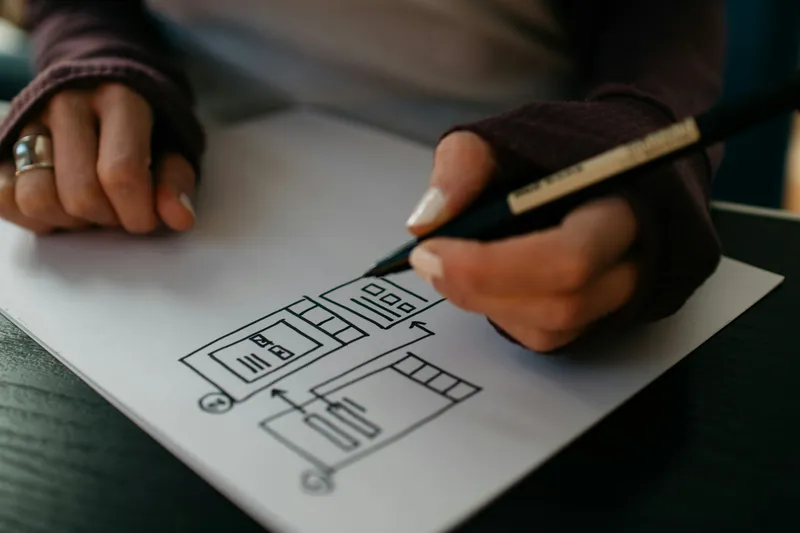
In a discovery workshop the team learns what the product is supposed to do, who will use it and how it should work for them.
The decision about technology comes after the workshop, once the scope and the way the product works are clear.
In the UX process, discovery produces a product vision, worked out with your Product Owner, and a roadmap. Research then combines interviews, surveys, usability tests and desk research, both qualitative and quantitative.
In the PSONI Discovery phase, design ran through the whole phase and was its main part.
For industrial IoT dashboards, discovery starts with an analysis of the company's procedures and instructions, which we turn into user stories before any dashboard is designed. Then we interview the operators who manage the environment every day and watch a typical day and its routines. Priorities are set with the operators, because one dashboard does not fit everyone: one operator has two monitors, another has four, so widgets can be moved, stretched and minimized. The prototype goes to users, and we implement their opinions in the next round until everyone agrees.
Before the workshop: the interview and the brief
The work starts before the meeting, and you prepare nothing special for it: a description of your idea and the presence of a decision maker are enough. The first task is to gather business goals that are easy to set and measure, such as reducing service time, increasing profit or attracting new users.
Then we interview you about your motivations, your team's competences, stakeholder roles and the chain of decisions, and how that process can be adjusted to an agile approach. We agree how often we talk, because it makes a big difference whether we talk every hour or once a week. And we ask who the user is, including the personas.
From the interview we prepare a workshop brief. It holds:
- A minimal list of the key features, with a question for each one: is this what the user needs?
- The schedule, the stages and the state of the project, including an analysis of the previous release, which usually brings a lot of useful insight.
- The preferred technology stack.
- The marketing and communication strategy.
Six questions about the purpose of the product give the conversation its shape:
- What is the biggest motivation behind the product?
- Which problem does it solve?
- How will it solve that problem?
- How do we measure success?
- How do we check that there is demand?
- What is the value proposition?
The discovery process: how the workshop runs
An opening workshop from a real project, and the longer User Journey Mapping format

The opening workshop in one recent project, for an energy trading company, ran from 11:00 to 14:00. The agenda had four points:
- Introduction of the teams.
- Clarifying the integration and technical questions.
- Confirming the scope and module priorities.
- Agreeing the next steps and the schedule.
For the UX work the third point carries the most weight: the scope and the order of the modules are what the design work is planned from. A written summary of the meeting followed.
Scoping meetings involve all the stakeholders and the product team, so we learn the business goals, the users' needs and the market context.
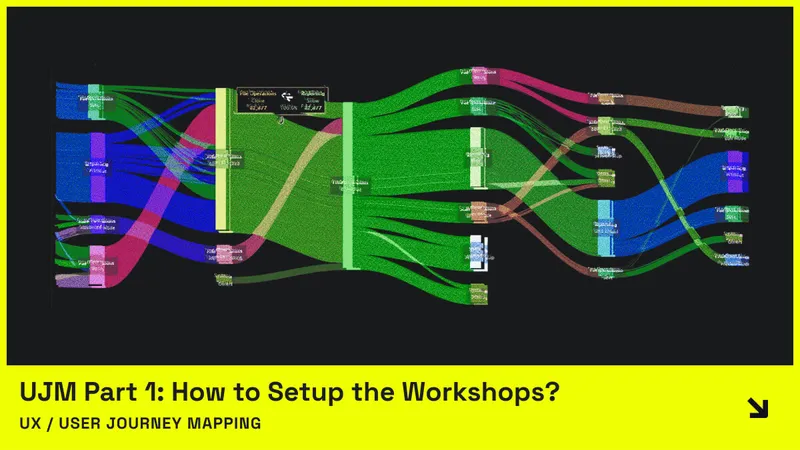
A longer format is the User Journey Mapping workshop, described in the article User Journey Mapping in Practice, part 1. In it we learn users' needs and behaviour from several perspectives. We have applied it for startups with a new product and for corporations with established systems, where we often took over only part of the development process. We have run it in different industries, for clients from Istanbul, London, Oslo and Warsaw.
A User Journey Mapping workshop lasts one or two days, and the preparation takes at least one or two weeks. About 60% of it goes by the book, and about 40% is improvisation. Pieces of the puzzle are usually missing: sometimes nobody in the room knows the answer to a technical question, and the team speculates a little to fill the blind spot.
Basic and extended discovery
Where the first stage ends and the wider scope begins

Basic discovery is free every time. It is the first stage of a project: the opening workshop and a basic mockup or proof of concept prepared from it.
Extended discovery is a separate, wider scope that can run for several months. PSONI is an example: its Discovery phase ran from 17 March to 15 June 2026, with Discovery sprints and sprints on an AI proof of concept before the next stages. After the design came a code analysis, and the phase ended with a demo and the stage's acceptance documentation.
What you get from discovery
The results of basic discovery and of extended discovery
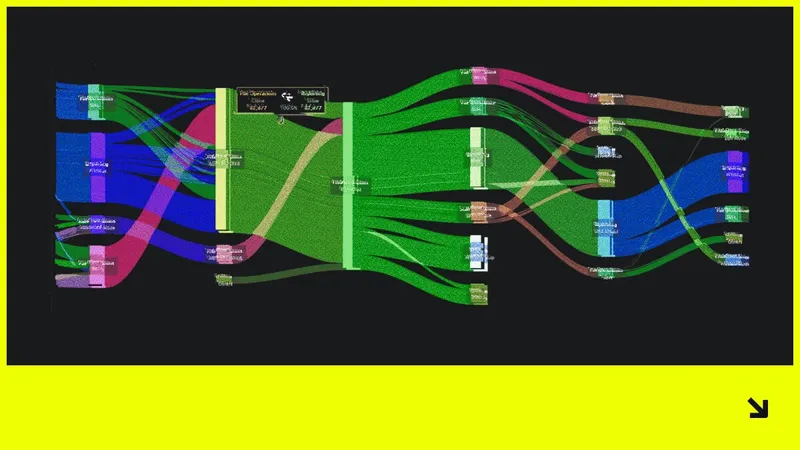
Basic discovery ends with a confirmed scope, an estimate of the cost and the basic mockup.
Extended discovery produces the full set:
- A written summary of what was discussed and agreed.
- The confirmed scope.
- Maps of user journeys and user flows, drawn for each role that uses the product.
- Mockups or a clickable prototype.
- A backlog and user stories.
When a workshop makes sense
A workshop makes sense when you plan a new product or feature, or a new flow in an existing product. It also fits an audit of a UX or business process, a search for a new strategy or a pivot, the creation of new KPIs, and a check of what users need and where the product lets them down.
Running it with everyone in one room is the most effective way, and a video call works too. We also work on site at the client's office.
Who takes part in the workshop
From our side

From your side



What the designers do in discovery
The Product Designer answers for the whole user experience and co-decides the shape of the product. The designer prepares the plans for the product workshops and shapes the product vision together with your Product Owner. The designer also creates personas, customer journey maps and empathy maps, and writes the problem statements and the hypotheses to validate.
In a discovery workshop, a Visual Designer works with the Product Designer on information architecture and content structure.
From workshop to product: a portal for an energy trading company
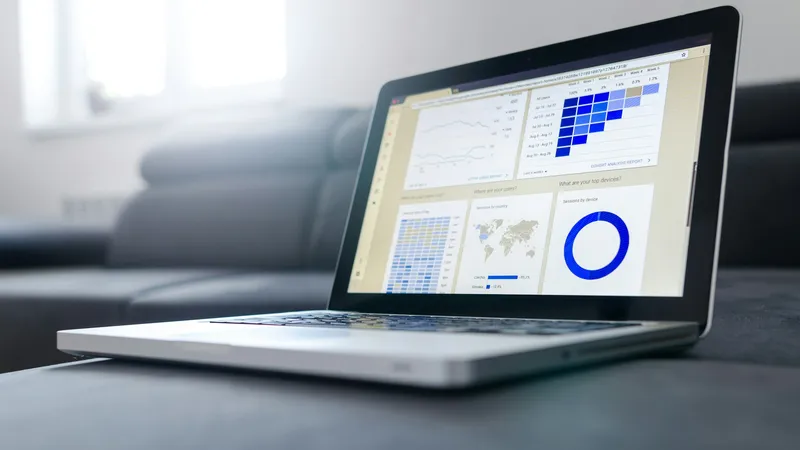
After the opening workshop, the team showed the client a demo of the portal. User flows followed for four roles: Client, Seller, Trader and Back-office.
The first sprints brought UX and UI work with shared visual rules and shared components for all modules, and the design system was verified technically in the first sprint, before the build. Then the project moved on to a requirements specification with user stories, the first phase of work on the portal.
Workshops in our projects
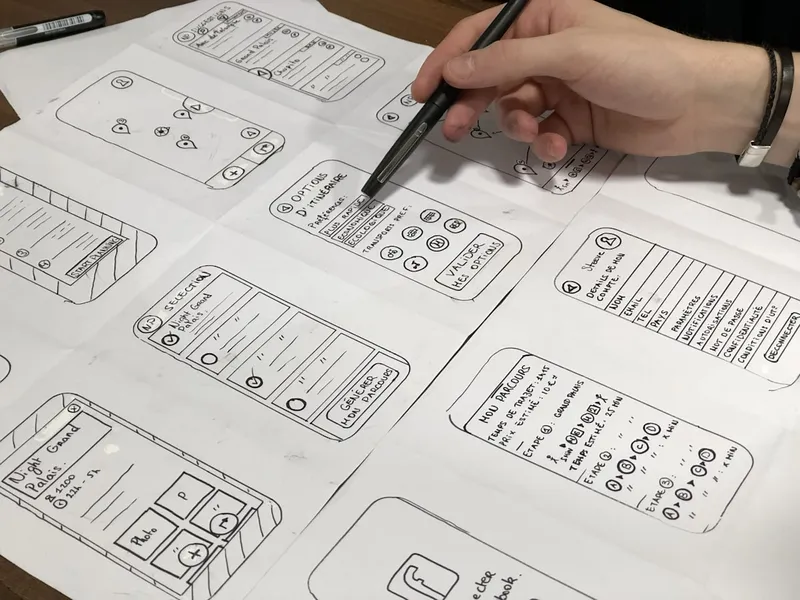
Workshops keep returning as a product grows. At Enerace, we ran workshops again for successive modules: the choice of architecture in 2021, the invoice import in 2024, and the new views and the PowerShift module in 2025. Design workshops accompanied the work on one new module from 7 November 2024 to 12 January 2026. The details are in the Enerace case study.
Meeting face to face shaped the BizBot design. Its product workshops and hackathons took place in Warsaw, Oslo and Istanbul, and the team first had to understand local legal and cultural nuances. The sessions showed how well the design fit the real activities of Norwegian companies. The project produced 400 screens and 21 landing pages, and the work covered UX and UI, brand identity, the website and marketing materials, and a design system for the next modules. The BizBot case study covers the UX work.
Planning workshops can split a tender into modules. At Centrum Komunikacji, the project began with planning workshops in July 2025: the tender's requirements were divided into modules, each tied to a point of the specification, and production started on 20 April 2026.
Discovery can fix the scope of an MVP. For an app that sells merchandise at live events, it produced mockups and MVP views for six areas: the sales dashboard, statistics, label printing, a live view of stock during the event, the setup of a new event and the remaining views of the main user flow.
After the workshop
For a product with AI at its centre, the next step is AI MVP development. For any other first version, the scope confirmed at the workshop is the starting point of the build, and How we do IT describes how we run it. The UX and UI design that follows discovery is described under UX Design and Product Design, and Consulting & Discovery presents the whole stage and its other services.
Why start with us
The team that runs the workshop builds the product afterwards, so scope and decisions are not handed over again. The Enerace team stays with the product through workshops, estimates, delivery, testing on staging, release and maintenance.
At Skyfri the collaboration began with a technical audit, from 20 November 2023 to 7 January 2024, and continued with a Big Room Planning: a meeting, often run as a workshop, in which we plan a longer stage of work. The workshop there brought different people together in one place to agree the mission, the vision and the strategy. Planning sessions like it help to put a project's backlog in order and to align the teams.
Building the energy management system (EMS) followed, and since January 2024 our engineers have worked inside the client's team, with no handoff after the launch. Details are in the Skyfri case study.
FAQ: questions before a workshop
What founders and product owners ask before a workshop
-
A meeting at the start of a project in which you and our team settle what the product should do, who will use it and how it should work.
-
Yes, basic discovery is free every time. Extended discovery is a separate, wider scope that can run for several months.
-
The workshop opens with an introduction of the teams, goes through the integration and technical questions, confirms the scope and module priorities, and closes with the next steps and a schedule. Our Project Tech Leader, Project Manager (or Scrum Master) and Business Owner meet your Product Owner or the decision maker.
-
The opening workshop in our example ran from 11:00 to 14:00. A User Journey Mapping workshop takes one or two days, with one or two weeks of preparation.
-
Discovery produces the personas, journey maps and user flows that the design work starts from.
-
Basic discovery gives you a confirmed scope, an estimate of the cost and the basic mockup. Extended discovery adds a written summary, journey maps, user flows, a clickable prototype, a backlog and user stories.
-
A requirements specification states each requirement from the user's point of view as a user story, in a form engineers can estimate and test. The workshop comes first, and the specification starts from its confirmed scope.
-
No. Teams are sometimes attached to a technology they already like, and we check whether it is indispensable before anything is decided.
-
Yes, we sign an NDA before the workshop.
-
You do. The economic copyrights to the code pass to you with each payment. The details are on our Security & GDPR page.
More on scoping a product before you build
Related reading on discovery, MVP and MLP
Discover what your product really needs
Your message goes to
Filip Szamborski
Co-founder & CEO

Your message goes to
Karol Oponowicz
Co-founder & Business Owner
Your message goes to

Paweł Zieliński
Co-founder & Business Owner
SO FAR WE HAVE WORKED WITH BRANDS LIKE:





Thank you for your message.
We read every message ourselves and get back to you within 48 hrs on business days.
Something urgent? hello@ordergroup.co