
Skyfri - Solar & Battery Asset Management Platform
Solar asset management software - EMS and monitoring for battery portfolios
Project Summary
Order Group built the architecture and implementation of the EMS behind Skyfri's solar and battery asset management platform. Skyfri Intelligence handles monitoring and data, Skyfri SolarSCADA handles site-level hardware control. A Technical Feasibility Study in November 2023 - market analysis, feasibility study, technical specification - opened the engagement before either team committed to a build. The two teams have worked as one continuous unit since January 2024, with no handoff after launch. The EMS Order Group built has been running in production since June 2024, across four streams: EMS, Monitoring and Asset Management, Data and Onboarding, and Industrial Design.
The solar sector lost an average of 5.77% of expected production to underperformance in 2024, up from 5.00% in 2023 - about $5,720 per MWdc (megawatt of DC-rated capacity) a year (Raptor Maps 2025 Global Solar Report). Monitoring only shows that loss after it has happened. Catching it before it compounds takes software that acts on the data, which is what the EMS layer Order Group built does. See our Energy Hub for the wider range of monitoring, trading and storage platforms we've built for the energy sector.

The Renewable Energy Asset Management Solution
An EMS that runs without the internet
Asset management software built for someone else's hardware
Solar monitoring software built for a distributed portfolio

Three Layers, Three Jobs
Skyfri's platform and Order Group's EMS split the work into three layers, each with one job:
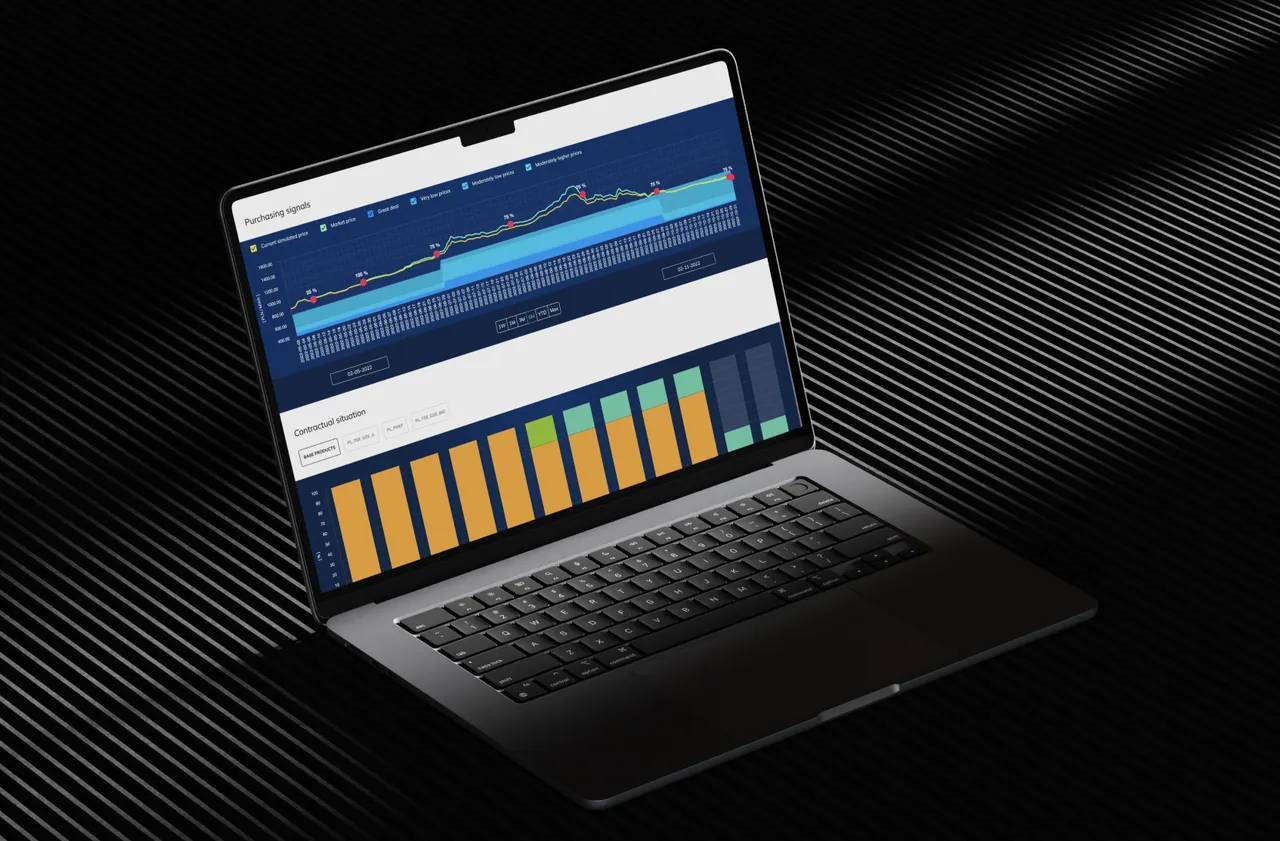
- Skyfri Intelligence (monitoring): rolls up production figures, faults and site status across the whole portfolio - shows what happened.
- Skyfri SolarSCADA (hardware control): the site-level layer that talks to inverters and batteries directly.
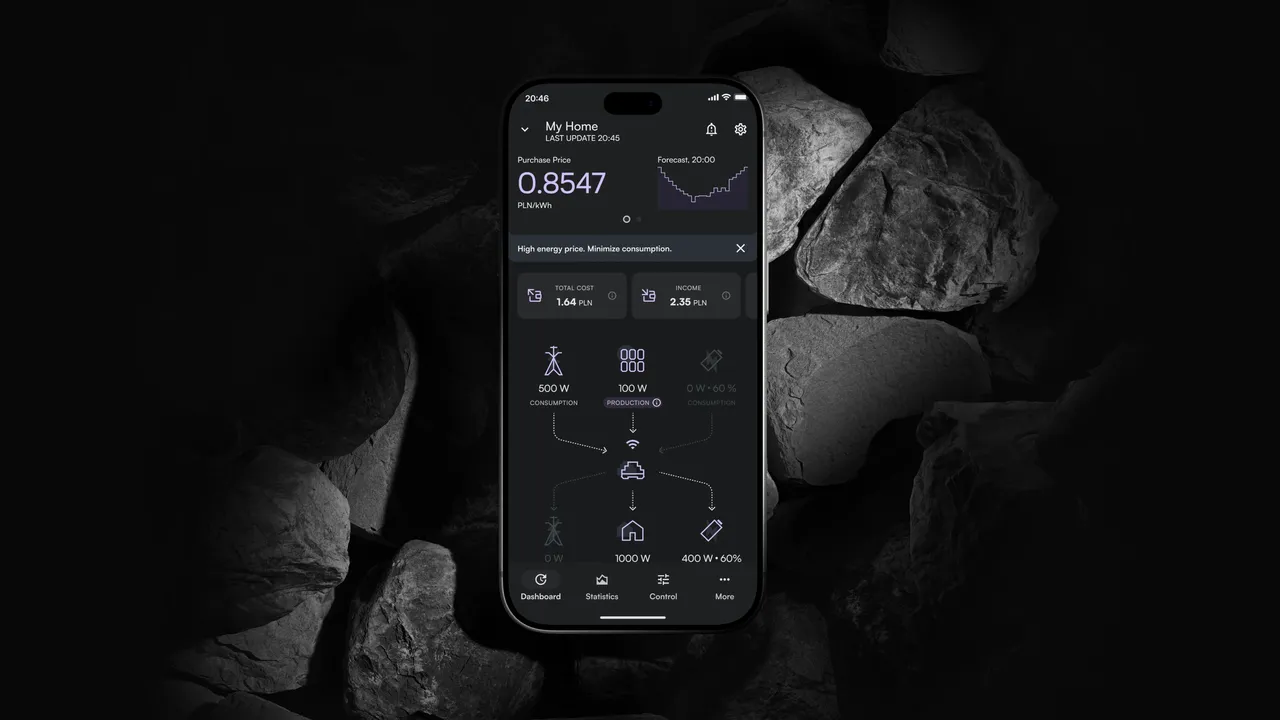
- EMS, built by Order Group (control logic): decides when to charge, discharge, peak-shave, trade energy and cap exports, running fully offline - acts on what's happening.
Why It's Hard to Build With Us
An EMS that runs offline cannot fall back on a cloud service to catch its mistakes. It has to make correct, safety-relevant decisions about batteries and grid connections on its own. Doing that across several inverter and battery brands at once turns every integration into a negotiation with someone else's firmware. The same control logic also has to hold for every site's own limits, whether a site's battery is a fraction of a megawatt or more than 2 MW. Four work streams ran in parallel on one team: EMS, Monitoring and Asset Management, Data and Onboarding, and Industrial Design. Onboarding a device in one stream changes what the EMS can control in another, so the team has to hold the whole system in view.
That kind of coordination is hard to sustain through a typical build-and-leave engagement. Order Group and Skyfri didn't run it that way: the engineers who shipped the EMS in June 2024 are still working alongside Skyfri's own team, in the same arrangement that started in January 2024.

Results
Order Group's EMS architecture is running in production across Skyfri's live portfolio. The figures below reflect Skyfri's own production data, confirmed by Skyfri:

The clearest sign the architecture holds up is that it has kept running since June 2024 across all 7 plants - and that Skyfri and Order Group are now scoping a new EMS project for Hydro Rein.
More case studies
Related work in energy
-
Enerace - Custom-Made SaaS Web Application for Energy Trading
Order Group delivered astonishing work in a very organized way. They truly are a team worth trusting your project with!
-


Solar and Battery Asset Management Software - FAQ
-
Renewable energy asset management software tracks and, in the more advanced cases, directly controls a portfolio of solar and battery sites from one platform. Skyfri's platform is one example: Skyfri Intelligence handles monitoring and data, Skyfri SolarSCADA handles site-level hardware control, and Order Group built the EMS architecture that runs underneath both, now live across 7 plants. Order Group builds this kind of software across the energy sector - see our Energy Hub for the wider range of trading, monitoring and storage platforms we've built.
-
A solar monitoring software platform turns raw data from inverters, meters and sensors into production figures, faults and site status an asset manager can act on. On Skyfri's platform, that data acquisition, processing and display sits inside the EMS stream Order Group built, alongside the control logic it feeds.
-
An EMS decides when a site's batteries and inverters charge and discharge, how they run peak shaving and energy trading, how they respond to DSO (distribution system operator) requests, and how much the site exports to the grid. Skyfri's EMS, which Order Group built and which runs fully offline, does all of this across multiple batteries and inverters on the same site, including a single battery of more than 2 MW.
-
An EMS needs to run offline because a control decision on a live battery - charge, discharge, cut export at the connection limit - cannot wait on an internet connection that might be down. Order Group built Skyfri's EMS to keep running continuously without one.
-
A real portfolio is rarely built on a single manufacturer, so a platform managing it has to be OEM-agnostic. Skyfri Intelligence and Skyfri SolarSCADA are both built this way, per Skyfri's own product description - designed to read and control hardware neither Skyfri nor Order Group designed.
-
The stack is a React frontend and a Python asyncIO backend, a Databricks data pipeline, and Azure IoT Edge plus Azure IoT Hub connecting to the field, hosted on Azure. That combination has to move data from many distributed sites into one system reliably, which is a different problem from a typical web app backend.
-
A project like this needs a feasibility study because the platform has to work with hardware and site conditions the team does not control yet. Order Group and Skyfri ran a Technical Feasibility Study in November 2023 - market analysis, feasibility study, technical specification - before writing production code, which reached the field in June 2024.
-
Asset management means acting on the data: an algorithm enforcing a site's load limit, or an EMS running peak shaving and energy trading across a whole portfolio, instead of a chart someone has to read and act on by hand.
-
Companies managing solar and battery assets at enterprise scale use software like Skyfri's. Skyfri names Hydro Rein, Dominion Energy and Madison Energy Infrastructure as clients on its own site, and operates from Oslo, London, Denver, Bangalore/Hyderabad and Singapore.
-
Yes, in the same continuous arrangement that started in January 2024: the engineers who built the EMS are still working alongside Skyfri's team, now scoping a new EMS project for Skyfri's own end customer, Hydro Rein.

Discover what your product really needs
Your message goes to
Filip Szamborski
Board Member

Your message goes to
Karol Oponowicz
Board Member
Your message goes to
Paweł Zieliński
Board Member
so far we've worked with brands like:





Thank you for your message.
We read every message ourselves and get back to you within 48 hrs on business days.
Something urgent? [email protected]