
Build regulated fintech software
Consumer-lending apps, customer portals and netbanking, onboarding and KYC, payments and marketing-consent - we build and run the software behind regulated lenders. From the first workshop to multi-year support.
Tell us what you're building.
A few details help us put the right engineers in the first call instead of a salesperson with a slide deck.







Fintech runs on trust - and trust is a software problem
In lending, the software is the product. A borrower has to register, get verified, see a clear and correct offer, take the money and pay it back on a phone, reliably, every time. A mistake at any step means more than a cosmetic bug: a stuck application, a failed repayment, an incorrectly recorded consent or a damaged customer relationship. The flows are regulated, and lending products succeed or fail on details such as a validation rule, a KYC flag or an endpoint that should not be public.
We build for that, and we stay after launch. Some of our lending work has run in production for years, changing release after release. From the first version to the day-to-day operation of a live platform, we treat reliability, security and traceability as part of the job itself rather than extras added before launch.
That discipline shows in details most users never see. A loan calculator has to give a correct answer even to a visitor who has not registered yet, because the number they see is the number they will hold you to. A KYC flag has to stay verified once it is set, because resetting it by accident forces a real person through identity checks again for no reason. A payment webhook has to be idempotent, because networks retry, and a doubled payment means a support ticket and a customer who trusts you less. We build these safeguards directly into the flows we ship for Avafin and AASA24, and we test them against the failure modes that actually occur in production, beyond the happy path a demo shows.
We also follow where the sector is heading. KNF-registered lenders operate under both financial-services supervision and GDPR's rules on personal and consent data, and between them these two regimes touch every screen we build: an onboarding form, a KYC check, a marketing-consent toggle. Regulators increasingly expect lenders to prove when a check happened, on what data and under whose authorization. That is why we design audit trails and consent records from the first workshop instead of retrofitting them before a compliance review.
This is also why we organize delivery around a small, stable team rather than rotating contractors through a lending codebase. A validation rule that looks redundant to a newcomer is often there because of an incident nobody wants to repeat, and a team that stays with the platform carries that context forward instead of relearning it release after release. This kind of reliability gets less attention than a feature launch, but it keeps a regulated product trustworthy for years after the demo that won the contract.
Build it, then run it
From workshop to long-term partnership
We learn your product and users, then design, build and integrate what makes lending work - onboarding, KYC, payments and consents.
Then we stay. For AASA24 we have run the live platform for years - deployments, analytics, monitoring and a steady flow of change requests.
What we build
Consumer-lending apps
Customer portals & netbanking
Onboarding & KYC
Payments integration
Marketing consent & CRM
Long-term platform support



Long-term platform support
We run it after launch, not just build it
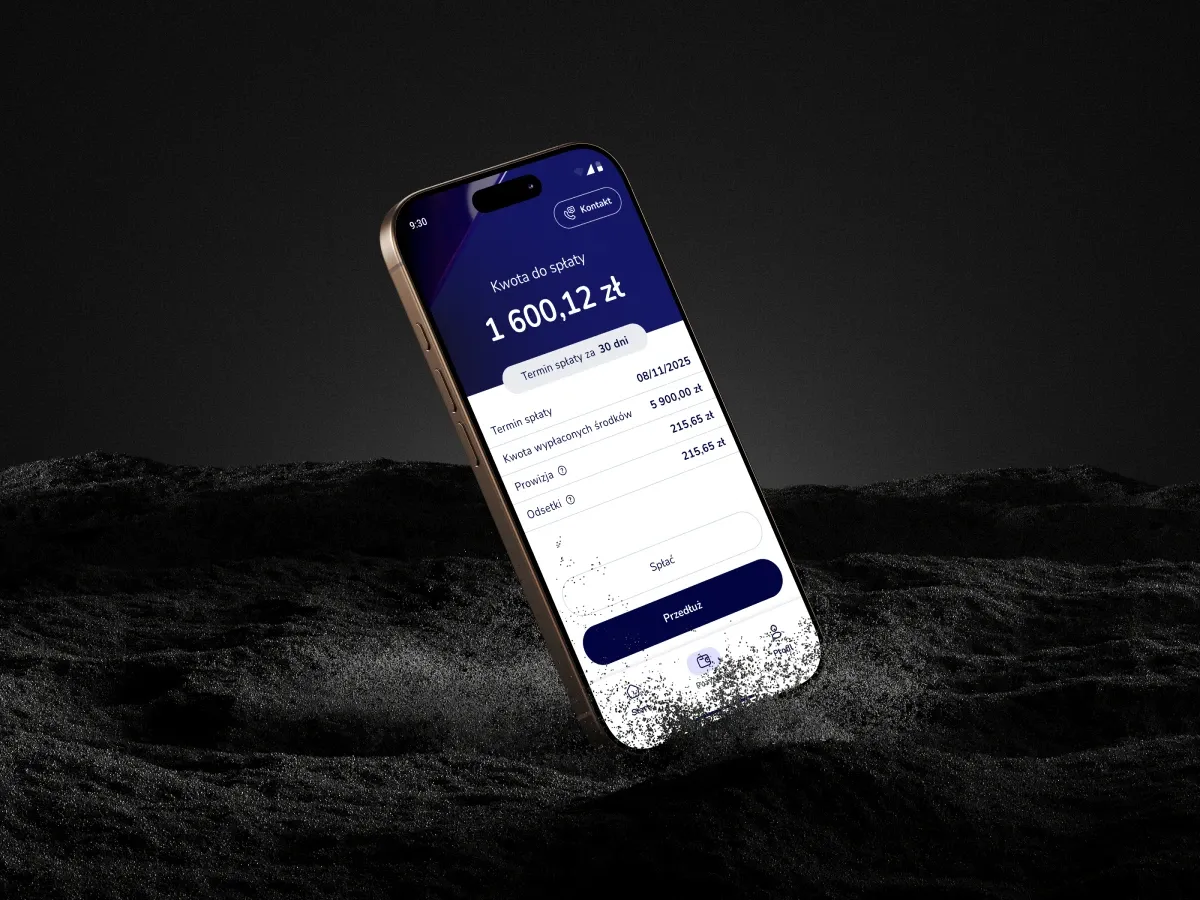
Deployments, code review, monitoring and product analytics - the unglamorous work that keeps a regulated lending platform dependable.
For AASA24 we have done this for years: a steady flow of prioritized change requests and production fixes on the live platform.

Rigor in financial software, demonstrated
Fintech case study
Why fintechs build with us
We do the hard, regulated parts of fintech that have to work in production and keep working.
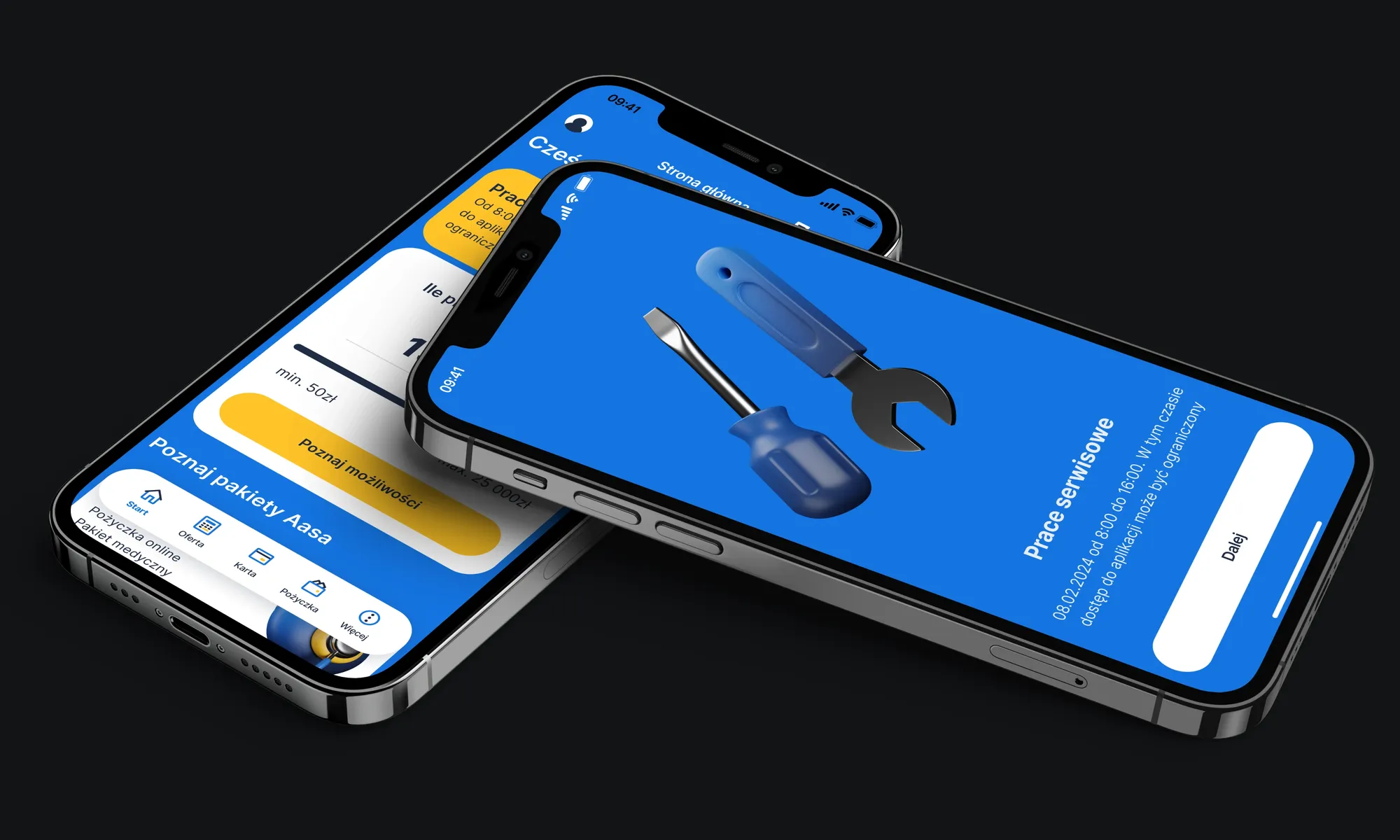
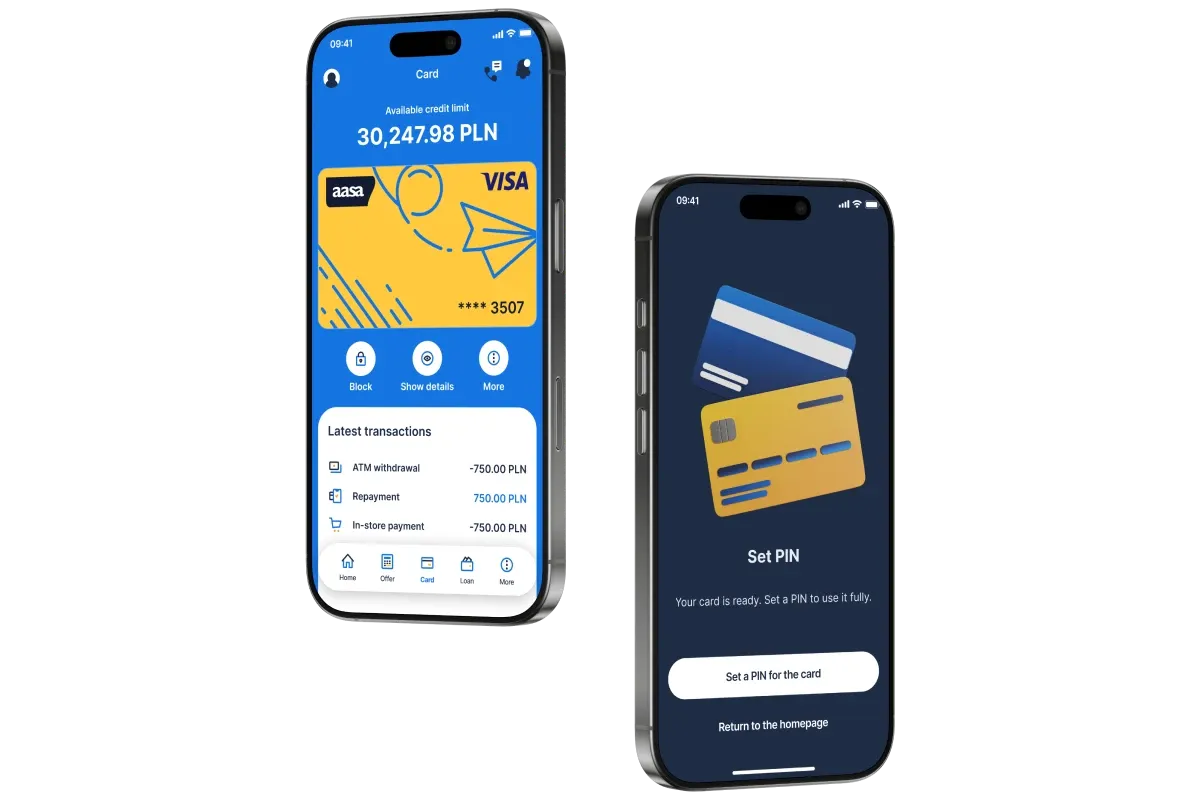
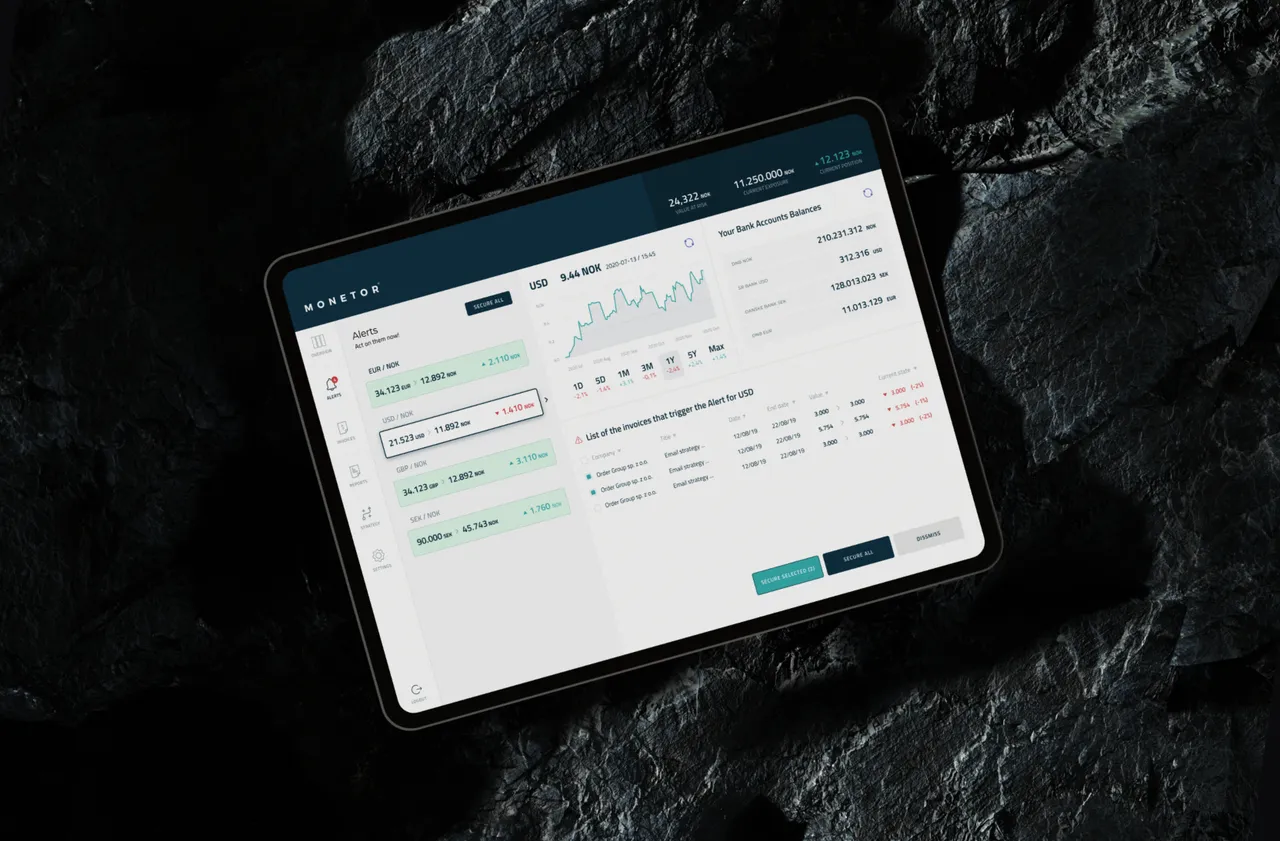
For Avafin we are building a full consumer-lending app end to end: registration and loan application, a calculator for unregistered users, phone verification, loan repayment, and self-service account management with proper data-change flows and back-end-driven validation. For AASA24 we have supported a live lending platform for years: the customer profile (netbank), the KYC lifecycle, payment integration with Autopay, marketing-consent management and SalesManago automation, address-data upkeep, analytics, deployments and continuous change requests. We have also delivered lending products for other financiers, including Wonga and Monetor.
We also productize lending end to end: a discovery workshop that maps your product and regulatory risk, design-and-delivery in React Native, and an ongoing retainer once you are live. Under the hood we reuse our Lending App Framework, so modules we already built and run for AASA24 and Avafin - eKYC and identity verification, the KYC lifecycle, and payments integration - shorten delivery instead of being rebuilt on every new project.
The framework exists because we kept solving the same regulated problems for different lenders: verifying identity without slowing down onboarding, reconciling payments against a ledger that has to balance, and keeping a marketing-consent record that matches what compliance actually requires. Reusing these modules gives a new fintech engagement a working eKYC flow and a tested payments integration on day one, instead of an empty repo. It also means the team supporting your platform after launch already understands the failure modes of regulated lending software, because they built the tooling that catches them.
AASA24 has been a live production platform for years, through multiple releases, and the payment integration and KYC lifecycle we built still run it today. Avafin's registration-to-repayment journey is being built against the same validation rules the back end already enforces, so the numbers a borrower sees during onboarding are the numbers the ledger will actually charge. Both products get the same approach: dependable engineering for regulated money movement, and a team that stays for the long term instead of disappearing after launch.
Ready to build or fix your lending product?
Book a free discovery workshop. We'll map your product, the regulatory risks and the fastest path to a dependable release.
Fintech software development - FAQ

-
Consumer-lending apps (registration, loan calculator, phone verification, repayment, self-service account management), customer portals and netbanking, onboarding and KYC, payments integrations, marketing-consent and CRM, and long-term support of live lending platforms.
-
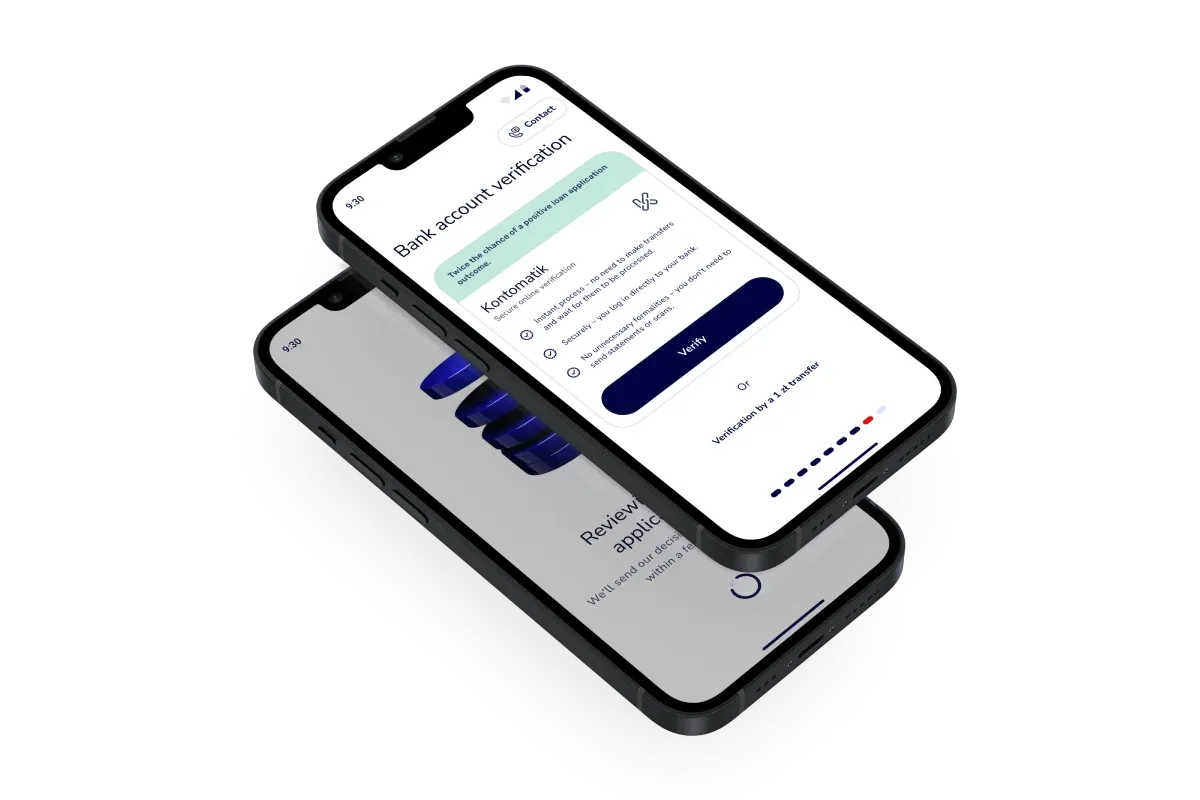
Yes. On the AASA24 platform we maintain the Autopay payment integration with controlled endpoint access, and KYC steps wired into the application flow - including adding KYC after a contract is signed and protecting the KYC status from accidental resets.
-
We manage marketing consents across the application, the customer profile and partner consents at the final step, and integrate marketing automation (SalesManago) with monitoring of campaign-notification delivery, so consent and messaging stay aligned.
-
Yes, it is how we work. We have supported AASA24's live lending platform for years: deployments, code review, monitoring, product analytics and a continuous stream of prioritized change requests and production fixes.
-
In lending and fintech, among others: Avafin, AASA24, Wonga and Monetor. In our longest-running engagement, with AASA24, we have supported the same live platform for years, which usually says more about fit than a longer client list would. We can walk you through the relevant work in a call, within what our agreements allow.
-
With a workshop to understand your product and users, then design, build and integration - and, if you want, long-term support once you are live. Book a free consultation and we'll scope it with you.

Partnering for regulated, production-grade fintech.
Your message goes to

Filip Szamborski
Board Member

Your message goes to

Karol Oponowicz
Board Member
Your message goes to

Paweł Zieliński
Board Member
SO FAR WE HAVE WORKED WITH BRANDS LIKE:


Thank you for your message.
We read every message ourselves and get back to you within 48 hrs on business days.
Something urgent? [email protected]