Software Support & Maintenance That Doesn't Stop After Launch
The project ships, but the product keeps changing - Zeronest is now on support sprint 56, having started at sprint 19. We run support the same way we run development: dedicated engineers, two-week sprints, a plan for when something breaks.
What Software Maintenance & Support Actually Covers

Didrik Martens
BizBot CEO
The same three things, sprint after sprint.
How We Run Ongoing Software Maintenance
Monitoring & Analysis
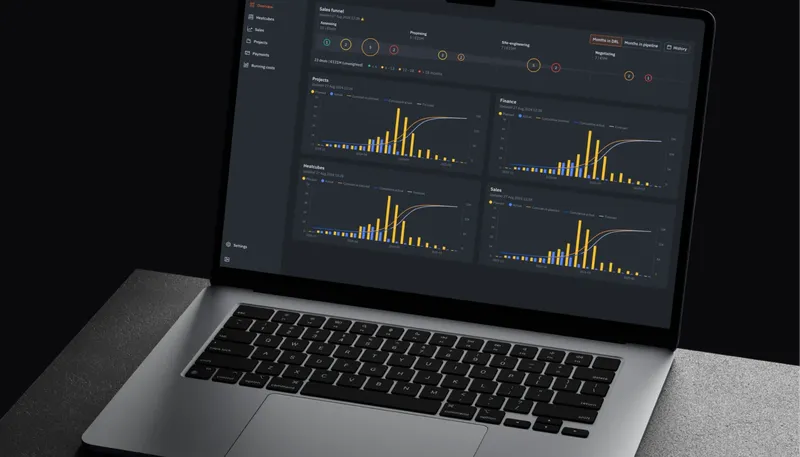
We track uptime, error rates and how real users interact with the product, so problems get caught before they turn into incidents.
Every sprint starts with a short review of what changed in production since the last one, so priorities come from real usage.
That review is also where we flag drift: dependencies going out of date, traffic patterns shifting, anything that turns into a bigger problem if it sits unattended for another sprint.
Not every alert becomes a ticket: the review decides what needs fixing this sprint and what can wait, so the backlog reflects real risk instead of every notification that fired.

Sprint-Based Updates
Fixes and improvements ship on the same two-week cadence we use for new development. It's the model behind Zeronest's 38 sprints, running from sprint 19 in May 2025 to sprint 56 in July 2026.
Each sprint ends with a working, deployed change, the same rhythm a new-build client would see from us.
Small requests do not wait for a quarterly roadmap meeting; they go into the next available sprint alongside whatever else is already queued.
Bigger requests get scoped and estimated the same way a new feature would be, so you know the cost before it starts.

Infrastructure & Crisis Response
When something breaks in production, the team that knows the code responds, backed by an SLA or a support agreement set to your priorities.
That includes the infrastructure underneath the application - servers, deployments and monitoring, the same cloud infrastructure we provision for new builds.
Response Times & Escalation
We set response times and escalation rules upfront, in writing, so nobody is guessing who to call at 2am when something goes down. A typical agreement sets three priority tiers: critical issues affecting production jump the queue, standard bugs get scheduled into the next sprint, and low-priority requests get batched with other work. The exact response-time target for each tier is set in the agreement itself, not on this page, since it varies by client and workload. If an issue turns out to be bigger than a tier suggested when it was logged, we re-triage it in the same sprint rather than waiting for the next one.
After An Incident
After an incident closes, we write up what happened and what changes, so the same failure does not repeat itself next quarter. We also run a short post-incident check the following sprint, to confirm the fix is holding up under real production traffic.
Taking Over An Existing Product
When we take over a product someone else built, the first sprint is an audit, not a rewrite. We map the infrastructure, check deployment pipelines and access, and fix anything already fragile before it becomes an incident on our watch. That audit also tells us which parts of the system need closer monitoring going forward, so the response plan reflects the product as it actually is, not as the original documentation describes it.
Why Choose Us For Ongoing Maintenance & Support
We Stay Past Launch
Documented, Not Just Promised
One Model, Every Product
Software Maintenance & Support, Answered

-
Monitoring and analysis, scheduled updates on the same two-week cadence as new development, and incident response backed by an SLA or hours-based agreement - the same three things whether the product is custom software, a mobile app or a web platform.
-
Two billing models, chosen up front based on your workload.
- SLA-based: fixed response-time tiers and a retainer - best for predictable, priority-driven work.
- Hours-based: billed for time actually spent each sprint - best for a lighter or more variable workload.
-
Yes. We start with an audit, not a rewrite: reviewing access, deployment pipelines and anything already fragile, so we know what we're inheriting before the first real fix goes out.
-
Yes. Whether the codebase is a backend, a mobile app or a web platform, it runs through the same sprint cadence and the same support agreement - one contact for your team, not one per platform.
-
A short write-up of the cause and the fix, plus a follow-up check the next sprint to confirm the fix held under real traffic after deployment.
More On How We Run Support
The pricing model behind these sprints, for readers who want the detail


Tell us what needs supporting
Your message goes to

Filip Szamborski
Board Member

Your message goes to

Karol Oponowicz
Board Member
Your message goes to

Paweł Zieliński
Board Member
SO FAR WE HAVE WORKED WITH BRANDS LIKE:





Thank you for your message.
We read every message ourselves and get back to you within 48 hrs on business days.
Something urgent? [email protected]