Django development company and software house for hard problems
Zeronest, Enerace.Online and Centrum Komunikacji run on Python and Django backends built by Order Group, a software development company in Warsaw. As of April 2026 Zeronest, an energy management system, served more than 3,000 prosumer storage installations.


Python and Django in production
Python and Django are the backbone of two long-running products: Zeronest, an energy management system built since January 2024, and Enerace.Online, developed since 2020.
Zeronest
Zeronest serves solar and battery installations. It has three connected applications: a mobile app for the prosumer (a household that produces and uses its own energy), a mobile app for the installer and a web management platform. The backend began on Django 4.2 with Django REST Framework and JWT authentication. Celery handles background tasks, data sits in PostgreSQL and Redis, and the whole system runs on AWS with ECS, RDS, S3, Cognito and SNS.
Every minute the engine decides whether a battery charges, discharges or sells to the grid. It weighs live readings, market prices, tariffs, consumption history and the weather forecast, and it runs in three modes: off, manual and automatic. Manual mode offers five behaviors (charging, discharging, anti-reflux, self-consumption and service), and automatic mode picks one of three strategies: defensive, neutral or aggressive. The data comes from our own device, the Bzyk D200. It has its own SIM card, connects to the inverter over RS485 and Modbus and reports over LTE. Device traffic goes over MQTT and TLS 1.2 behind AWS IoT Core, and client data stays in the EU. The platform integrates 16 inverter brands, among them Deye, GoodWe, Hoymiles and Sungrow.
We also built the demand-side response (DSR) module, a billing mode for energy cooperatives and a new modem-data ETL on Django and PostgreSQL that replaced the AWS Lambda and DynamoDB version by April 2025, and by the end of its first two years the team had put 11,220 hours into the platform.
Enerace.Online
Enerace is an energy procurement advisory firm from Olsztyn, and Enerace.Online is its platform for buyers of energy and gas, in the browser and in the App Store and Google Play. We have developed it since 2020 as a permanent team working in Scrum with no end date. One team builds more than 20 functional areas in one codebase, and we are responsible for the backend, the web app, the mobile app, the integrations and the infrastructure. The React Native app for iOS and Android has been in the stores since 2023.
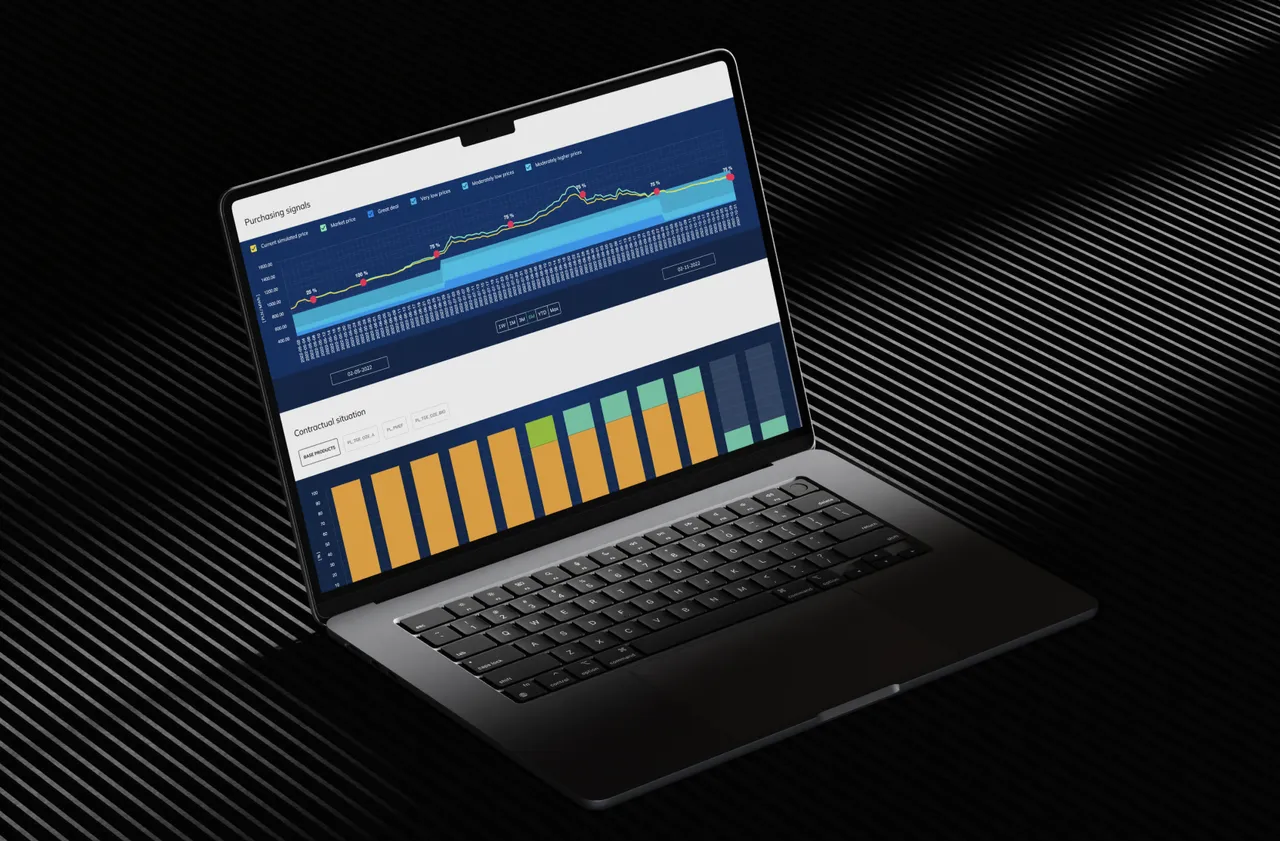
The backend is Python and Django with a GraphQL API built on graphene-django and JWT authentication. Celery runs background tasks on Redis, the data lives in PostgreSQL, and the rest of the stack is React with TypeScript, React Native and AWS with ElastiCache and autoscaling. Thirteen external market data sources feed the system, from power exchanges and grid operators such as TGE, ICE, ENTSO-E, PSE, OKTE and OPCOM, plus ECB and NBP rates, and the imports moved from crawlers to the official ICE and TGE APIs.
A contract engine recalculates each client's position every day, invoice control compares each invoice with a shadow invoice, and PowerShift, started in December 2025, plans machine schedules at the lowest combined cost of energy, distribution and the Polish capacity charge, a part of the electricity bill.
Developers on your project
Our CTO and the Project Tech Leader are responsible for the technical side of a project: architecture, technical requirements and standards, code review, estimates, risks and documentation. Maciej Sułek, Co-founder & CTO, was Project Tech Leader on KYOTO throughout 2024, when the team built cloud infrastructure on AWS and a planning and simulation platform. He has been Project Tech Leader on the Mudita project since July 2022.
Every project also gets a Project Manager, who works as Product Owner or as Scrum Master, never as both. The Project Manager looks after the schedule, the scope, the risks and a monthly hours report, stops changes outside the agreed scope and tells the client what those changes would do to the budget.
Developers work in your tools if you want that: your Slack and your Jira, and on Skyfri also MS Teams. Related service: nearshore software development. To see what a project like yours would take, estimate your project.
Custom, mobile and web, each with its own page
Three ways we build

Custom software development
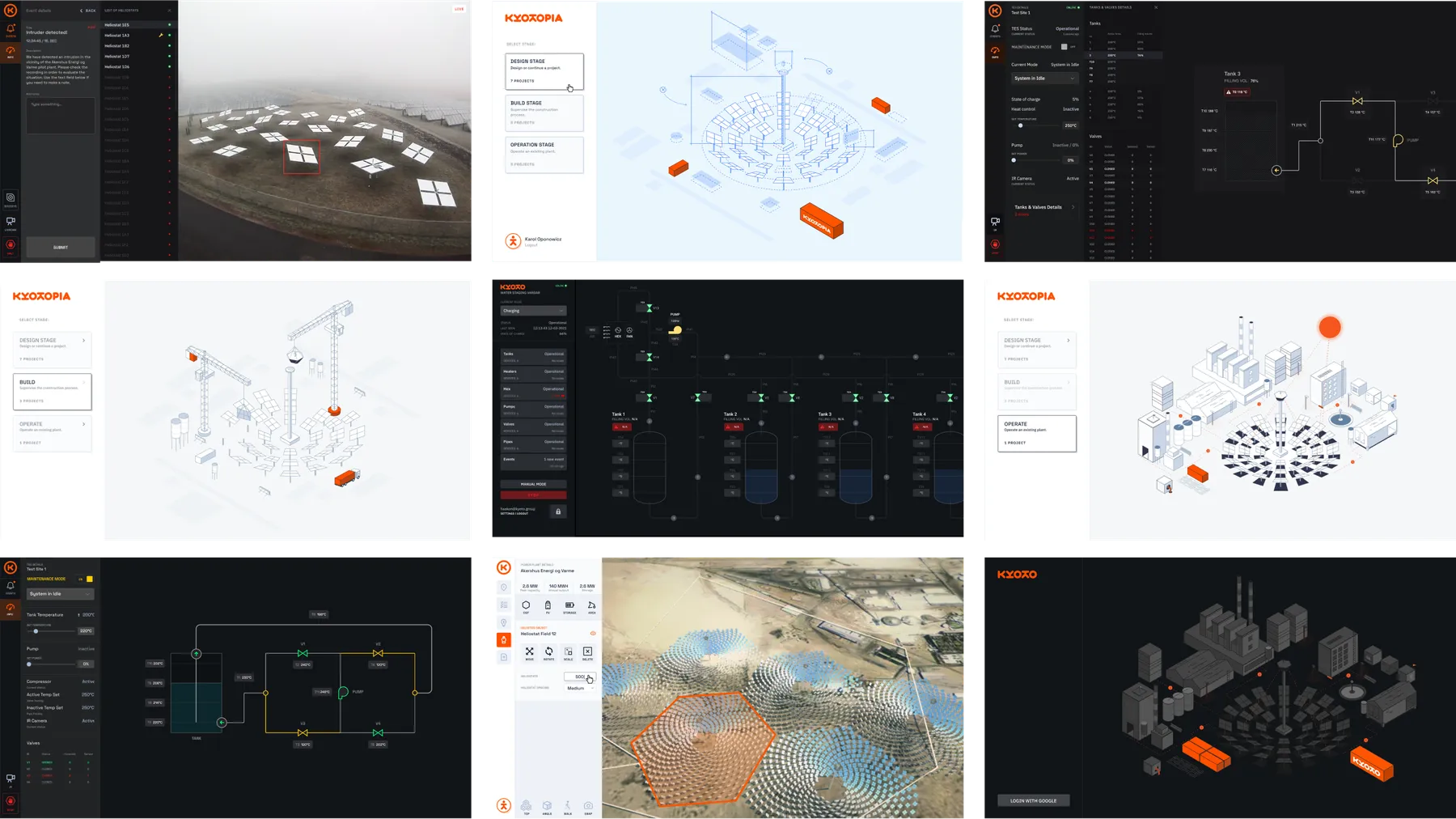
Custom builds follow four stages: discovery workshops, sprints with a working demo, testing and QA before release, and support after launch. Our example is KYOTO, an industrial IoT and digital twin system. The custom stack is chosen per project and draws on Python, Node.js, Django, React.js and React Native.
Mobile apps
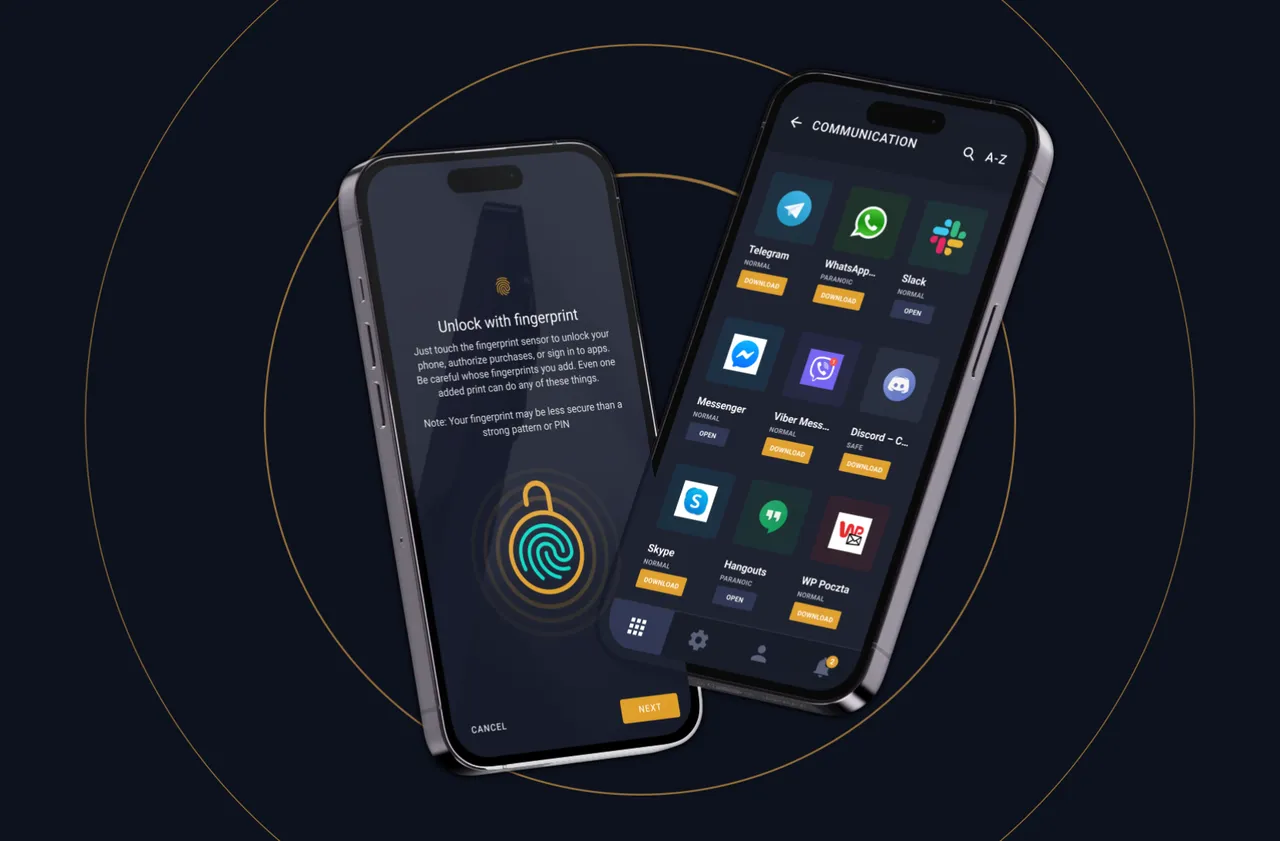
Mobile work covers cross-platform apps in React Native, our main framework, and native apps in Swift and Kotlin for products that depend on the operating system. Flutter and Ionic come in when a client's existing stack calls for them. Zeronest and Centrum Komunikacji both run on React Native.

Web development
Web work pairs a React or Next.js front end with a backend in Python and Django. Zeronest's web platform runs on Next.js, MUI and Redux Toolkit, with Django REST Framework behind it. Of our work on Monetor, Henric Jonsson, Head of Business Development at the company, said: "The team is doing a tremendously good job and they are evolving with us throughout the process." Read the Monetor case study.
Why build software with us
Start with a paragraph
Two-week sprints with a demo
What shapes budget and time
You own what we build
Taking over a system another team built
One product, built in phases
From workshops to launch in nine months

More systems, from Django backends to operating systems
Django also runs Centrum Komunikacji, and our Python and Android work reaches from Mudita to Skyfri, KYOTO and RAW Cyber.
Centrum Komunikacji
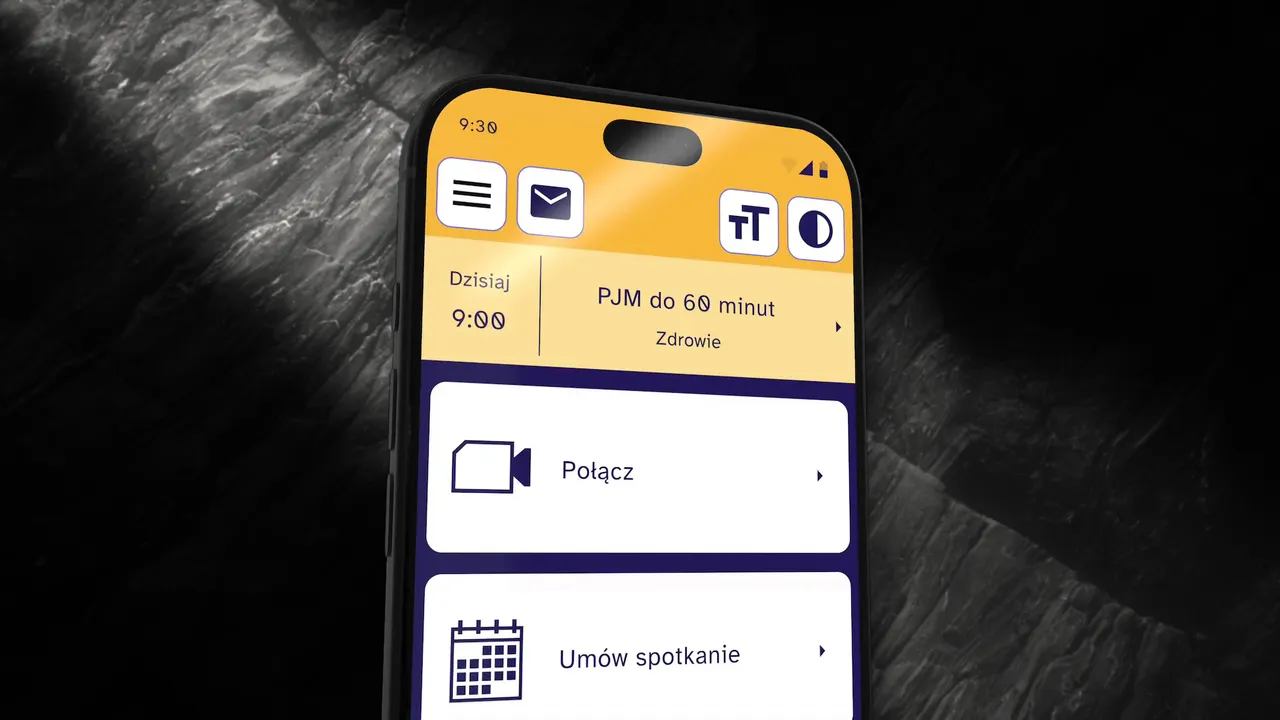
Centrum Komunikacji is an app of the Polish Association of the Deaf, funded from the European Funds for Social Development 2021-2027 and published as Centrum Komunikacji CK in the App Store and Google Play. It connects users with interpreters of Polish Sign Language on demand. We designed and built the web app, the iOS and Android apps, the backend and the infrastructure from scratch, and we maintain them after launch. The backend is Django with Celery.
Video calls are end-to-end encrypted on a self-hosted LiveKit media server, and the recording is uploaded to S3 in parts with SHA-256 checksums. Phone calls, for example to a clinic, run through a separate room on a SIP gateway, and the interpreter is in both rooms at once. Live transcription uses the open-source Vosk engine in the specialist's browser. Queues for SOS, on-demand interpreting and transcription run in real time on WebSocket and Redis, and the video layer was designed for 30+ simultaneous sessions. The PostgreSQL cluster has failover, Redis runs with Sentinel, traffic is encrypted with TLS 1.3, mTLS secures the link between the load balancer and the servers, and monitoring runs on Grafana and Sentry.
Python and Django across Mudita, Skyfri, KYOTO and more
- Since July 2022 we have worked for Mudita, which makes phones with an e-ink screen, in Java, Kotlin and Python and at the level of AOSP, the Android Open Source Project. The project includes a Django backend, and the system for the phone is built on dedicated machines with automated building and signing. We built Mudita's own app store, the Developer Portal and the over-the-air update platform for the Mudita Kompakt phone, and we have been migrating parts of the product to a new Android architecture.
- Skyfri is a solar and battery asset management platform. The energy management system we built for it has a Python asyncio backend with a data pipeline in Databricks and Azure IoT Hub and Edge, ran fully offline and entered production in June 2024. It controlled batteries on 7 plants, with more than 5 MWh of capacity and more than 4 MW of battery power, and handled charging, discharging, peak shaving (cutting demand peaks), energy trading, requests from the distribution system operator and export limits.
- In KYOTO, an industrial IoT and digital twin system, the stack was React.js, Python and AWS with Terragrunt and Jenkins, over three and a half years. After an MVP with UX/UI, we developed the product from 2024 into a battery management system based on SCADA (supervisory control and data acquisition) that monitors and controls the flow of energy in real time, with weather data collection and a plant performance simulation interface. The team regularly worked on site in Oslo, in Agile and Scrum.
- The RAW Cyber project, RAW Secure Phone, was a closed three-year stage, from about 2019 to 2021. We built RAW OS on Android in C and C++, with packet inspection and a RAW Store that offers only pre-approved apps.
- An industrial platform under NDA has a mixed stack: .NET, Ruby on Rails, FastAPI, Django, Vue, Android and iOS apps and Terraform. We modernize it in stages, module by module. For a client in the same sector we moved a front end from Vue 2 to Vue 3 and to Vite. Our cloud migrations run mostly on AWS with Terraform.
Django versions, upgrades and engineering practice
We upgrade running systems in stages, with the development environment first and production after it.
- Enerace.Online moved to Django 3.2 and Python 3.9 in a migration closed on 15 February 2022, and between 14 April and 27 June 2025 to Django 5 and Python 3.13, together with a new package manager and a new linter for Python. In 2026 it received a new backend structure and a new app layout.
- Zeronest stayed live through three updates: the Android target API in August 2025, React Native from April to July 2026 and Django from July to September 2026.
Our own Django project template is the starting point of new backends. Centrum Komunikacji began from a repository created with it, with a React and React Native (Expo) monorepo and CI/CD set up in July and August 2025. Zeronest's backend has unit tests, is monitored in Sentry and is deployed through GitHub Actions. Inside Order Group, the Enerace repositories are our reference for frontend and backend standards. The project has a staging environment that runs on an anonymised copy of production, monitoring that alerts the team on Slack and, since 2026, a Django service that autoscales on CPU load.
What clients say

Gustavo Zaera Holo
Chief Product Officer at Kyoto Group AS
“Order Group is supportive and flexible, delivering high-quality results.”
Industries we have built software for
Our projects cover 15+ industries. The ones we can name are energy, fintech, aviation, telecommunications, the public sector and education, cybersecurity, e-commerce, industrial IoT and healthcare. We also build for cinema and ticketing with Filmgrail and for electric mobility with Nuvve. The remaining industries are under NDA.
Case studies behind this page
Centrum Komunikacji, Enerace and RAW Cyber in detail
-
-
Enerace - Energy Procurement Software for Industrial Energy and Gas Buyers
Order Group delivered astonishing work in a very organized way. They truly are a team worth trusting your project with!
-
RAW Cyber - Secure Custom Android Operating System
Even with the challenging demand, the team was able to provide designs and other OS features already. The team managed to deliver on time and they understand the specifics of the security industry.



Guides and insights
Articles on Django, mobile frameworks and Scrum

Backend Development in Python. When to Use Django?

Comparing Ionic, NativeScript & React Native
Why Use Scrum? 6 Reasons and Practical Examples
Why Is Flexibility Such a Valuable Trait in Software Development?

Next.js 15. What's New, What Changed, Breaking Changes.

How Do Electrical Engineers Use Python?
Django and software development, answered
FAQ
-
Django runs Zeronest, Enerace.Online and Centrum Komunikacji, and a Django backend is part of Mudita. Skyfri and KYOTO are Python projects.
-
We use the version a project needs and upgrade while the system runs, development environment first and production after it. Enerace.Online has been on Django 5 and Python 3.13 since 2025, and Zeronest started on Django 4.2 and was updated between July and September 2026.
-
Both. RAW Cyber is an operating system on Android, and for Mudita we work at the level of AOSP.
-
Choose custom software when the whole product is yet to be built, from discovery workshop to support after launch. Choose mobile apps when the product lives on phones. Choose web development for a React or Next.js front end with a Python and Django backend. Describe your problem in a paragraph or estimate your project and we will tell you which fits.
-
Yes. We begin with access and onboarding, then an audit, and agree the first priorities together.
-
A Project Manager runs the project day to day, and our CTO and the Project Tech Leader own the technical side. The team for your project follows from the discovery estimate.
-
15+ industries, among them energy, fintech, aviation, telecommunications and healthcare. Some clients are under NDA.
-
We are based in Warsaw, Poland, and work with clients worldwide. Our team regularly worked on site in Oslo, for the KYOTO hardware and for the Skyfri audit.

Discover what your product really needs
Your message goes to
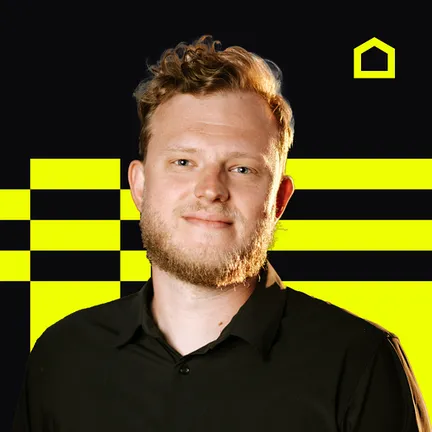
Filip Szamborski
Co-founder & CEO

Your message goes to
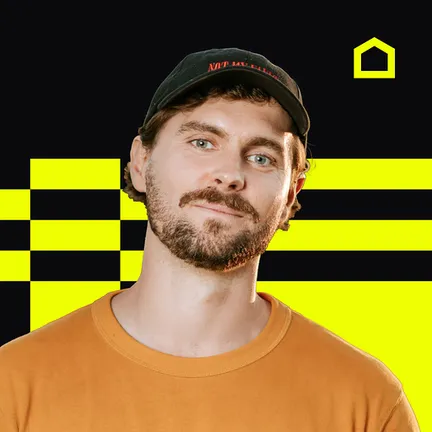
Karol Oponowicz
Co-founder & Business Owner
Your message goes to
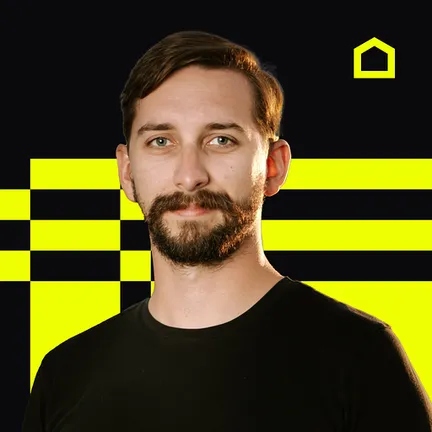
Paweł Zieliński
Co-founder & Business Owner
SO FAR WE HAVE WORKED WITH BRANDS LIKE:





Thank you for your message.
We read every message ourselves and get back to you within 48 hrs on business days.
Something urgent? hello@ordergroup.co