

Energy management system software for batteries and solar

Order Group, a software house in Warsaw, builds EMS software for battery and solar sites that mix brands, run offline or follow grid operator commands.

Book a free consultation

Tell us about your sites.

Tell us which batteries, inverters and markets you work with.

  • Zeronest installations

    3,000+

    Prosumer storage installations on the Zeronest EMS (April 2026)

  • Zeronest inverter brands

    16

    26 device variants controlled by the Zeronest EMS

  • Zeronest storage

    30 MWh

    Batteries under the Zeronest EMS

  • Skyfri plants

    7

    Solar and battery plants under the Skyfri EMS (2024)

  • Global Green storage

    15 MWh

    At Global Green's sites, under the EMS we are building

  • In production

    June 2024

    The month both the Zeronest and the Skyfri EMS went live

Who builds custom EMS software for battery storage?

We build custom EMS software for operators of batteries and solar and for companies that sell a platform on top of them. Energy management system software reads the meters, inverters and batteries on a site and sends them setpoints: when to charge, when to discharge, when to curtail production and when to trade, within the limits set by the grid, the contracts and safety. The EMS glossary entry explains the term in more detail.

We built the EMS of the Zeronest platform for homes with solar and storage and for the installers who look after them. For Skyfri we built the EMS under its platform for solar and battery plants, with more than 4 MW of battery power and more than 5 MWh of capacity. Since December 2025 we have also been building an EMS for Global Green, an operator of solar and battery sites in Germany and Canada. The rest of our energy work is on the energy software development page.

Zeronest

Home battery EMS and solar monitoring in one platform

EMS and BESS Software Development

Control

Home battery EMS for a prosumer fleet

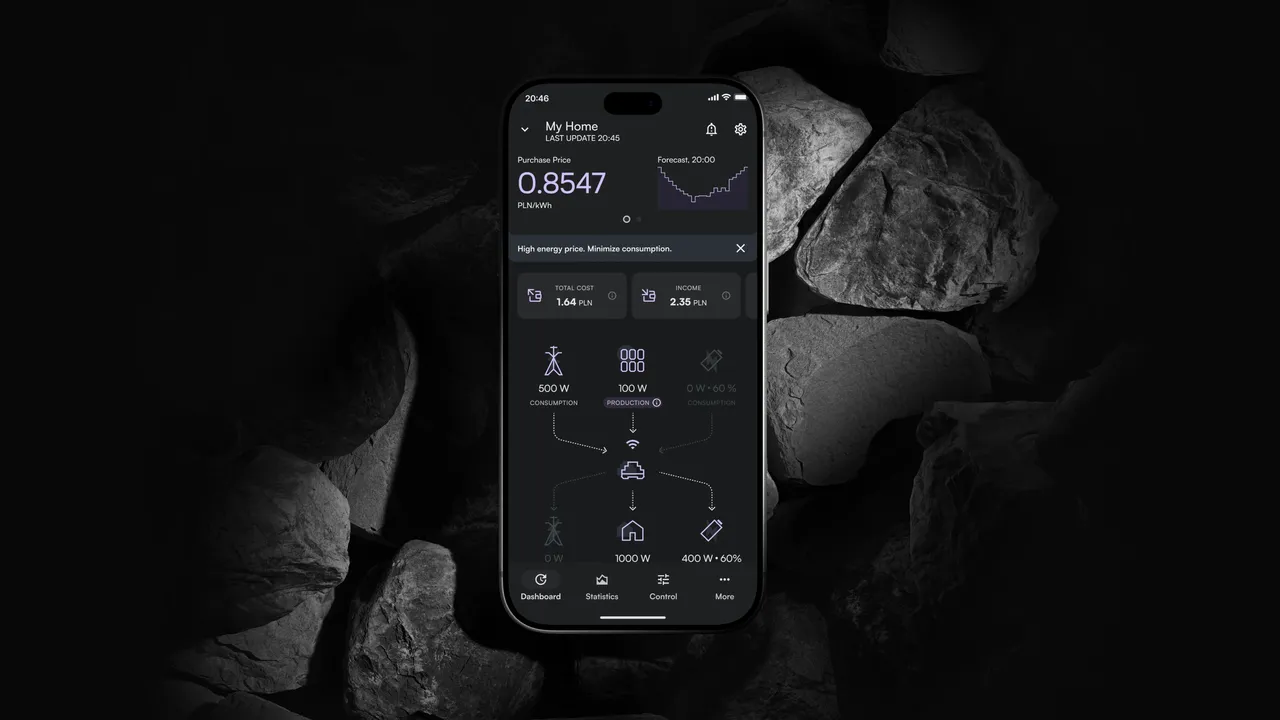
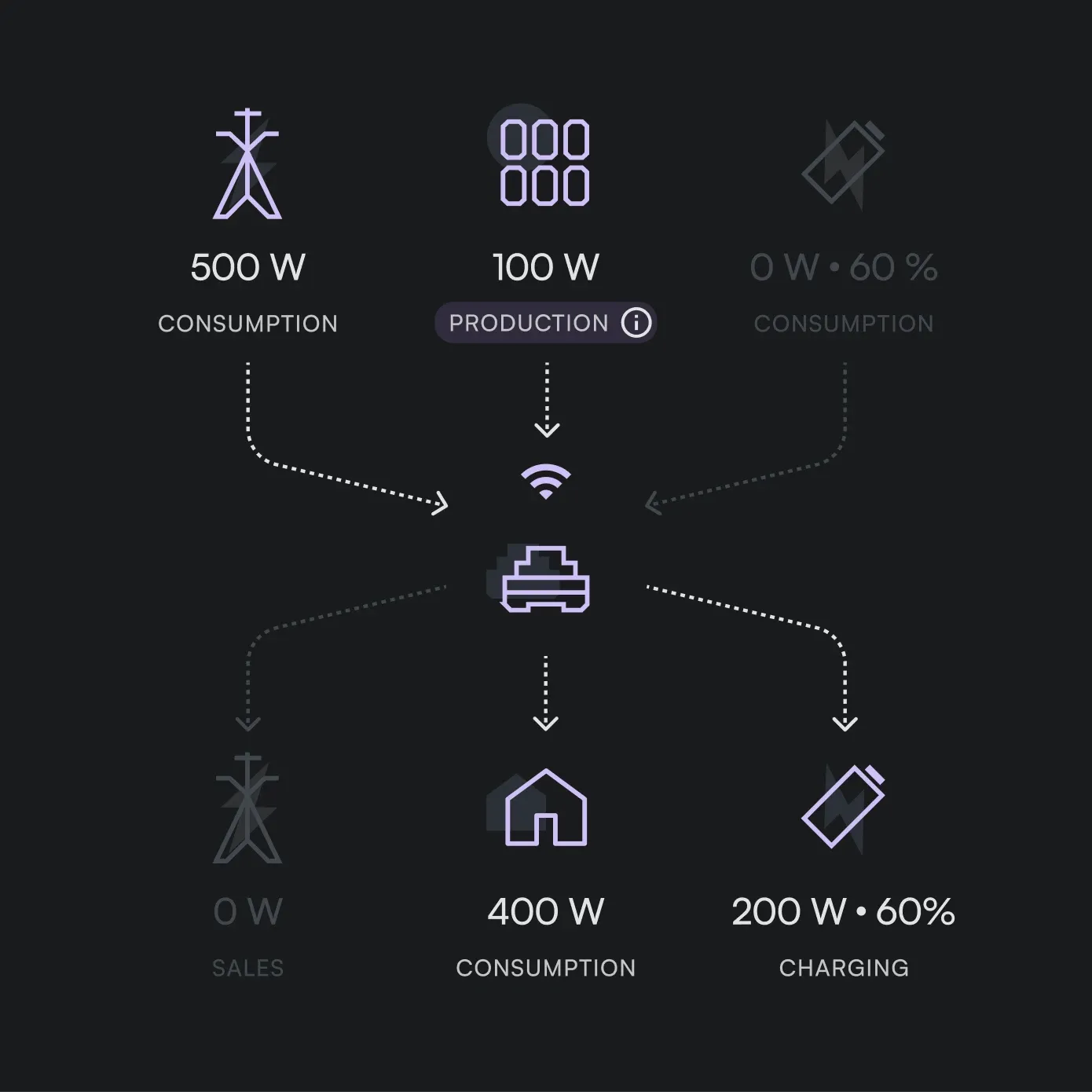
Once a minute, the Zeronest EMS decides for each battery whether it charges, discharges or sells energy to the grid. It weighs live readings, day-ahead and intraday prices, dynamic and time-of-use tariffs, consumption history and the weather forecast, and protects battery life in every cycle. A storage system runs in one of three modes:

  • off;
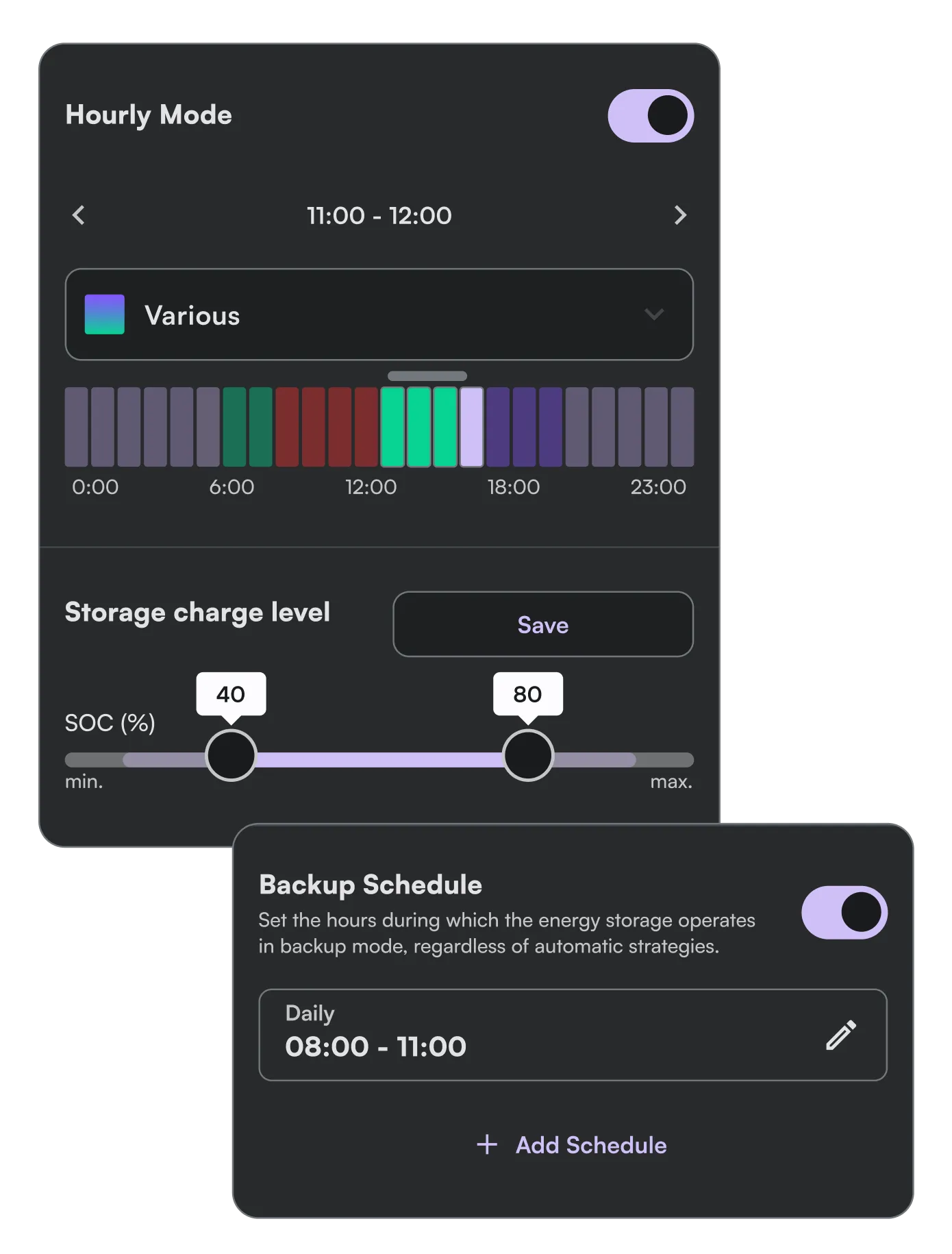
  • manual, with five behaviors: charge, discharge, antireflux (no export to the grid), self-consumption and hold, set permanently or on an hourly schedule;
  • automatic, with a defensive, neutral or aggressive strategy.
Read the Zeronest case study
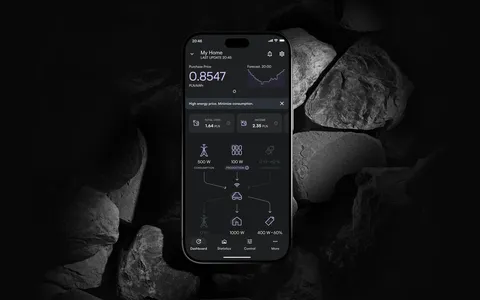
Zeronest energy flow diagram: production, consumption, battery charging and grid

Monitoring

Solar monitoring software that also runs the battery

At Zeronest and Skyfri, monitoring and control use the same data, so the EMS acts on the readings the dashboard shows. The Zeronest platform serves homeowners, businesses, installers, aggregators, energy cooperatives, energy clusters and local governments.

  • What the panels produce, what the battery does and what that energy is worth.
  • Installation status and alerts for installers, with fleets sorted by battery capacity or connection state.
  • A production forecast built from tomorrow's weather.
  • The app also works without solar panels, on smart-meter data alone.

Should I use the battery vendor's EMS or a custom EMS?

When each kind of EMS fits
SituationVendor EMSCustom or extended EMS
Battery and inverter brandsOne brandSeveral brands mixed on one site or across a fleet
Operating modesStandard modes are enoughYour own strategies or models
ConnectionStable linkThe site has to keep working offline
MarketsNo tradingEnergy trading or balancing markets
Grid operatorNo commands to followGrid operator commands and export limits
CustomersNo platform of your ownYour own platform for your customers

The EMS between the battery and the market

In the EMS projects we build, data and setpoints travel between the inverter, the cloud, the grid operator and the user.

  1. On site

    • Inverters Zeronest controls 16 inverter brands, among them Deye, GoodWe, Hoymiles and Sungrow.
    • Batteries and BMS Batteries from several manufacturers, each with its own BMS limits.
    • Meters Production, consumption and battery state for each installation.
  2. Edge

    • EMS controller Runs on site: Skyfri on Azure IoT Edge, Global Green on an industrial computer.
    • Zeronest device Own SIM and LTE, wired to the inverter over RS485 and Modbus, independent of the vendor cloud and home Wi-Fi.
  3. Cloud

    • IoT ingestion MQTT over TLS: AWS IoT Core at Zeronest, Azure IoT Hub at Skyfri.
    • Zeronest engine Decisions per battery from readings, prices, tariffs and weather, plus an inverter state forecast every hour.
    • Device simulator Global Green: new logic is tested on a simulator in AWS.
  4. Users and markets

    • Prosumer and installer apps Battery modes, schedules, installation status and alerts.
    • Web management platform Fleet control for installers, cooperatives and operators.
    • Grid operator and markets Export limits, operator requests and trading setpoints.

Software we build

Readings travel from the site to the cloud, and setpoints travel back to each inverter and battery.

One battery can trade, shave peaks and serve aFRR, but not with the same kilowatt-hours.

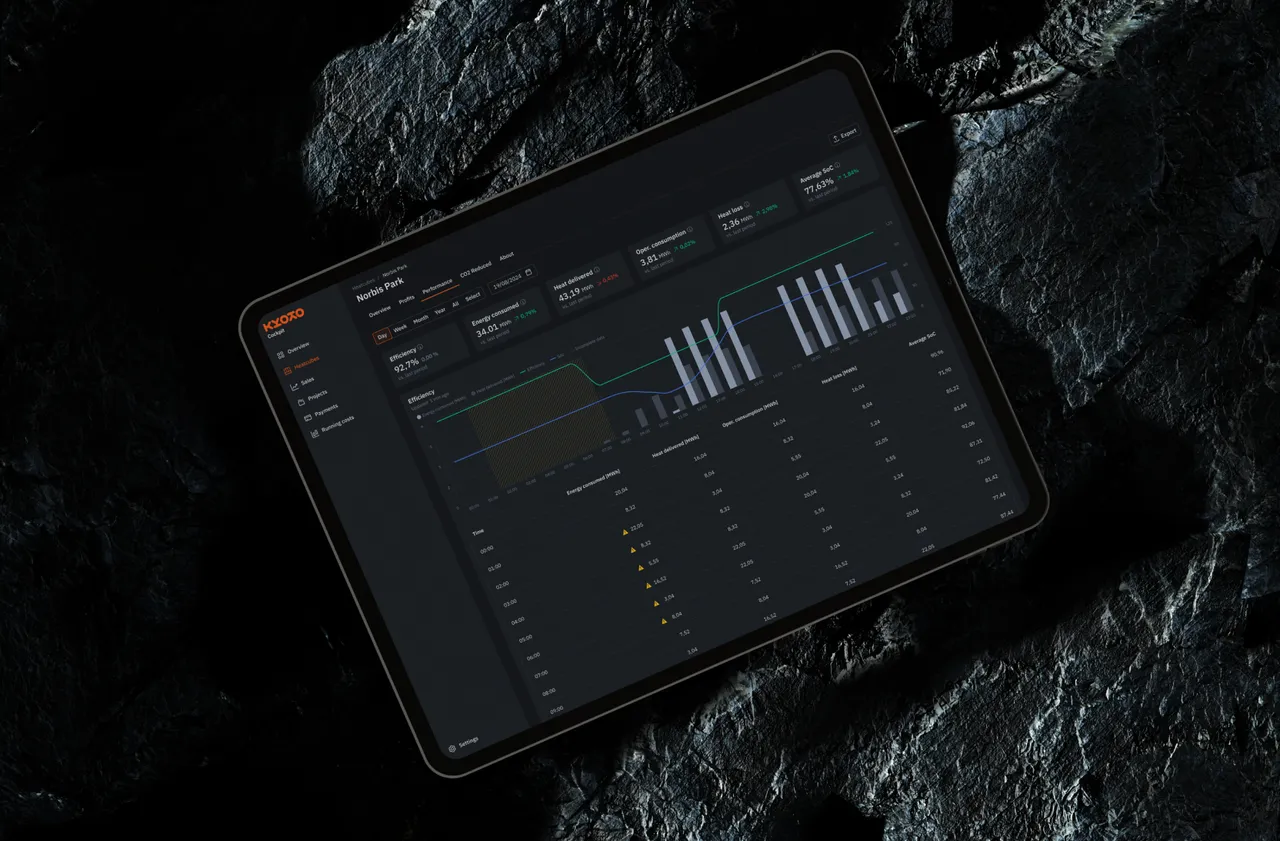
Skyfri

Can one battery do trading, peak shaving and aFRR at the same time?

Yes, if the EMS reserves state of charge and power for each commitment, including the power held back for aFRR. For Skyfri we designed the architecture and built the EMS under its platform for solar and battery plants. It schedules charging, discharging, peak shaving and trading through a partner across several batteries and inverters on one site.

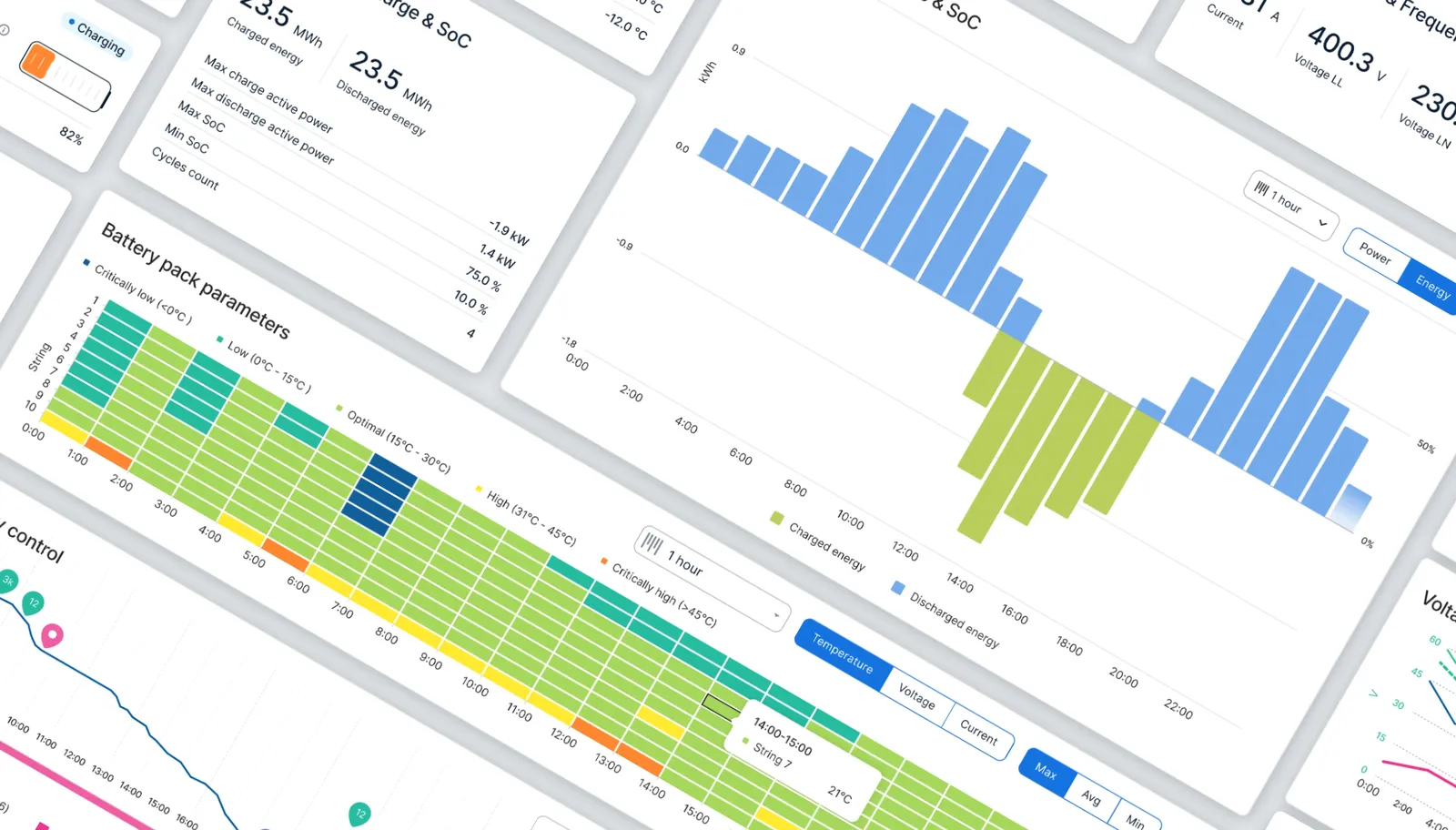
BESS monitoring dashboard with energy, temperature and battery charts.
  1. Power and SoC limits

    Maximum charge and discharge power, the minimum and maximum state of charge, and the cycle count.

  2. Charge and discharge

    Energy charged and discharged hour by hour across the day.

  3. Battery pack

    Temperature, voltage or current, string by string across the pack.

  4. Lab validation

    Validated in Socomec's energy storage lab near Strasbourg, then rolled out in Germany and Sweden.

How a BESS energy management system settles conflicts

When two commitments compete for the same battery, the EMS applies the priority written down for that case. In the EMS we are building for Global Green, each function is a separate controller with its own priority: export limits from the grid operator, direct battery commands, PV and export caps, a safety limit and trading. The system warns when no fallback controller has been set. Since September 2026 the current version has run on the site controller.

The next piece is an orchestrator that combines setpoints from energy trading, aFRR and direct control, resolves conflicts and only then splits the result across batteries. It is still being built. Its loss compensation was ready by July 2026, so the declared power reaches the grid connection point.

How do you choose an energy management software company?

Ask for four things in the specification, then look for them in the vendor's past projects.

  • Local control

    The control loop and safety limits run on an edge device on the site itself.

  • Setpoint read-back

    Every setpoint is read back from the device to confirm what it holds.

  • Cycle log

    Each cycle logs its inputs, the active rule and the setpoint it sent.

  • Simulator tests

    New logic runs on a simulator with the site's interfaces before a real battery.

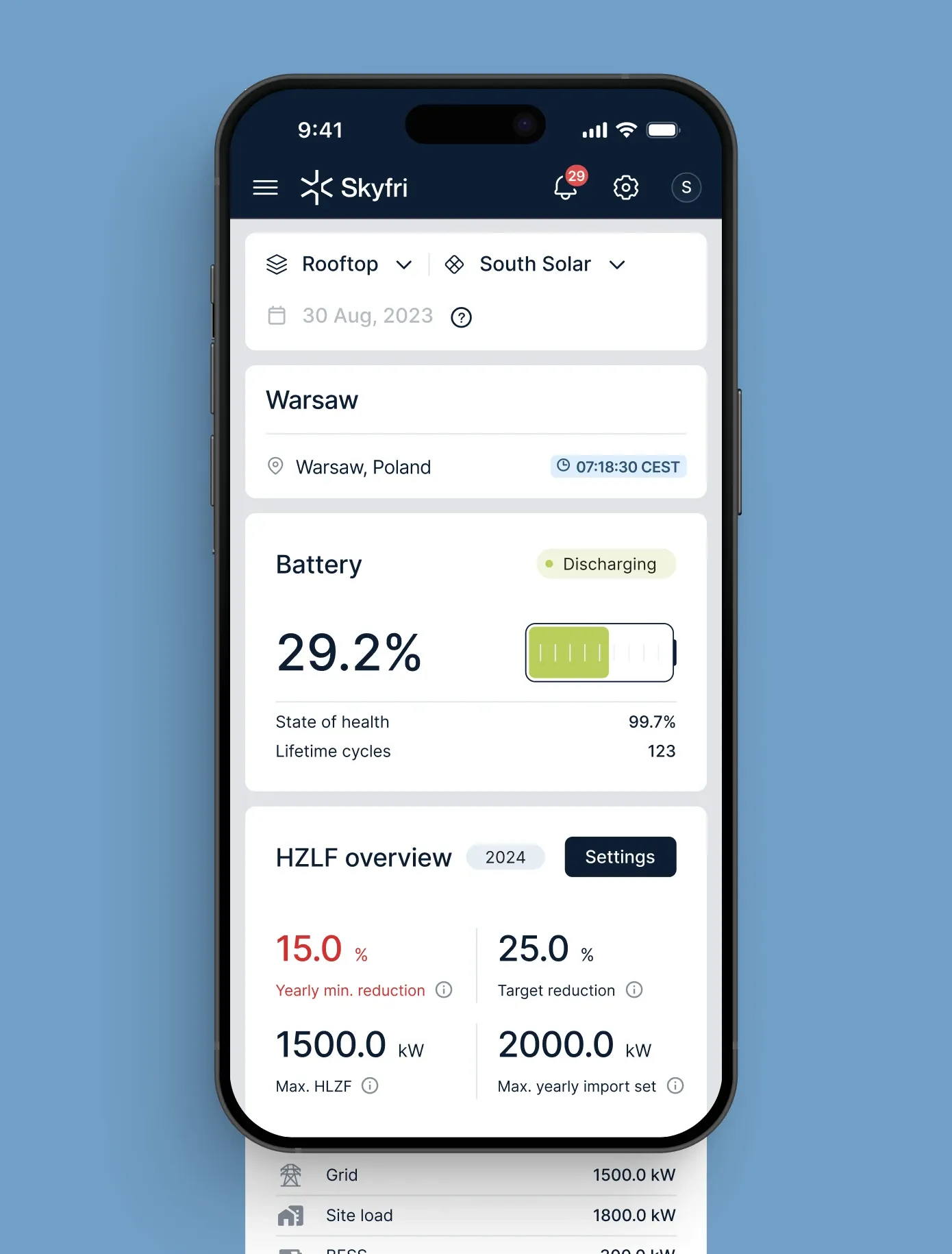
Skyfri mobile app on a phone showing battery charge and HZLF peak reduction targets for a site

Industrial energy management system and C&I energy storage

The EMS keeps a C&I site within its grid connection and tariff.

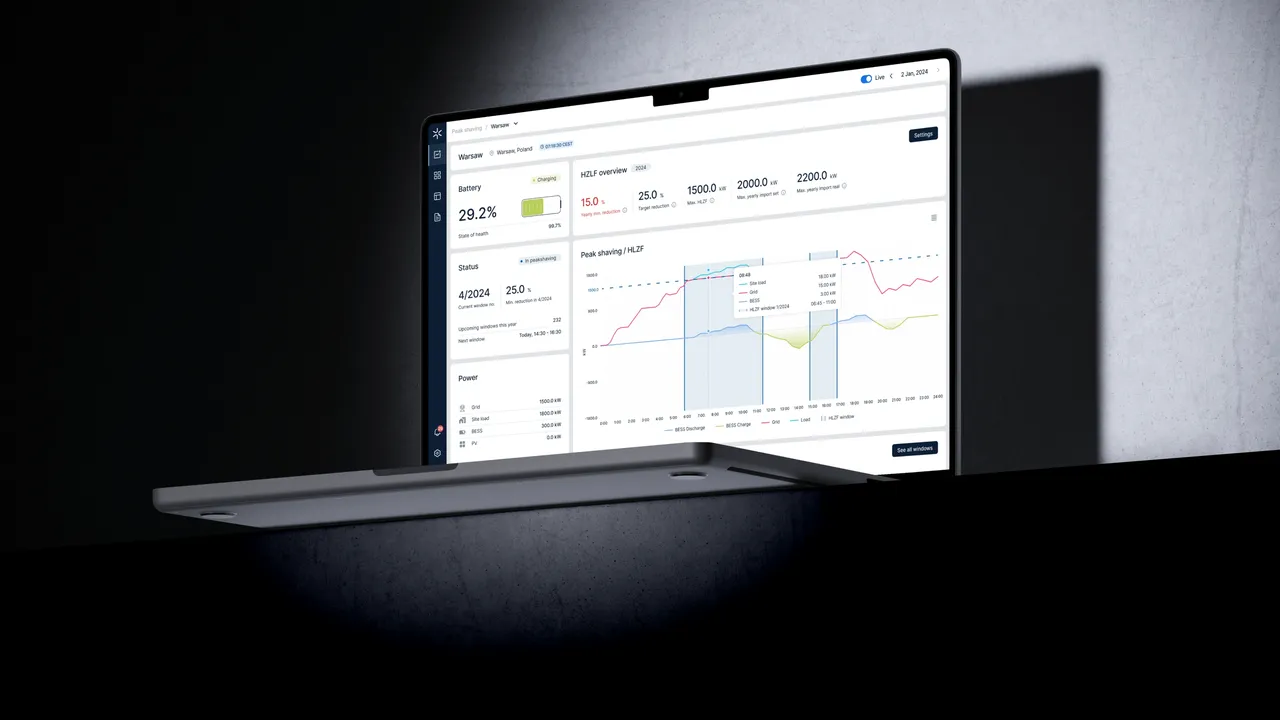
  • Peak shaving: the battery discharges when the site's load would go above its limit
  • Skyfri's EMS started from the high-load windows (HLZF) in German network charges
  • PowerShift (2026, for Enerace) plans machine runs around energy prices and the Polish capacity fee

Plus the KYOTO Group digital twin

Why teams build their EMS with us: two systems live since June 2024

How we work

Energy management software development: building, rollout and support

Each stage ends with something you can check: an estimate, a release, a live site. Skyfri began with a Technical Feasibility Study in November 2023 and reached production in June 2024.

  1. Discovery

    A free meeting and a basic proof of concept or mockup give you an estimate. Extended discovery maps your assets and market constraints into a roadmap.

    Free

  2. Build

    Releases, each estimated before work starts. The Zeronest EMS work began in January 2024 and reached production in June 2024.

    Per release

  3. Deploy

    Rollout to your sites with monitoring in place, plus documentation and runbooks, with infrastructure as code for your team.

    Monitoring

  4. Support

    Maintenance under an SLA agreed in the contract. KYOTO Group, for whom we built a SCADA-based digital twin, came back in 2024 for product development.

    SLA

Where to start

Where is your EMS project now?

Pick the situation closest to yours. Each one starts with a free discovery meeting.

Our sites mix battery and inverter brands

First step

Map every device and the interface it exposes

We list the batteries, inverters and meters on your sites and check which protocols each one offers.

  1. A free discovery meeting about your sites and markets
  2. A list of the devices and protocols the EMS has to integrate
  3. An estimate for the first release

Our sites have to keep running without the cloud

First step

Agree what runs on site and what runs in the cloud

We go through each function of the EMS and agree where it runs: on the site or in the cloud.

  1. A free discovery meeting about your sites and markets
  2. A split of EMS functions between the site and the cloud
  3. An estimate for the first release

We want our own platform for our customers

First step

Scope the platform and the EMS underneath it

We separate what your customers see, such as apps and fleet views, from the layer that controls the batteries.

  1. A free discovery meeting about your sites and markets
  2. A scope for the platform and for the EMS under it
  3. An estimate for the first release

What buyers ask us before an EMS project.

Questions about EMS software

  • Yes, if the control loop and the safety limits run locally on site, with the cloud used for history, forecasts and configuration. The Skyfri EMS runs fully offline.

  • In our projects, Modbus over RS485 for the inverter link and MQTT over TLS to the cloud. At Zeronest each installation gets its own device that reports over LTE, independent of the manufacturer's cloud and the home Wi-Fi, and data reaches the cloud through AWS IoT Core. The Skyfri edge code is Python asyncio on Azure IoT Edge, with Azure IoT Hub in the cloud. We start by checking which interfaces your devices expose.

  • The Zeronest EMS has control modules for 16 inverter brands, including Deye, GoodWe, Hoymiles and Sungrow. For Global Green we handle MQTT communication and the Modbus register maps of batteries from two manufacturers.

  • In a battery energy storage system, the EMS decides when to charge and discharge and at what power, and it treats every limit the BMS reports as a hard constraint. The BMS protects the cells (voltage, temperature, state of charge, balancing and disconnection) and usually comes from the battery supplier. The PCS converts between AC and DC and carries out the power setpoint, while SCADA collects data and passes commands on. We build the EMS and validation prototypes; batteries and inverters come from your partners or ours. Our article on battery energy storage systems describes the whole system.

  • Yes. The Skyfri EMS carries out requests from the distribution system operator (DSO) and enforces the site's maximum load and export limits.

  • Yes, through a layer above the site EMS. For Zeronest we built a demand response module that splits an aggregator's call across metering points. Aggregation and virtual power plants are covered on our page about VPP and DSR software.

  • Next to the four control requirements (local control, setpoint read-back, a cycle log and simulator tests), list the interfaces each device exposes, the grid operator limits that apply to the site and a routine check of device configuration. The Zeronest EMS checks inverter configuration automatically at 02:30 and 14:30.

  • Yes. We build the control layer around your models or strategies, and the battery and grid limits are enforced underneath.

Paweł Zieliński

Co-founder & Business Owner

Book a free consultation
Wind turbines on snowy hills under a cloudy sky

Book a free consultation

Your message goes to

Filip Szamborski

Filip Szamborski

Co-founder & CEO

Thank you for your message.

We read every message ourselves and get back to you within 48 hrs on business days.

Something urgent? hello@ordergroup.co

Let's work together!

When needed, our engineers work with you in person at your office.

Fields marked with an asterisk (*) are required.

Order Group sp. z o.o. uses the information you provide only to reply to your enquiry and to keep a record of it (Art. 6(1)(b) and (f) GDPR). Details, including your rights, are in our Privacy Policy (opens in a new tab).

We reply within 48 hrs on business days - a person, not an autoresponder.

Using an AI assistant? It can send this inquiry for you or prepare a pre-filled form - instructions for it are in llms.txt.

SO FAR WE HAVE WORKED WITH BRANDS LIKE:

Accessibility settings

Text size

100%