Software development consulting that starts with a free discovery workshop

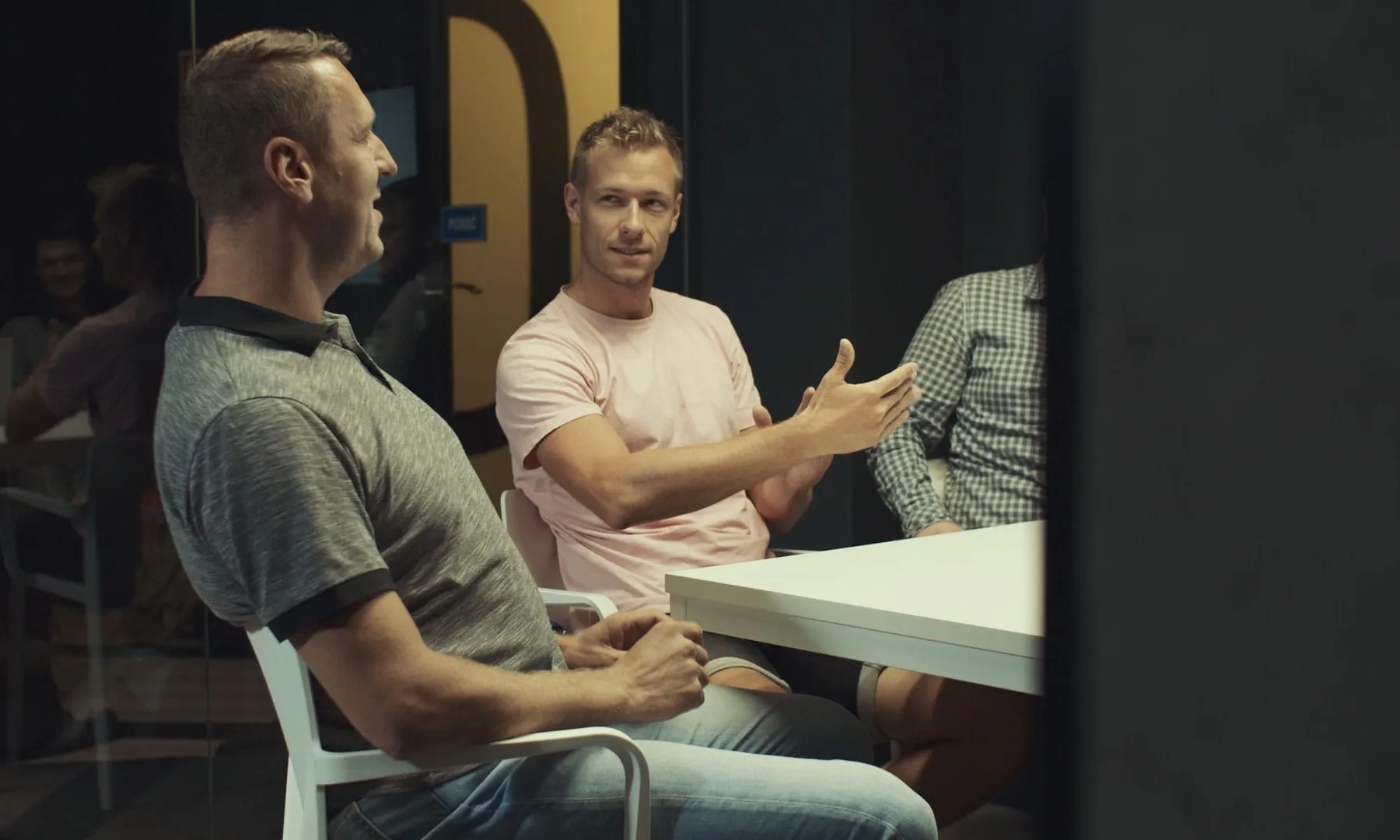
A decision made in a workshop room costs a conversation. Found during the build, the same decision costs a rewrite. That is why our software development consulting starts with a free discovery workshop, run by the engineers who then build the product.

Line illustration of a tablet with charts, a calculator and coins, representing consulting

What software development consulting covers

Software development consulting is advice from the people who write the software. It settles which problem to solve first, which technology fits it, where the risk sits and what a realistic start looks like. The discovery phase is the early part of that work, the part that defines what will be built. The sections below follow a project in the order in which it happens.

When software development consulting makes sense

Four situations where an outside technical view helps.
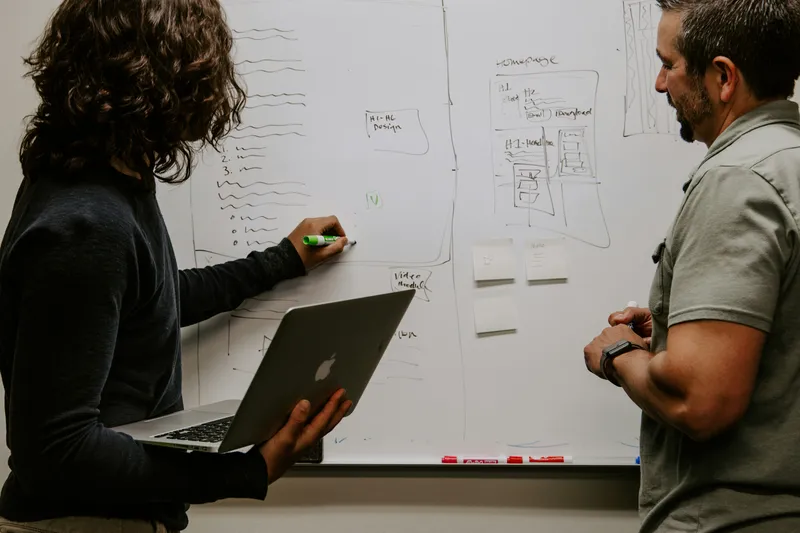
You have an idea but no scope

The goal is clear and the feature list is not. Discovery turns the goal into a scope with priorities before work on the build begins.
A system already runs

You are weighing changes to a system that is in use. A technical audit gives the facts about the system, and the next step follows from what it shows.

Integrations shape the plan

The product has to connect to other systems. Integration and technical questions belong on the agenda of the first workshop, before the schedule is running.

An AI idea needs a first test

Discovery for AI ideas uses our own AI toolkit. Sprints that test a proof of concept check the idea before the next stages, as they did for PSONI. For a product with AI at its centre, AI MVP development follows.

Which of the four services fits your situation

The four consulting and discovery services compared by starting point, first step and result.
ServiceStart here whenHow it startsWhat you receiveSeen in
Product discovery workshopYou have an idea but no scope, or integrations shape the planOne meeting, freeA written summary, a confirmed scope with priorities, a schedule of next steps, an estimate and a basic mockup or proof of conceptEnerace, Centrum Komunikacji
Technical auditA system already runs and a decision depends on its state: an investment, a takeover or scalingA free first conversation, then a kick-offA written report with recommendations and the order of changesSkyfri
Fractional CTOA product has to be built, the architecture is open, or technical decisions stallThrough discovery, in a project built by our teamA technical leader who owns architecture, standards, estimates and technical risksKYOTO, Mudita
AI product discoveryYou have an AI idea that needs a proof of conceptDiscovery with our own AI toolkitA proof of concept, then AI MVP development as the next stepPSONI

Discovery phase services, step by step

Free basic discovery and extended discovery

The basic discovery is free every time: one meeting, the discovery workshop, and a basic proof of concept or mockup prepared from it, which lets us estimate the work. Extended discovery is a separate and wider scope that can run for several months. The engineers who lead the workshop build the product afterwards, so the scope and the technical decisions stay with the same people.

The opening workshop

In one recent project, for an energy trading company, the opening workshop ran from 11:00 to 14:00. The agenda had four points: introductions between the teams, integration and technical questions, confirmation of the scope and the priorities of the modules, and next steps with a schedule. A written summary followed the meeting. When a workshop calls for it, we build mockups and interactive prototypes, usually in Figma.

Business goals, users and the market

Extended discovery starts with scoping sessions: a series of meetings and workshops with all the stakeholders and the product team. We learn the business goals, the needs of users and the market context, and we plan how to deliver a product that reaches those goals and fits the market without compromising what users need. We treat scoping and planning the timeframe as the most important stage of a project.

Roles on our side, on yours and in design.

Who takes part in discovery

Our side

A Project Tech Leader owns the technical side of the project, architecture and technical solutions included. A Project Manager or Scrum Master keeps the schedule and the process, and a Business Owner takes part in the workshop.

Your side

A Product Owner or a decision maker confirms the scope, and you can take the Product Owner role yourself. The decision maker is in the room, so the scope and the order of the modules are confirmed there, and the schedule of the next steps is agreed at the same table.
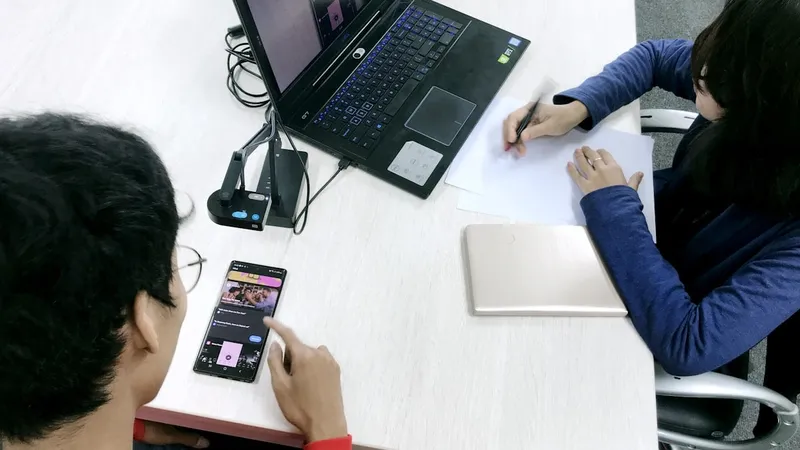
Product Designer

A Product Designer takes part in discovery as well. With your Product Owner, the designer shapes the product vision and writes the hypotheses to validate, and they become a roadmap and plans for product workshops. The designer also defines personas and maps user journeys, and the work happens in Miro, FigJam and Figma.

Terms explained

Hypothesis to validate

An assumption written so that it can be tested, for example that users finish a task faster with a new flow. A prototype or a conversation with users can confirm or reject it before development starts.

Requirements specification and user stories

A written description of what the system must do. A user story states each requirement from the user's point of view, in a form engineers can estimate and test.

Technical audit

An analysis of an existing system, its technology stack and the way it is built. It gives the team the facts to decide what to keep, change or extend.

Proof of concept

A small working model that tests whether an idea can work technically before the full product is built.

MVP

The first version of a product, with only the features needed to put it in front of users. In technical leadership its scope comes with a roadmap and a technical plan.

Scrum Master

The person who runs the Daily Scrum, Sprint Planning, Sprint Review and the retrospective of a project.

Big Room Planning

A planning meeting at which the people involved plan a longer stage of work together. At Order Group it is often run like a workshop.

The set depends on the project.

What you get after discovery

A written summary, scope and schedule

A written summary of the workshop records what was agreed and what happens next. It comes with the confirmed scope and a schedule of next steps.
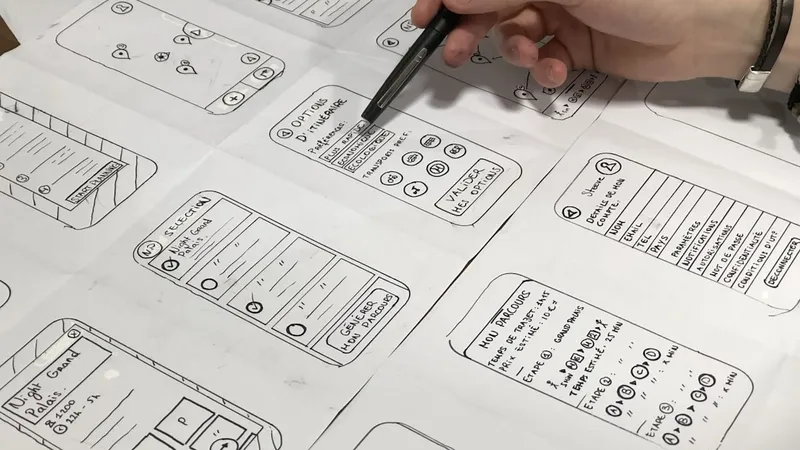
Basic discovery: scope, estimate and mockup

The free basic discovery ends with a confirmed scope, an estimate and a basic mockup or proof of concept. The wider set of documents in the table below belongs to extended discovery.

Requirements and user stories

When the project calls for it, discovery continues in writing, with a requirements specification and user stories for the first phase of the build.

The documents discovery produces

Which documents discovery produces and at which stage each one appears.
DocumentWhat it holdsWhere it comes from
Written summaryWhat was agreed at the workshop and what happens nextBasic discovery
Scope and module orderModules in priority order, confirmed with the decision makerBasic discovery
ScheduleThe next steps and their timingBasic discovery
Basic mockup or proof of conceptA first version that lets us estimate the workBasic discovery
Vision and roadmapThe product vision and the stages ahead, shaped with your Product OwnerExtended discovery
Personas and journey mapsWho uses the product and how they move through it, mapped on Miro and FigJam boardsExtended discovery
Hypotheses and workshop plansAssumptions written so that they can be tested, and plans for product workshopsExtended discovery
Flows, mockups and clickable prototypeThe product flows and screens, built in FigmaExtended discovery
Requirements specification and user storiesWhat the system must do, with each requirement written as a user storyExtended discovery
BacklogThe list of work items for the buildExtended discovery
MVP scope, roadmap and technical planThe scope of the MVP, a roadmap and an estimate of time and team compositionTechnical leadership

Four ways to start a project with us

Technology consulting services at Order Group

Each service has its own page with the scope and how to begin.

The table above shows which of the four fits your situation.

The technical audit

When to order an audit

The owner of a system orders an audit before an investment or a round of funding, before taking over a system from another vendor or team, or before scaling a product. We run audits only for the owner of the system. The decision after the audit is the client's, and the audit does not commit you to working with us.

What the audit covers

The audit covers code and architecture (the code audit), data processing and performance, infrastructure, a review of the security of code and configuration, and the delivery process with the practices of the team. The result is a written report with recommendations and the order of changes, discussed with you at a meeting.

How an audit runs

The first conversation takes place in a free discovery call. A kick-off follows, the project is entered in our data protection registers, and access is updated whenever the team changes. We work in your tools, analyse the current projects and the stack, propose solutions and agree the order of changes with you.

After the audit

If the audit points to changes in an existing system, legacy software modernization carries them out step by step on a system that keeps running.

Technical audit at Skyfri

Skyfri in Oslo asked for a technical audit to show what to change in the process of building the product. It lasted seven weeks, from 20 November 2023 to 7 January 2024. It covered data processing and performance, the product build process, team practices and the repeatability of interface components. The stack included React, C# and ASP.NET, Python and PySpark, Kusto/ADX, Databricks and Azure.

A feasibility study first

The collaboration with Skyfri opened with a Technical Feasibility Study in November 2023: a market analysis, a feasibility study and a technical specification. The architecture and the implementation of the energy management system (EMS) followed.

From audit to production

After the audit the team held a Big Room Planning session to plan the next, longer stage of work. The talks in Oslo produced a new project, the EMS, and since January 2024 our engineers have worked inside the Skyfri team. The work runs in four streams: the EMS, monitoring and asset management, data and onboarding, and industrial design. The teams work as one unit, with no handoff after the launch.

The EMS in production

The EMS controls the batteries across 7 plants. It decides when they charge and discharge, runs peak shaving, which cuts the short peaks of consumption, and energy trading, answers requests from the distribution system operator and keeps exports within the grid connection limit. It runs fully offline, because a control decision cannot wait for a lost connection. It has been in production since June 2024, and the batteries total more than 5 MWh, with more than 4 MW of battery power.

The stack behind it

The EMS stack is a React frontend, a Python asyncIO backend and a Databricks data pipeline. Azure IoT Edge and Azure IoT Hub connect it to the field, and it is hosted on Azure.

Fractional CTO: technical leadership in the project

What fractional CTO means

A fractional CTO is an experienced technical leader who works with a company part time, sets the technical direction, decides on the architecture and guides the engineers. CTO as a service is the same role delivered by a firm, and a full-time CTO is employed by the company. Startups and scale-ups without a technical leader look at the first two when an employee is not yet the right step.

Our model

At Order Group, our CTO and a Project Tech Leader take the role inside a project that our team builds. The person who sets the architecture works next to the engineers who write the code, and the way in is the free discovery workshop.

Who plays the role

Every project has a Project Tech Leader, the person with the most technical knowledge in the project, appointed by our CTO together with the heads of the frontend and backend teams. Our CTO, Maciej Sułek, co-founded Order Group in 2013 and led projects as a tech lead in the first years of the company.

When a company needs the role

A company needs a technical leader when a product has to be built and the architecture is still open. It needs one when estimates arrive and the business cannot verify them, or when technical risks sit in people's heads and not in a plan. The role also fits a team that writes code without shared standards or code review, and a project where technical decisions stall because nobody has the last word.

Architecture and requirements

The technical leader proposes technical solutions that fit your business goals. The leader also turns your functional and non-functional requirements into technical ones, and our CTO can also write them himself.

Standards, estimates and risks

The leader sets the code standards and runs the code review process. The leader verifies the estimates and identifies technical risks along with their impact on the project.

Decisions and closing the project

The leader takes part in the meetings with you and in technical decisions. When opinions differ, the Project Tech Leader has the last word, and when a skill is missing, the leader can propose a change in the team. The leader keeps the technical documentation and completes a technical checklist when the project closes.

Technical leadership on KYOTO

Maciej Sułek was Project Tech Leader on KYOTO in the first stage of the collaboration, and the team built the MVP. The collaboration resumed in 2024, and until December 2024 we developed the product in Scrum. Over three and a half years the project grew from a UX/UI MVP into a battery management system (BMS) based on SCADA, the supervisory layer that shows the state of an installation. The BMS monitors and controls the flow of energy in real time.

What we built for KYOTO

The scope covered cloud infrastructure on AWS, a planning and simulation platform, the BMS and SCADA dashboards. The stack was React.js, Python and AWS, with Terragrunt and Jenkins for the infrastructure. The system included surveillance functions, weather data collection, energy price analysis and a plant performance simulation interface.

How we worked on KYOTO

We worked in Agile and Scrum and added features as the needs of the plant grew. The team worked side by side with experts in thermal storage, hardware and energy markets, and regularly worked on site in Oslo to connect the hardware to the software.

Technical leadership on Mudita

Maciej Sułek has been Project Tech Leader on Mudita since July 2022 and wrote the technical requirements himself. The project is an app store for the Mudita Kompakt phone and a platform for over-the-air (OTA) updates of Mudita phones.

Project management in a consulting and discovery engagement

A Project Manager keeps the schedule, the scope and the communication.
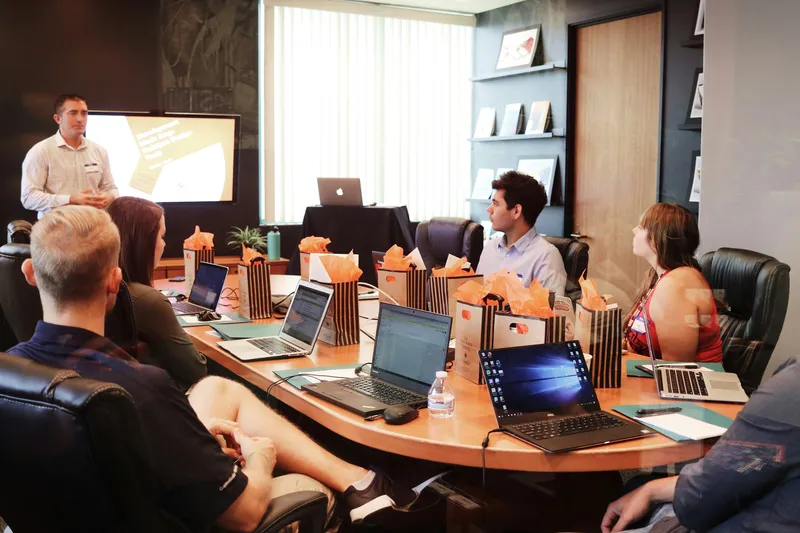
Roles and rhythm

The Project Manager is usually the Product Owner or the Scrum Master of the project, never both. The Project Manager organises regular project retrospectives, in addition to the Scrum events.
Schedule, changes and risks

The Project Manager is responsible for the schedule, the priorities of tasks and the deadlines, and watches progress with corrective actions when needed. A change outside the agreed scope is blocked until the client accepts it. Risks are identified and escalated to the Business Owner or the Head of Delivery.

Communication

Each project has its own Slack channel, clear rules for communication with the client, and meetings with an agenda and a kept timebox.

The client's tools

When the client prefers it, we work in the client's tools. At Skyfri that meant MS Teams, Outlook with accounts in the client's domain, Slack and the client's Jira, and at KYOTO Slack and the client's Jira.

From sprint to release and beyond

Sprints

Sprints, inspired by Scrum, cut the scope into parts that can be delivered in a short and controllable time. Each sprint ends with a release and a demonstration of the working part of the product.

Sprints on Zeronest

On Zeronest, an energy management platform, the same Order Group team has worked on the platform from the start, in one- or two-week Scrum sprints. An early version was shown at Intersolar Europe in June 2024, and the platform has been in production since then.

Practices in every project

Every project includes delivery at every demo, daily standups, peer review, code review and management tools. Tasks are written as user stories with story points, each task has a named person responsible, and the documentation stays live. The Project Manager or Scrum Master looks after the integration of the team.

Stabilization and release

In the stabilization stage we perfect every area that decides whether the product meets the expectations of its users. When the stage is over and the first users have given positive feedback, the first version is deployed to the production environment.

After the release

After the release we can monitor performance and analyse how users interact with the product.

Staying with the product at Enerace

At Enerace the team stays with the product through workshops, estimates, delivery, testing on staging, release and maintenance. Production monitoring sends alerts to the team on Slack, a separate staging environment runs on an anonymised copy of production, and the mobile app is updated to meet app store requirements.

Regular upkeep at Enerace

Regular upkeep keeps the Enerace platform on current versions, so it takes new modules without a rewrite. The stack went through major modernisations in 2022, 2023, 2025 and 2026.

Delivery stages at Centrum Komunikacji

The system lives in a shared React and React Native (Expo) repository, with code shared between web and mobile and CI/CD from the first weeks. Stage 1 went to the client for testing in September and October 2025. Stage 2, from February to April 2026, covered production infrastructure, security and performance tests, the WCAG audit, training for the client's staff and publication in the app stores.

Quality control at Centrum Komunikacji

The people who built the system deployed it and still maintain it. QA checks every change requested by the client's staff before it is closed.

Discovery in practice: seven projects

PSONI: extended discovery

The discovery phase for PSONI ran for about three months, from 17 March to 15 June 2026. It included discovery sprints and sprints that tested a proof of concept with AI before the next stages.

An energy trading company: from workshop to specification

A new client. The collaboration started with the opening workshop on 29 July 2026, and a requirements specification with user stories followed as the next phase of work. It closed the first phase on 29 September 2026.

Enerace: workshops through the life of a project

Enerace is another, long-standing client. Workshops came back there with later modules: the choice of architecture in 2021, the design of new modules, invoice import in 2024, and new views and the PowerShift module in 2025. The workshops on invoice import came before the invoice control module was built. One team has developed the product since 2020.

Centrum Komunikacji: planning workshops

The project began with planning workshops in July 2025. The requirements of the tender were divided into modules, each tied to a point of the specification. Production started on 20 April 2026, nine months after the first workshops.

Centrum Komunikacji: workshops with users

From September 2025 to January 2026, workshops and tests with Deaf and blind users produced a package of around 30 UX and UI changes. They included a high-contrast palette, button outlines, clearer selected states, a narrow content column, a help section and rejection reasons in Polish Sign Language. After training for the client's staff, the interpreters asked for a mirrored view of their own image, and we added it.

Skyfri: audit first, then the EMS

A technical audit came first, then the EMS and a collaboration inside the client's team. The details are in the section on the technical audit.

KYOTO: technical leadership and the MVP

Technical leadership in the first stage, which produced the MVP, and product development in 2024. The details are in the section on fractional CTO.

Mudita: technical leadership

Technical leadership since July 2022. The details are in the section on fractional CTO.

Why work with us

One team, an NDA and your code

The engineers who run the workshop go on to build the product, so you explain your business once and the people who heard it write the code. We sign an NDA before the workshop, and we describe some clients by their industry only. Copyright in the code transfers to you with each payment, for the uses listed in the contract.
Protection of your data

We are the data processor and you are the controller, with a separate data processing agreement for each project under Article 28(3) of the GDPR. Accounts are named, access runs through AWS IAM Identity Center on the principle of least privilege, and procedures are reviewed every 12 months. We report an incident within 24 hours at the latest. After the contract ends we delete or return your data within 10 working days and confirm it in writing within 7 days. The Security and GDPR page has the details.

Projects
160+

projects delivered since 2013 in 15+ industries

Team
40+

people work at Order Group

Clutch
5.0

average rating from 18 verified reviews

Workshop
Free

the basic discovery workshop

Product & discovery

Guides and insights
All 11 articles about Product & discovery

Consulting and discovery, answered

FAQ
Karol Oponowicz
Karol Oponowicz
Co-founder & Business Owner
Book a free discovery call
  • The discovery phase is the stage before development, in which a team settles what to build, for whom, in what order and under which technical constraints. It turns an idea into a scope the team can plan the work from. For a new product our discovery phase services are the first stage of the collaboration, and the same engineers go on to build it.

  • Yes. The basic discovery is free every time: one discovery workshop and a basic proof of concept or mockup prepared from it, which lets us estimate the work. Extended discovery is a separate, wider scope that can run for several months, as it did for PSONI.

  • It depends on the scope. The opening workshop in one of our projects took three hours, while the extended discovery phase for PSONI ran for about three months, from 17 March to 15 June 2026. The agenda of the opening workshop had four points, and a written summary followed it.

  • A written summary of the workshop, a scope confirmed by the decision maker and a schedule of next steps. The free basic discovery adds an estimate and a basic mockup or proof of concept. Journey maps, user flows, prototypes, a backlog and user stories come with extended discovery.

  • Engineers who go on to build the product. On our side a Project Tech Leader, a Project Manager or Scrum Master and a Business Owner take part, and a Product Designer works with your Product Owner. You can take the Product Owner role yourself.

  • A clear idea still rests on assumptions about scope, integrations and priorities. The workshop checks them with the people who will build the product, and integration and technical questions are on its agenda.

  • Our technology consulting services are discovery workshops, a technical audit, fractional CTO services and AI product discovery. For a product built around AI, AI MVP development is the next step, and for an existing system we offer legacy software modernization.

  • A Project Manager keeps the schedule, the priorities and the deadlines, and blocks changes outside the agreed scope until they are accepted. Risks go to the Business Owner or the Head of Delivery, and the Project Manager organises regular retrospectives. Each project has its own Slack channel, and we work in your tools when you prefer it.

  • Yes. We sign an NDA before the workshop, so you can describe your product openly. Some of our clients appear on this page by industry only, like the energy trading company.

  • No. Discovery fits any moment when the scope is uncertain: a new product, a new stage of an existing one or a first project with a new partner. Enerace, a long-standing client, held workshops again with later modules in 2021, 2024 and 2025.

  • You do. Copyright in the code transfers to you with each payment, for the uses listed in the contract. The Security and GDPR page has the details.

  • We act as the data processor and you are the controller, with a separate data processing agreement for each project. Access goes through named accounts and AWS IAM Identity Center on the principle of least privilege. We report an incident within 24 hours at the latest, and after the contract we delete or return your data within 10 working days. The Security and GDPR page has the details.

  • Book a free discovery call through the contact form and describe what you want to build. We reply to the form within 48 hours on working days.

Developer with headphones coding at desktop monitor in an open office

Tell us what you want to build

Your message goes to

Filip Szamborski

Filip Szamborski

Co-founder & CEO

SO FAR WE HAVE WORKED WITH BRANDS LIKE:

Thank you for your message.

We read every message ourselves and get back to you within 48 hrs on business days.

Something urgent? hello@ordergroup.co

Start with a discovery workshop

Book a free discovery call, the first stage of your software project.

Fields marked with an asterisk (*) are required.

Order Group sp. z o.o. uses the information you provide only to reply to your enquiry and to keep a record of it (Art. 6(1)(b) and (f) GDPR). Details, including your rights, are in our Privacy Policy (opens in a new tab).

We reply within 48 hrs on business days - a person, not an autoresponder.

Using an AI assistant? It can send this inquiry for you or prepare a pre-filled form - instructions for it are in llms.txt.

Accessibility settings

Text size

100%