
Loan origination software development
If the amount in the app is not the amount in the agreement, the customer sees it first. Aasa24 has 13 application steps and SMS signing. The AvaFin app takes its steps from the core system and verifies bank accounts.
Tell us about your core system.
A few details help us prepare for the first call.







What loan origination software covers, and which part we build
Lending software has three layers: a loan origination system (LOS), a loan management system (LMS) and the customer app or portal that talks to both. The LOS takes a loan from application to payout: the application, verification of the applicant's data, the decision, the offer, the agreement and the payout. The LMS services the loan afterwards. Many vendors sell the LOS and LMS as one product. Loan origination software development, as we do it, means building the application part of the customer layer and connecting it to the lender's core system. Servicing after payout is covered on our loan management software development page, and the wider field on our lending software development page.
Since May 2023 we have built and developed Aasa24, the lending app of Aasa Polska. Since January 2026 we have been building the mobile app of AvaFin Poland. Both are loan institutions supervised by KNF.
Our side: the customer channel
- The mobile app for iOS and Android in React Native, with the loan calculator and the application flow.
- The backend of the app and an admin panel.
- Integrations with your core system, payment providers, open banking, the KYC (know your customer) provider and the card issuer.
Your side: the core system
- Credit decisions.
- The pricing engine, including the APR calculation.
- The loan book.
The identity verification service is run by an external provider, which we integrate.
The Aasa24 backend is ours: Django, PostgreSQL and Celery on AWS, with infrastructure in Terraform. It takes loan data, statuses and calculator parameters from Aasa's core system through an API.

The loan application as a set of states
A loan application is a chain of steps, and several of them depend on outside services: identity verification, bank account verification, credit bureaus and the PESEL restriction register. Any of them can fail to answer or return a result that needs a person to decide. For that reason we build the application as a set of explicit states that the customer can see.
Aasa24 has 13 application steps, with open banking and contract signing by SMS, and more than 40 application and loan states turned into plain messages. While the decision is pending, the AvaFin app shows a screen saying the application is being analyzed.

KYC, bank account verification and the PESEL check
KYC, bank account verification and the PESEL check are three separate steps of the loan application, each with its own status.
Bank account verification
AvaFin customers verify a bank account by logging in to their bank through open banking or with a verification transfer. The check runs at registration and in the loan application.
PESEL and multi-level verification
In Aasa24 the PESEL restriction check, a flag Poles can set on their national ID number against identity theft, is a step of the application with its own status. Verification works on several levels: KYC with a document scan, PESEL with an SMS code, and repeat or manual verification in difficult cases. A customer can retry after a negative result.
In Aasa24 the application for a payment card with a renewable limit has its own KYC status. A positive bank account verification moves it on to KYC, and a customer whose application was rejected after three failed attempts can go through KYC on a new application.
One pricing engine, steps set by your core system
In the AvaFin app the core system decides the order of the loan application steps, and the app displays them. Changing the order or the scope of the steps does not need a new app version.
The AvaFin calculator shows guests and logged-in customers the amount, period, cost, APR, repayment date and promo codes. Prices come from the same pricing engine as the core system, so the amount in the app is the amount in the agreement.
Aasa's team changes calculator parameters, documents and messages in the Aasa24 admin panel, without a release in the app stores.

Buy a loan origination system or build your own origination channel
If you are choosing loan origination system software, a ready-made LOS gives you the decision, the rules and the bookkeeping from the vendor. An origination channel of your own on top of your core system gives you your own application flow, your own screens and changes without waiting for a vendor. Which one fits depends on the lender, and a free discovery workshop is where we work that out with you.
What the decision system has to do, whoever supplies it
These requirements hold for a decision system whether you buy it or build it.
- Every decision is recorded with its data and the versions of the rules it used, and the rules are versioned.
- A person can review a decision.
- Fraud checks are a separate module.
- Cheaper checks run before paid queries to credit bureaus.
- One pricing engine serves all channels.

CCD2, consumer credit law, AMLR and the AI Act in loan origination
CCD2, the Consumer Credit Directive 2 (Directive (EU) 2023/2225), applies through national rules from November 20, 2026. As of October 2026, Poland has not published a new act implementing it. In a loan application these provisions end up on screens, in consents and in the decision flow.
What CCD2 changes in the loan application
- Every advertisement, including a calculator, carries the cost warning (Article 8).
- The information form must be consistent and legible within the limits of the medium (Article 10(6)). In an app we read that as legibility on a phone; the article itself does not mention phones.
- Tying is prohibited (Article 14).
- Pre-ticked boxes are not consent (Article 15).
- An offer the customer did not ask for waits for their agreement (Article 17).
- The lender documents the creditworthiness assessment, and after an automated assessment the consumer can ask for human intervention (Article 18). In an app that means a request path and a review queue.
The Consumer Credit Act in Poland
The assessment comes before the agreement (Article 9). A loan institution may grant credit only after a positive assessment (Article 9a). The PESEL restriction register is checked before every agreement and every amendment that increases the debt (Article 9b). The information form goes to the consumer on a durable medium (Articles 13 and 14).
AMLR and the AI Act
From July 10, 2027, Article 22(6) of the AMLR, the Anti-Money Laundering Regulation (Regulation (EU) 2024/1624), names an identity document or electronic identification with qualified trust services for identity verification. A verification transfer and a bank login are not on that list.
Under the AI Act, AI systems that evaluate the creditworthiness of natural persons are high-risk, except AI systems used to detect financial fraud (Annex III, point 5(b)).
We do not describe the apps we build as CCD2-compliant. The legal reading stays with your lawyer. Our article on CCD2 in lending apps goes through the application flow in more detail.
Security and consent in the origination flow
Aasa24 masks screens with sensitive data in analytics and session recordings. The PIN never appears as plain text, and the app has been through external penetration tests. Analytics starts only after the customer's consent.
In the AvaFin app, analytics and crash reporting wait for the customer's decision, which the app reads from the consent management platform.
Two lenders under KNF supervision
Why lenders build with us
We have built Aasa24 since May 2023 and the AvaFin Poland app since January 2026. A free discovery workshop gives you an MVP scope and a roadmap.
Minimum budget in our custom software projects: 25,000 EUR. A working MVP usually takes about 3 months, a full product 7 months or more.
Where to start

Questions lenders ask us
Loan origination software development - FAQ

-
Loan origination software takes a loan from application to payout. We build the customer side: the app, KYC, bank account verification and contract signing, plus the backend and integrations with your core system. Decisions, pricing and the loan book stay in your core system. The glossary entry has the full definition.
-
Credit decisions, scoring, the pricing engine and the APR calculation stay in the lender's core system or in the LOS you buy, and our app shows their results. We build the customer channel: the app with the calculator and the application, KYC, bank account verification and signing, and the integrations with your core system.
-
A ready LOS brings the decision, rules and bookkeeping from the vendor. Your own channel on your core system gives you your own flow and screens, with changes made without waiting for a vendor. The answer depends on the lender. A free discovery workshop is where we work it out.
-
Through an API between your core system and the app's backend. In the AvaFin app the core system sets the order of the application steps and the prices, and the app displays them. In Aasa24 the backend takes loan data, statuses and calculator parameters from Aasa's core system.
-
KYC, bank account verification and the PESEL check are each a step of the application with its own status. AvaFin customers verify a bank account by logging in to their bank through open banking or with a verification transfer. In Aasa24 verification works on several levels, including manual review. The identity service is external.
-
National rules apply from November 20, 2026, and as of October 2026 Poland has not published its implementing act. In an app they mean the cost warning in advertising, an information form that we read as legible on a phone (our reading of Article 10(6)), no tying, no pre-ticked consents, and human intervention after an automated assessment. We do not call our apps CCD2-compliant.
-
In our custom software projects a working MVP usually takes about 3 months and a full product 7 months or more, with a minimum budget of 25,000 EUR. The estimate for your project, with cost, timeline and team, comes out of a free discovery workshop.
-
Loan origination software takes the loan from application to payout. Loan management software services it after payout: the loan account, schedule, interest, payments, arrears and closure. The customer app is a third layer that talks to both. We cover the second on our loan management software development page.
Earlier fintech work
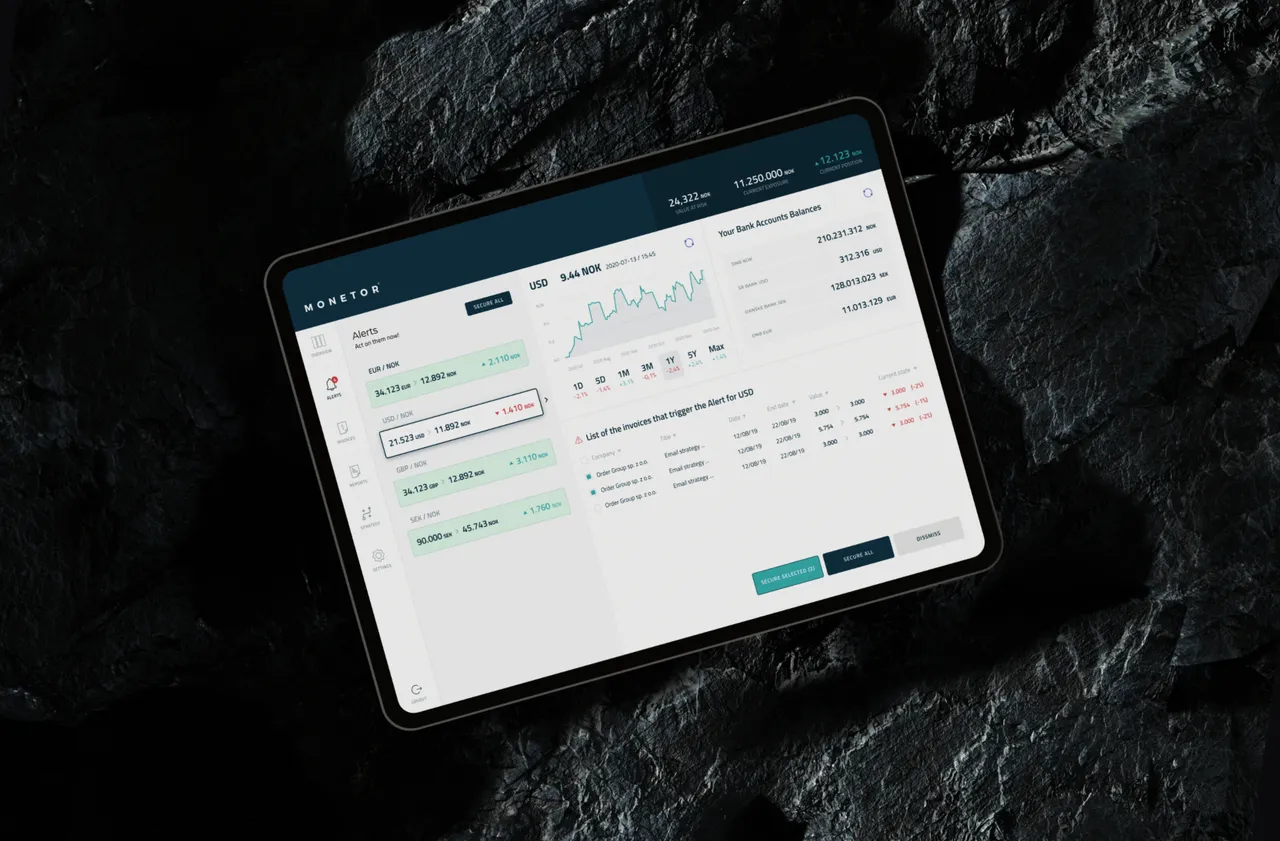
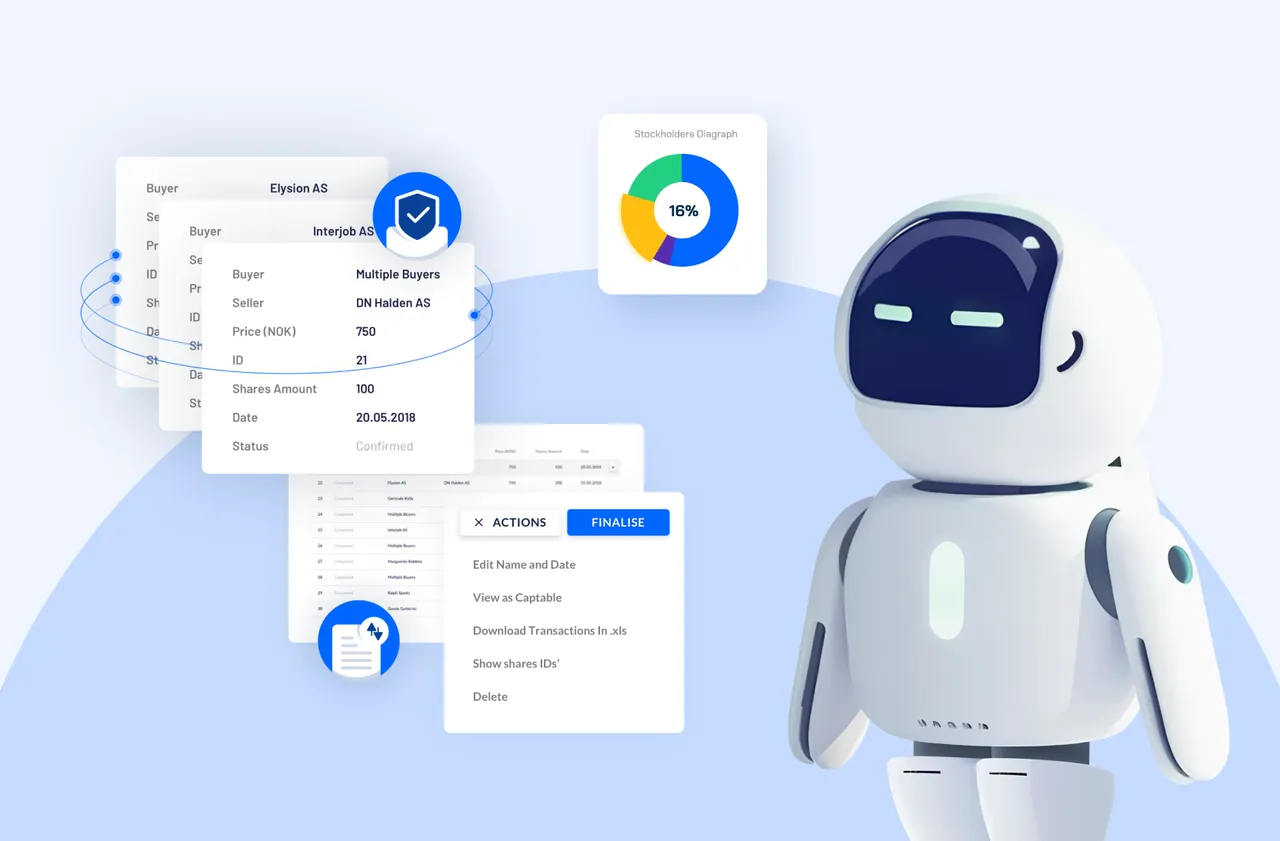
Monetor (FX risk web app) and BizBot (UX/UI redesign)
-
Monetor - A Web Application for Analysing Business FX Risk
The team is doing a tremendously good job and they are evolving with us throughout the process.
-
BizBot - There's No Successful App Without Solid UX
Order Group invests time to define the scope and ask clarifying questions. Their channels of communication lead to smooth remote project management.


Why talk to us about your origination channel?
Book a free consultation. We reply within 48 hours on business days and look at your core system and application flow.

Loan apps and core-system integrations for consumer lenders.
Your message goes to

Filip Szamborski
Co-founder & CEO

Your message goes to

Karol Oponowicz
Co-founder & Business Owner
Your message goes to

Paweł Zieliński
Co-founder & Business Owner
SO FAR WE HAVE WORKED WITH BRANDS LIKE:




Thank you for your message.
We read every message ourselves and get back to you within 48 hrs on business days.
Something urgent? hello@ordergroup.co