
Loan management software development: the borrower side
If the app shows a different amount than the core system, the borrower sees the mistake first. We build the app or portal the borrower uses after payout and connect it to your core system. Our lending clients are Aasa Polska (Aasa24) and AvaFin Poland.
Tell us about your core system.
A few details help us prepare for the first call.







What is loan management software, and which part do we build
A loan management system (LMS) services a loan after payout: the loan account, the repayment schedule, interest, payments, arrears and closure. A loan origination system (LOS) takes the loan from application to payout, and the borrower's app or portal is a third layer that talks to both but is neither. Loan management software development, as we do it, means building that third layer and connecting it to the lender's core system. Application and payout are covered on our lending software development page.
The main risk in loan management is a balance or a schedule that does not match the agreement. In our projects the loan book, interest, the repayment schedule and loan statuses stay in the client's core system, and the app shows what that system holds.
We have built and developed Aasa24, the lending app of Aasa Polska, since May 2023. Since January 2026 we have been building the mobile app of AvaFin Poland. Both companies are loan institutions supervised by the Polish Financial Supervision Authority (KNF).


Borrower portal and app: repayment, schedule, payment holidays, extension
A borrower portal is the part of loan management the customer uses: it shows what is owed and when, and lets the borrower act on it.
Aasa24
In Aasa24 the borrower pays an installment, makes an early repayment, takes a payment holiday (in the app since November 2023) or refinances (since August 2024), with no call to the contact center. The agreement, the repayment schedule and the repayment history can be downloaded as PDFs.
Several rules keep the screens in line with the loan. The app shows an installment as paid according to rules agreed with Aasa, the Pay button appears only when there is something to pay, and the schedule lists only active installment plans. The loan list can be filtered by status, with the filter running in Aasa's core system. For the credit card in the app, a repayment screen shows the minimum amount due.
AvaFin
The account area of the AvaFin app shows the amount to repay, the due date or the delay, the loan history with documents, and repayment and extension offers. A loan extension has its own path: the customer requests it, follows its progress and can cancel it. Some extension types ask for a document or a guarantor's statement, added from the camera or from files.
Payment and extension run in AvaFin's own webview inside the app. The app takes the customer to that step and refreshes the status when they come back.
Loan states: one source of truth for every screen
Every borrower screen depends on the loan's state, so the list of states is the contract between the core system and the app. Aasa24 turns more than 40 application and loan states into plain messages.
The AvaFin app handles 18 loan states, and each one has its own view on the home screen and on the loan screen. They include open, in extension, overdue with and without an extension, with a bailiff, in court, sold, assigned to another creditor, rejected and in acceptance. In AvaFin the loan state matrix is the single source of truth for screen design.

Payments and bank account verification
A borrower app takes repayments through a payment gateway and verifies the borrower's bank account. In Aasa24 repayments go through the Autopay payment gateway. The integration handles a change in the amount due and receives payment notifications over a secured channel.
AvaFin customers verify a bank account by logging in to their bank through Kontomatik, using open banking, or with a verification transfer through Autopay. The check runs at registration and in the loan application.
Integrating with your core lending system
A lending app connects to the core lending system through an API between that system and the app's backend.
In Aasa24 the backend is ours: Django, PostgreSQL and Celery on AWS, with infrastructure in Terraform. It takes loan data, statuses and calculator parameters from Aasa's core system and shows the customer's data from that system in the app. When the core system is unavailable, the app handles it without losing the customer's data. Aasa's team changes calculator parameters, documents and messages in an admin panel, with no new release in the app stores.
In the AvaFin app the core system decides the order of the loan application steps, and the app displays them. Calculator prices come from the same pricing engine as the core system, so the app and the core system price a loan the same way.

Collections, arrears and CCD2: what changes on the customer side
For the borrower, arrears are handled in the app: the screens with the amount due, the payment, the extension and the payment holiday. That is our part of debt collection; we have not built a collection system or a contact strategy engine.
CCD2, Directive (EU) 2023/2225, applies through national rules from November 20, 2026 (Article 48). As of October 2026, Poland has not published a new act implementing it. After payout, CCD2 asks lenders to offer forbearance before enforcement, to detect payment difficulties early and to refer borrowers to debt advice (Articles 35 and 36). In a borrower app that means a help path and forbearance options before the case moves on.
We have not run a CCD2 implementation project, and we do not describe the apps we build as CCD2-compliant.

How we work on a live lending platform
We build the app and keep developing it after launch. On Aasa24 the same core team has worked since 2023: 3-4 mobile developers, plus backend, DevOps, QA and a project manager. The first public release of Aasa24 came in November 2023, less than 6 months after work started. Since then, a new version has shipped every 3-4 weeks on average, and every pull request goes through code review.
New projects start with a free discovery workshop, which gives you an MVP scope, a roadmap and an estimate of cost, timeline and team.
Questions lenders ask us
Loan management software development - FAQ

-
A loan management system (LMS) is the software that services a loan after payout: it keeps the loan account and the repayment schedule, calculates interest, records payments and tracks arrears until the loan is closed. A loan origination system comes before it and takes the loan from application to payout. In our projects the LMS is the lender's core system, and we build the borrower app that works with it.
-
No. The loan book, interest, the repayment schedule and loan statuses stay in your core system. We build the borrower side of loan servicing, meaning the app or portal and its backend, and the integration with your core system. In Aasa24, for example, the app takes loan data and statuses from Aasa's core system through an API.
-
A loan origination system takes a loan from application to payout. Loan management software services it after payout: the loan account, the schedule, interest, payments, arrears and closure. The borrower's app sits on top of both and talks to each of them.
-
A borrower portal is where the customer sees the loan and acts on it: what is due and when, payments, documents, payment holidays and extensions. It works with the loan management system but is a separate layer. That layer is what we build, for example the account area of the AvaFin app.
-
Yes. In Aasa24 the borrower pays an installment, repays early, takes a payment holiday or refinances without calling the contact center. In the AvaFin app an extension has its own flow: request, progress and cancellation.
-
Through an API between your core system and the app's backend. In Aasa24 our Django backend takes loan data, statuses and calculator parameters from Aasa's core system and keeps working without losing customer data when that system is unavailable. In the AvaFin app the core system sets the application steps and prices, and the app displays them.
-
CCD2 asks lenders to offer forbearance before enforcement, to detect payment difficulties early and to refer borrowers to debt advice (Articles 35 and 36). National rules apply from November 20, 2026; as of October 2026, Poland has not published its implementing act. We have not run a CCD2 implementation project and do not describe our apps as CCD2-compliant.
-
For Aasa24 the first public release came in November 2023, less than 6 months after work started. The scope and timeline for your project come out of a free discovery workshop.
-
We do not build ledgers, so we do not price complete loan management systems. If you already run a core system, we build the borrower side and its integrations on top of it, and the scope and cost of that work come out of a free discovery workshop.
-
In our projects the borrower app covers what happens after payout. In Aasa24 the borrower pays an installment, repays early, takes a payment holiday or refinances, and downloads the agreement, the repayment schedule and the repayment history as PDFs. The account area of the AvaFin app shows the amount to repay with the due date or the delay, the loan history with documents, and an extension flow the customer can follow or cancel.
-
That depends on the lender's core system. Aasa24 turns more than 40 application and loan states into plain messages. The AvaFin app handles 18 loan states, each with its own view on the home screen and the loan screen, and its loan state matrix is the single source of truth for screen design.
-
We keep developing it. The same core team has worked on Aasa24 since 2023, with a release every 3-4 weeks on average and code review on every pull request.
Earlier fintech work
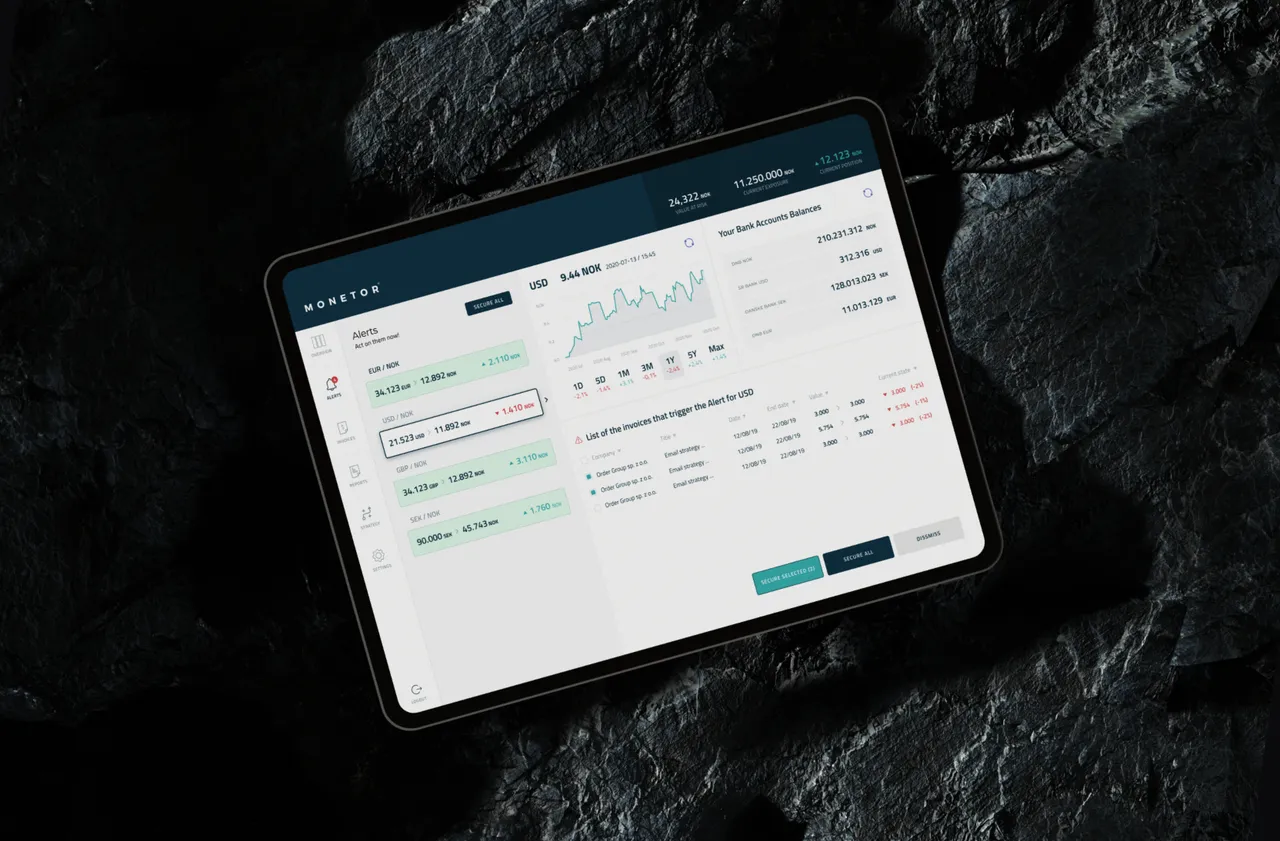
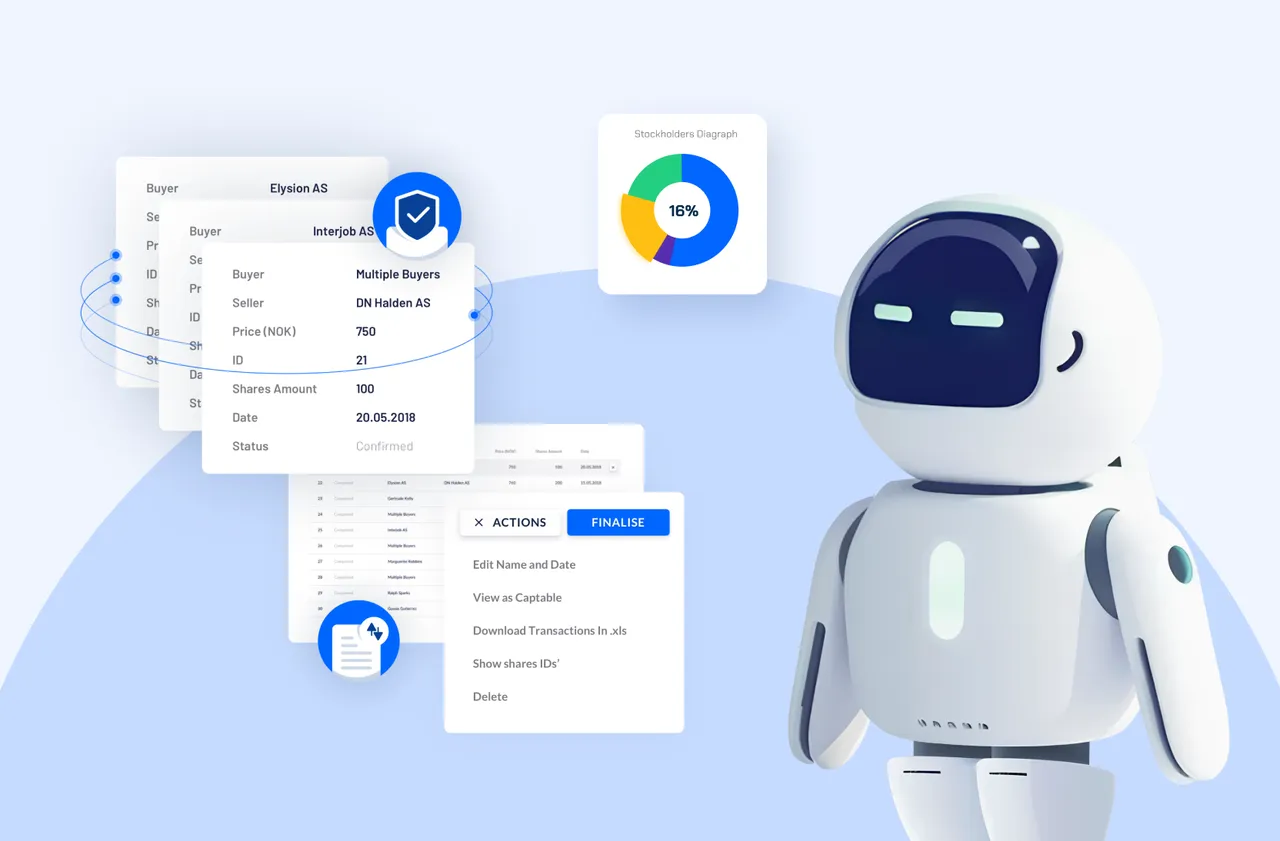
Monetor (FX risk web app) and BizBot (UX/UI redesign)
-
Monetor - A Web Application for Analysing Business FX Risk
The team is doing a tremendously good job and they are evolving with us throughout the process.
-
BizBot - There's No Successful App Without Solid UX
Order Group invests time to define the scope and ask clarifying questions. Their channels of communication lead to smooth remote project management.


Why talk to us about your borrower app?
Book a free consultation. We'll look at your core system, your loan states and what your borrowers need to do in the app.

Borrower apps and core-system integrations for consumer lenders.
Your message goes to

Filip Szamborski
Co-founder & CEO

Your message goes to

Karol Oponowicz
Co-founder & Business Owner
Your message goes to

Paweł Zieliński
Co-founder & Business Owner
SO FAR WE HAVE WORKED WITH BRANDS LIKE:




Thank you for your message.
We read every message ourselves and get back to you within 48 hrs on business days.
Something urgent? hello@ordergroup.co