
Zeronest - Solar Panel Monitoring App with Automated Battery Management

Project Summary
It's 6pm and electricity prices just spiked. Somewhere in Poland, a home battery either reacts on its own or it doesn't. Making sure it does is the software Order Group has been building for Zeronest since January 2024: an EMS, an energy management system for solar and battery installations, that decides automatically whether to store, use or export power. The stakes keep climbing: in April 2026 Poland's grid operator ordered non-market redispatch on a record 25 days, curtailing 223 GWh of solar generation in a single month, after total curtailment had already grown from 731.4 GWh in all of 2024 to 1,131.5 GWh by September 2025.
An early version was shown at the InterSOLAR trade fair in June 2024; today Zeronest, a Warsaw-based company that positions itself as a Polish producer of advanced EMS hardware and software, markets savings of up to 34% on electricity costs. The scale of the problem keeps growing: Poland's flexibility market still rests on roughly 200 MW of storage against close to a million prosumers (2025 figures), and the April 2026 amendment to the Energy Law is expected to unlock some 150 GW of new renewables and storage. Deciding when each of those batteries charges, discharges or sells has stopped being a job a person can do by hand. Zeronest automates it.

Solar Panel Monitoring App & Battery Management System
Three apps for every layer of the market
Zeronest's EMS serves more than a single household: homeowners, businesses, installers, aggregators, cooperatives, energy clusters and local-government bodies all work on the same platform.
A homeowner opens an app with four screens: dashboard, control, schedule and statistics. It shows what the panels produce, what the battery is doing and what that is worth in money, and it turns tomorrow's weather into a plain-language forecast of expected production. It still works with no solar panels at all, running on smart-meter data alone.
Installers get two tools. The Web Management Platform serves the office, doubling as the team's CRM. It shows alerts, each installation's status (unassigned, scheduled, pending or activated) and four daily counters: sites scheduled today, installs pending, today's backlog, installs activated. It also handles user management and CSV exports at 15-minute or hourly granularity. A mobile app puts the same alerts and install statuses in the technician's pocket. Larger operators use the same platform to configure sites, assign devices, handle subscription billing and control whole fleets of installations, sorted by battery capacity or connection state. The device price covers the first two years of service; after that, a 20 PLN/month fee keeps it running.
An automation engine with three operating modes
Once a minute, the engine re-decides what the battery should do, weighing fresh readings against market prices, tariffs, consumption history and the weather forecast. It works with dynamic tariffs and zonal ones alike, and it optimizes how the battery cycles, protecting its lifetime rather than only the bill. The storage itself can run in one of three modes:
- Off - automation is disabled; the battery runs on its default settings
- Manual - the owner picks one of five behaviors: charge, discharge, anti-reflux (blocking export back to the grid), self-consumption, or maintenance, fixed or on an hourly schedule
- Automatic Zeronest - the system picks the behavior itself, from one of three strategies: defensive, neutral or aggressive
That engine serves three goals: it cuts the household's energy cost, it gives the grid more flexibility to absorb solar swings, and - through the platform's demand-side response (DSR) module - it opens a way for the same storage to earn money from grid services on top of what it already saves.
Turning grid flexibility into revenue
Zeronest's demand-side response module lets aggregators and grid operators call flexibility events across the batteries the platform manages. We built it ourselves: it groups individual metering points, dispatches each event, then gathers the confirmations and reports that settlement depends on. That turns a fleet of home batteries into capacity the grid can lean on, and its owners get paid for lending it out.
Billing across a whole energy cooperative
Zeronest settles an entire energy cooperative on two levels: the whole group and each individual metering point. Deposits are balanced and invoices and corrections generated automatically as energy moves between what a member consumes on the spot, what they deposit with the cooperative, and the grid. The cooperative layer is sold the same way as the rest of the platform: through installers and business partners, who carry it to the end customer. A cooperative or installer sees and controls the entire fleet: a B2B2C management layer over the prosumers underneath. Each user still only sees what their role allows: a homeowner the simple view, an installer the job-focused one, a cooperative operator the whole fleet.


Why It's Hard to Build With Us
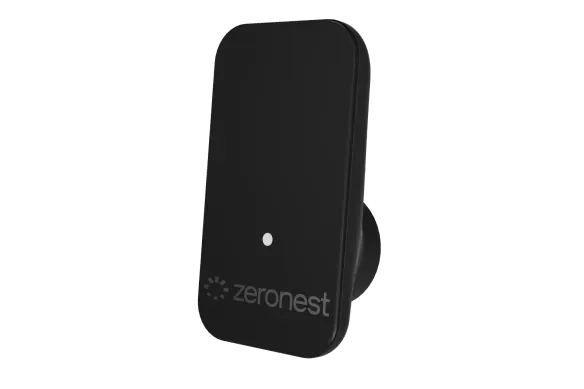
Zeronest doesn't read production data through the inverter manufacturer's own API. Every installation gets its own hardware: Bzyk D200, a device with its own SIM card, wired directly into the inverter over RS485/Modbus and reporting over LTE, independent of the manufacturer's cloud and the homeowner's Wi-Fi. Like the rest of Zeronest's hardware, it's designed, built and tested in Poland, and mounts on a standard DIN rail in about 15 minutes.
Building that custom data layer ourselves was harder than calling a manufacturer's API, but it paid off twice over: the system stays online when a manufacturer's API goes down or a home network drops, and the platform now integrates 16 inverter brands in one system, Deye, GoodWe, Hoymiles and Sungrow among them, giving each household a choice of hardware.
Every minute, a fresh reading of production, consumption and battery state combines with day-ahead and intraday market prices, distribution tariffs, grid-operator signals and the weather forecast to make one automated decision: charge the battery, discharge it, or sell to the grid. The grid-operator signals arrive through a second Zeronest device, the Świetlik D300 grid integrator. Handling that much live data about someone's home also means the whole system has to meet cybersecurity requirements under NIS2, CRA, RED DA and Poland's national cybersecurity act (KSC), communicating device-to-cloud over MQTT and TLS 1.2 behind AWS IoT Core. Client data stays within the EU throughout.
None of that gets easier with turnover, so Order Group has kept the same seven people on this project throughout: backend, mobile for iOS and Android, QA, analysis and design, working in two-week SCRUM sprints. Across the platform's first two years they logged some 11,220 hours. See more of our energy-storage and EMS work on the Energy Hub.

Results
What debuted at InterSOLAR in June 2024 now runs in production for several thousand users: homeowners, installers and cooperatives. Subscription billing and payments integration, added in 2026, turned monitoring software into a platform that settles real money.


Related case studies
More energy software we've built
-
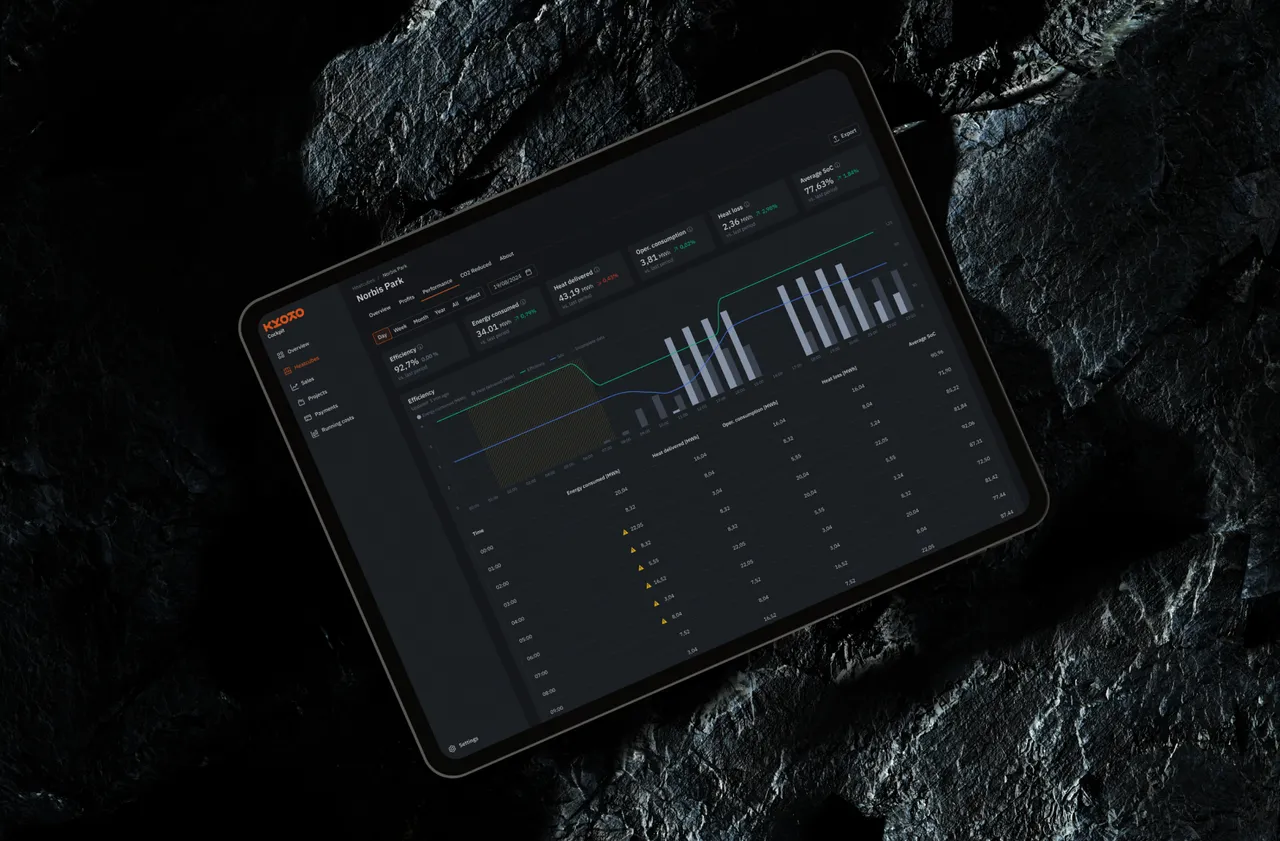
KYOTO - Industrial IoT & Digital Twin for Thermal Energy Storage
Order Group is supportive and flexible, delivering high-quality results.


Solar Panel Monitoring & Battery Management - FAQ
Get an estimate for the costs, timeline & the team composition needed for your project...
-
A solar panel monitoring app shows homeowners how much energy their system is producing and using, and what that is saving them. Most solar panel monitoring software stops at those numbers; Zeronest's app goes further, automating the battery decisions behind them.
-
Zeronest connects through its own hardware - a device called Bzyk D200 with its own SIM card - wired directly into the inverter, rather than relying on each manufacturer's own API. That is what lets it work across brands and keep running even if a manufacturer's cloud service goes down.
-
A battery management system usually means the electronics inside a battery pack. Zeronest works a layer above that hardware: residential battery management software that decides when the storage charges and discharges, optimizing cycle efficiency and battery lifetime along the way.
-
It combines live market pricing, a weather forecast and the battery's current state, then picks the action that saves the most money while protecting the battery's lifetime and cycle efficiency. We built this decision layer for Zeronest.
-
An energy management system (EMS) is software that monitors a site's energy production and storage, tracks how much it consumes, and automatically decides how to act on all of it. Zeronest's platform is a home energy management system that also scales up to installers, cooperatives and whole fleets.
-
Yes, if it separates data and permissions by role. Zeronest's platform gives homeowners their own simple view, installers a job-focused app, and cooperatives or larger operators a management layer over many sites.
-
It has to meet cybersecurity requirements under NIS2, CRA, RED DA and Poland's national cybersecurity act (KSC), with all data processed inside the EU. Zeronest's platform does this with device-to-cloud communication encrypted over MQTT and TLS 1.2 behind AWS IoT Core.
-
Yes, if the EMS behind it includes demand-side response (DSR). Zeronest's platform groups metering points and lets aggregators or grid operators call flexibility events across the batteries it manages, turning storage into capacity the grid pays for using, on top of the savings from automated charging and discharging.
-
Our energy management work for Zeronest uses Next.js, MUI and Redux Toolkit on the web, React Native and Redux Toolkit on mobile, and Python/Django with Django REST Framework and Celery on the backend, deployed to AWS (ECS, RDS, S3, Lambda, Cognito, SNS) via GitHub Actions. It integrates with a dedicated IoT layer for device data and a live weather-forecast feed, plus Sentry for monitoring, to handle real-time device and market data.

Partnering on your energy management system.
Your message goes to
Filip Szamborski
Board Member

Your message goes to

Karol Oponowicz
Board Member
Your message goes to
Paweł Zieliński
Board Member
So far we have worked with brands like:





Thank you for your message.
We read every message ourselves and get back to you within 48 hrs on business days.
Something urgent? [email protected]