Why Is Flexibility Such a Valuable Trait in Software Development?
Karol Oponowicz, Co-founder & Business Owner | | 4 min read
The brief
Not every project goes according to plan. Sometimes flexibility is needed, especially when we build software for start-ups, competitive industries, or new, innovative products.
Not every project goes smoothly from start to finish. Sometimes you need to take a detour to get around challenges. In other words, you need to be flexible.
How do you stay flexible and still maintain quality in the custom software development process?
Flexibility in Software Development
Why is Flexibility Important in Software Development?
A software project where everything goes exactly according to plan is rare. Flexibility in software development helps you deal with unexpected changes and still deliver a successful outcome.
There are two main aspects of flexibility:
- System Flexibility: The ability of the software itself to adapt to new situations or data. A well-designed system can handle changes without breaking down.
- Team Flexibility: How well the development team can adjust to changes in project requirements, goals, or unexpected challenges. An open-minded and adaptable team can work with these changes to deliver a better product.
In this article, we'll focus on team flexibility and how it directly impacts the flexibility of the software being built.
What Does It Mean to Be Flexible?
Flexibility in IT project management is required whenever the environment is dynamic, which is almost always. Today, few projects are totally predictable, with a path to delivery that looks like a straight highway.
When things change constantly, project teams have to be flexible. As the study "Structure and flexibility of project teams under turbulent environments" puts it:
The extent of authority and autonomy granted to the project manager and the individual team members has a significant impact on the ability of the project team to meet stakeholders' goals and expectations. This is particularly true in dynamic environments, where resources, requirements, and other conditions change rapidly, and a great deal of innovation is required.
In software development, one way to ensure flexibility is to apply agile methodologies from the very start of the project.
Being agile & adaptable lets you respond to changing project assumptions safely and effectively.
KYOTO Project
For three and a half years, we worked with KYOTO on a complex project in the renewable energy industry (you can read more in the KYOTO case study). Along the way, we had to challenge our plans, expand the scope and redefine our assumptions several times.
KYOTO had this to say about us:
They are above average in their flexibility, trying out a business model that was unknown to them, supporting our way of working, and delivering efficiently. We trust them.
Flexibility in the KYOTO project was visible both in the use of SCRUM and in our ability to respond to the changing concept of the start-up's target product.
The KYOTO project (then called Kyotopia) confirmed our view that the SCRUM/Agile approach works very well for projects with changing requirements. It also helped us refine our understanding of agile management.
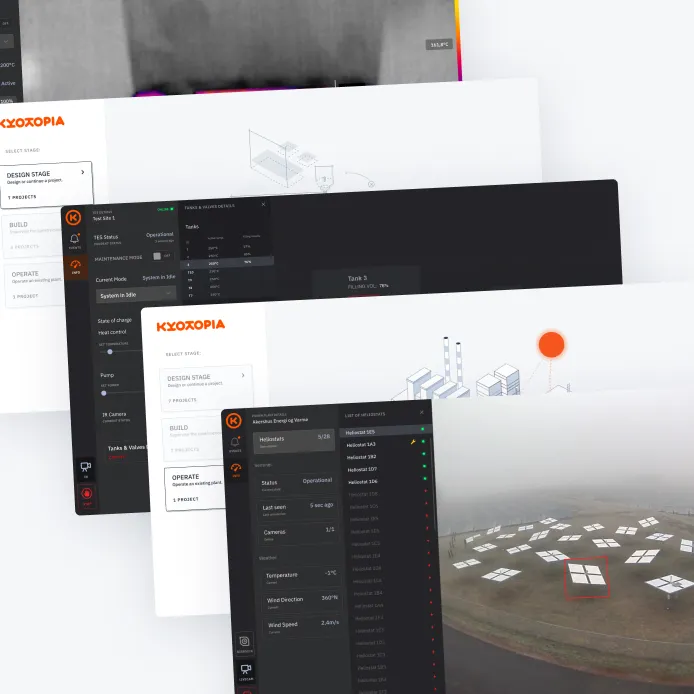
It was our major industrial IoT project for the energy industry, and we succeeded thanks to flexibility. Why was it especially needed in this project? Looking back, there were three reasons:
- The project's original goal was to build a CSP plant. It evolved into creating an end-to-end system to test, design, and deliver a power plant, and eventually KYOTO focused on thermal energy storage. Without our openness to changes, those goal alterations would have been a severe business obstacle.
- Due to its scale, the project required multiple third parties to cooperate with each other. Each of these companies had a slightly different style of management, which one team handling project coordination tried to bring together. We were ready to adapt our processes to the requirements of the client and the other teams in the project.
- Finally, the budget. As goals change, estimates need adjustments. With the time & material approach, based on long-term but flexible evaluation, we could absorb changes and propose improvements that benefited both parties.
Adaptability
Why Startups Need Adaptable Software Development Teams
Building a startup means dealing with uncertainty. Founders often face questions like:
- How ambitious should our initial concept be?
- How will future funding rounds impact our plans?
- What level of functionality should our initial product (MVP) offer?
As a startup evolves, its business needs and goals can change quickly, so the software development process also needs to adapt.
The Importance of a Flexible Development Partner
Startups should partner with a software development company that works well in dynamic environments. The development team, including project managers (PMs), tech leads, and developers, should be comfortable with:
- Adjusting to changing priorities: Startups may need to pivot their strategy based on market feedback or funding changes. A flexible team can adapt development accordingly.
- Managing project scope: The initial vision for a product may need to be scaled back or expanded based on available resources. An adaptable team can help manage these adjustments.
With a flexible development partner, startups can build software that grows and changes along with their business.
Flexibility in the Era of Changes and Building Sustainability
Solutions that support sustainable development must take a changing world into account. That applies to industrial and engineering projects, cybersecurity, and even improvements in global communication.
Many factors need to be considered when designing ambitious software, and to handle them all you need flexibility. Our software engineers will adapt to your needs. Contact us here.
If you want to know more about sustainability, read our article "Want to Reach the Sustainable Development Goals in your Enterprise? Focus on IoT!"
Work with our flexible software engineers!
Contact usMore articles about Product & discovery

What Is a Minimum Lovable Product (MLP), and How Is It Different From MVP?

Off-the-Shelf vs Custom Software Development - What Is the Best Solution for Your Company?