Energy Trading Platforms: How They Work, Main Types and the Software Behind Them
Aleksander Jess, Former Copywriter | | Updated | 8 min read
The brief
An energy trading platform is software for buying and selling electricity or gas: it shows prices, takes bids and settles trades. Since October 2025 the European day-ahead market has had 96 trading periods a day instead of 24, and REMIT II has shortened reporting deadlines. Both changes land on the software that traders, utilities and energy buyers rely on.
What is an energy trading platform?
An energy trading platform is software for buying and selling electricity or gas, with prices, bid submission and settlement in one place.
Depending on the market it covers, it is also called a power trading platform or an electricity trading platform. Before these platforms, energy changed hands mainly through long-term contracts and over-the-counter deals. Negotiations were slow, prices were hard to compare and market access was limited. Today a trader, a utility or a large industrial buyer can see the market price, place an order and track the settlement from a single screen.
Platforms fall into two broad groups:
- Centralized platforms: exchanges and operators run by a single managing body, such as a power exchange. Every trade goes through the operator's rules, order book and clearing.
- Decentralized platforms: peer-to-peer (P2P) systems where participants trade energy directly with each other, without a traditional supplier in the middle.
How does an energy trading platform work?
An energy trading platform works in three stages: pre-trade analysis, trade execution and post-trade settlement.
Pre-trade: forecasts and price data
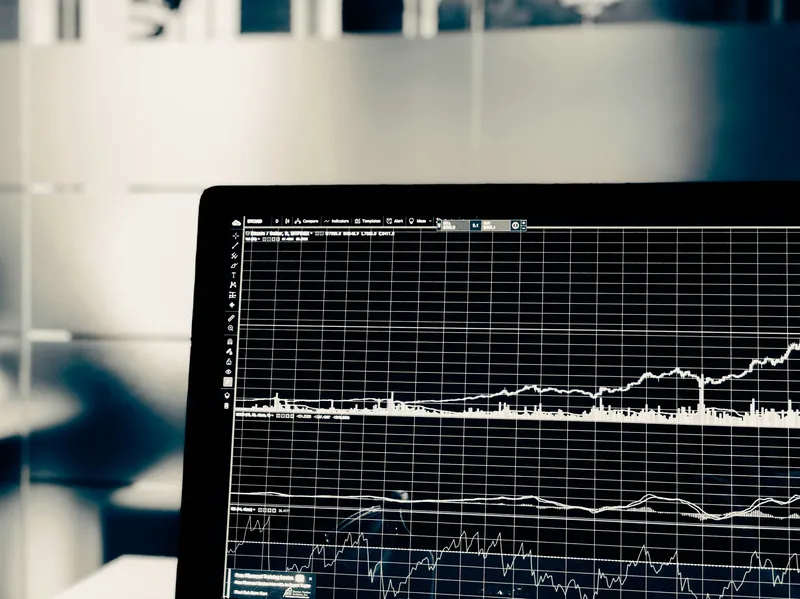
The first stage happens before any order is placed. The platform pulls in price feeds, weather data and demand or generation forecasts, so the trader knows how much energy to buy or sell and at what price it makes sense. For a portfolio with solar or wind assets, a wrong forecast means buying the missing volume later at a worse price.
Execution: day-ahead and intraday
The second stage is trading itself. On the day-ahead market, participants submit bids into a single daily auction for delivery the next day. On the continuous intraday market, they trade closer to delivery to correct their position as forecasts change. A platform connects to these markets, submits the orders and shows which ones were filled.
Post-trade: nominations, settlement and reporting
The third stage starts once a trade is done. The platform sends nominations (the delivery schedule) to the grid operator, settles the trade financially and prepares the reports that regulators require. It is the least visible part of trading, and its workload grows with every trade, because each one has to be reconciled.
Types of energy trading platforms
There are four main types of energy trading platforms: power exchanges, broker and procurement platforms, in-house trading desk tools, and peer-to-peer platforms. The examples within each type are in no particular order.
- Power exchanges. What they do: run organized day-ahead and intraday markets with clearing. Who uses them: producers, suppliers, traders, large consumers. Examples: Nord Pool, EPEX SPOT, TGE (the Polish Power Exchange).
- Broker and procurement platforms. What they do: help companies source energy, compare offers and run tenders. Who uses them: utilities and corporate energy buyers. Example: Enel X runs its Energy Exchange platform for energy procurement.
- In-house trading desk tools. What they do: forecasting, position views, order routing and algorithmic trading built around one company's strategy. Who uses them: trading teams, aggregators, asset operators.
- Peer-to-peer platforms. What they do: match prosumers who have surplus energy with nearby buyers. Who uses them: households, energy communities, small producers. Example: Power Ledger.
Of these, Nord Pool shows how much a single exchange covers. It runs day-ahead trading, continuous intraday, intraday auctions, financial hedging, and clearing and settlement. In August 2026 it operated in 17 European countries (Nord Pool monthly report, August 2026).
Energy trading platform vs ETRM software
An energy trading platform gives access to the market and executes trades, while ETRM software records those trades and manages position, risk, P&L and settlement.
Energy trading and risk management (ETRM) software is the book of record. Large trading companies usually run both: the platform is where orders go out, and the ETRM system tells the risk team what the company owns, what it owes and how much it could lose.
- Main job. Trading platform: market access and trade execution. ETRM software: trade capture, position, risk, P&L and settlement.
- Main users. Trading platform: traders and dispatchers. ETRM software: risk, middle office, back office and finance.
Energize Capital notes that legacy ETRM systems struggle with growing data volumes, multi-commodity portfolios and compliance obligations (Energize Capital).
What changed in European power markets (2024-2026)
Three changes reshaped energy trading software in Europe between 2024 and 2026: the 15-minute market time unit, REMIT II, and fast-growing intraday trading.
15-minute market time unit
Since delivery day 1 October 2025, the European day-ahead market (SDAC) has used a 15-minute market time unit (MTU). That means 96 trading periods a day instead of 24. The switch was originally planned for 11 June 2025 (Market Coupling Steering Committee, 12 September 2025). For software, four times more periods means four times more prices to store, bids to build and positions to settle every day.
REMIT II
REMIT II, Regulation (EU) 2024/1106, entered into force on 7 May 2024 (URE). It covers more entities and products, shortens reporting deadlines and widens the definition of market manipulation. A new implementing regulation entered into force on 29 April 2026 (Baker McKenzie). With shorter deadlines, reports have to be generated directly from trading data.
Intraday growth
Trading is moving closer to delivery. Nord Pool's intraday markets reached a record monthly volume of 22.2 TWh in July 2026 (Nord Pool monthly report, July 2026). A continuous market with a 15-minute MTU is hard to trade by hand, so more of the routine work goes to automated rules.
Key features to look for in an energy trading platform
A good energy trading platform connects to your markets, works at 15-minute resolution, automates routine trading within limits and produces regulatory reports.
Use this checklist when you evaluate a vendor or plan your own build:
- Market connectivity: native connections to the exchanges and intraday markets you trade on.
- 15-minute resolution: prices, bids, positions and settlement at 15-minute resolution end to end, not only on the trading screen.
- Forecasting: price, demand and generation forecasts feeding directly into bids.
- Automation and algorithmic trading with limits: rules that trade on their own, inside volume, price and loss limits that a person sets.
- Position and risk: a live view of what you hold, either built in or synced with your ETRM system.
- REMIT reporting: reports generated from trade data, not assembled by hand.
- Audit trail: who changed which order, when and why.
- Integrations: ERP for invoicing, an energy management system (EMS) for batteries and flexible assets, and SCADA, the control system that reports live plant data.
- Security: multi-factor authentication (MFA), encryption and access roles for every user.
Build, buy or extend?
Buy a ready platform for standard trading, build when your trading process sets you apart, and extend when only data and reporting fall short.
- Buy when you trade standard products on standard markets and the vendor's workflow matches yours.
- Build when the way you trade or advise clients is your competitive advantage, or when you plan to sell the software itself.
- Extend when your exchange connection or ETRM works but analysis, reporting or client-facing tools are manual.
Enerace, a consulting firm specializing in energy purchasing, chose to build. For more than 3 years, Order Group has been developing a SaaS web application that turned Enerace's consulting service into a scalable product for companies across Europe. The platform collects market data automatically, generates recurring reports and includes a client management dashboard. It runs on Python, Django, GraphQL and React, hosted on AWS.
Automating these processes saved Enerace hundreds of hours of work every month and let the company win new customers through the SaaS model. According to the Enerace case study summary, data-driven decisions help European enterprises achieve multi-million euro savings on energy and fuel purchasing.
Challenges of energy trading platforms
The main barriers to adopting energy trading platforms are changing regulation, legacy systems, cybersecurity, trust in algorithms, missing skills and internal resistance.
- Changing regulation. Rules differ between countries and change over time. REMIT II took effect in 2024 and its implementing regulation followed in April 2026, so reporting logic had to change twice.
- Legacy systems. Many utilities run older systems that do not integrate easily with modern platforms, and replacing them is expensive.
- Cybersecurity. The more a platform is connected to markets and assets, the larger the attack surface it has to protect.
- Trust in algorithms. Teams hesitate to let automated rules handle large positions in a volatile market. Clear limits and an audit trail help build that trust.
- Skills gap. Trading requires market knowledge that smaller companies often do not have in-house.
- Internal resistance. New tools change established processes, and people need time and training to adopt them.
For a deeper look at the risk side, read our article on the risks and rewards of energy trading.
Frequently asked questions
Who uses energy trading platforms?
Energy trading platforms are used by power producers, energy suppliers, large companies that buy energy, aggregators and, on peer-to-peer platforms, prosumers. Each group uses a different type: producers and suppliers trade on exchanges, corporate buyers use procurement platforms, and prosumers sell surplus solar energy on P2P platforms.
Are energy trading platforms regulated?
Yes. In the EU, wholesale energy trading falls under REMIT II, in force since 7 May 2024, with a new implementing regulation in force since 29 April 2026. Market participants have to report their trades within the deadlines it sets.
What is peer-to-peer energy trading?
Peer-to-peer energy trading means participants trade energy directly with each other, without a traditional supplier in between. Power Ledger is one example. We cover the model in more detail in How P2P Energy Trading Is Energizing Our Future.
What is ETRM software used for?
ETRM software is used to record trades and manage position, risk, P&L and settlement. It is the book of record for the risk and back-office teams, while the trading platform handles market access and execution.
Why does the 15-minute market time unit matter for trading software?
Since 1 October 2025, the SDAC day-ahead market has had 96 trading periods a day instead of 24. Software has to store, forecast, bid and settle four times more intervals, so tasks that were manual at hourly resolution now need to be automated.
Next step
If you are building an energy trading platform, an EMS or a procurement tool, the Energy Hub shows the systems we deliver for energy companies and how a project starts. To see a finished platform in production, read the Enerace case study.
Building a trading or energy platform? See what we deliver for energy companies.
See the Energy HubMore articles about Energy
How Energy Hubs Drive Financial and Environmental Benefits

Molten Salt Batteries - Salt in Batteries?