6 Fascinating Industrial IoT Projects
Maciej Sułek, Co-founder & CTO | | Updated | 4 min read
The brief
Unlock Hidden Profits & Stay Ahead of the Curve: Discover How Industrial IoT Transforms Businesses
Staying ahead in business today means adopting new technology. The Industrial Internet of Things (IIoT) is changing how companies of all sizes operate across many industries. But what exactly is IIoT, and how is it changing the way we work?
IIoT: A Network of Machines
Imagine a factory floor where machines don't just work - they talk to each other. Sensors embedded in equipment collect real-time data on performance, temperature, vibration, and other critical metrics. The data is transmitted securely to a central hub, where it's analyzed and turned into actionable insights. That, in short, is IIoT: a network of interconnected devices that work together to optimize processes, improve efficiency, and provide business intelligence.
IIoT Market Growth
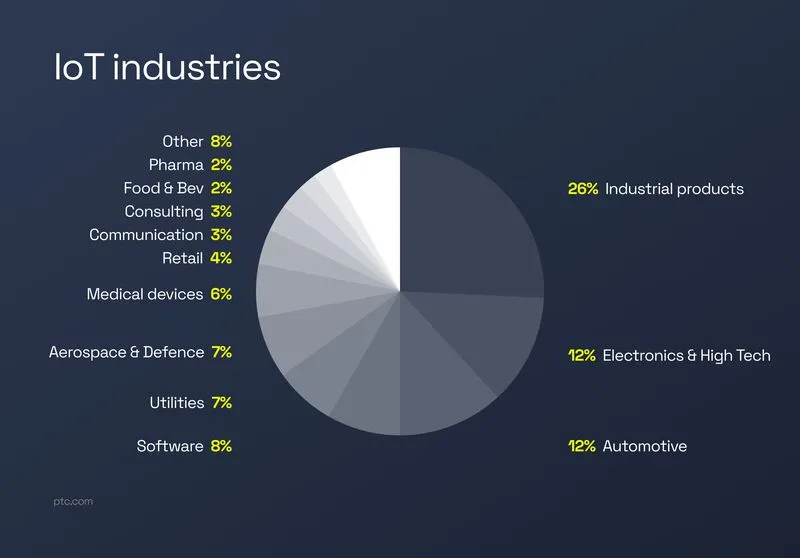
The global IIoT market size is projected to reach $3.35 trillion by 2030, according to Statista, which reflects how quickly IIoT is being adopted across sectors.
Industries such as power and energy, aviation and aerospace, and utilities lead this adoption and already benefit from real-time data and automation.
IIoT & Industry 4.0
IIoT is a core part of Industry 4.0, a concept built on automation and data exchange to improve processes across industries. Factories rely less on human intervention: with IIoT, machines can communicate with each other, self-diagnose potential issues, and even initiate maintenance procedures, while people still oversee the work. This combination of automation and human expertise is the basis of Industry 4.0, and IIoT is the technology that makes it possible.
Challenges & Solutions
IIoT has real potential, but implementing these solutions comes with challenges.
One of the main hurdles is the upfront investment. Companies need to invest in advanced technology and connected systems to get the long-term benefits of IIoT. Another important consideration is data security. IIoT devices collect large amounts of data, so strong cybersecurity measures are needed to protect sensitive information.
Real-World Impact
Here are some real-world examples of IIoT:
IIoT in the Energy Industry
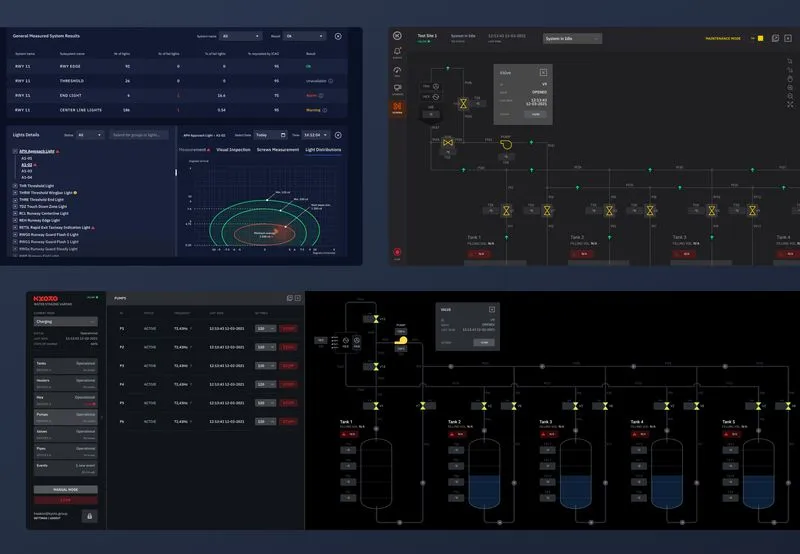
Industrial-scale solar energy systems can generate clean energy and also optimize its distribution and management. IIoT has enabled exactly this for companies like KYOTO, a Norwegian thermal energy storage company.
Using Industrial IoT, KYOTO built a secure cloud infrastructure for its thermal energy storage system. The system monitors equipment performance, stores thermal energy and uses image recognition technology for security.
IIoT in the Aviation Industry
In aviation, companies like Clear Airspace use IIoT to provide pilots with real-time data, supporting better decision-making during flights and the safety of passengers and crew.
Similarly, HRESS uses IIoT to create a scanning and monitoring system for heliports, improving safety and operational efficiency.
IIoT in the Logistics Industry
IIoT has also changed logistics. By connecting different parts of the supply chain, IIoT provides real-time data for better tracking, inventory management, and resource allocation. This brings significant cost savings and better efficiency across the whole supply chain.
Amazon, for example, has deployed IIoT-enabled robots in its warehouses.
IoT for Smart Cities
SMIGA is a startup that offers a platform for long-term bike rental. Each Smiga bike is equipped with a dedicated IoT module. The challenge was to enable these hardware modules to transmit information to our backend.
Our team developed a solution that keeps constant communication with the equipment, so users can track the condition of the bike in real time. Even if your phone loses its network, the connection to the bike stays on.
IIoT in the Manufacturing Industry
In manufacturing, IIoT has changed maintenance practices. Sensors embedded in equipment continuously monitor its condition, so companies can predict breakdowns before they occur. This approach, known as predictive maintenance, helps prevent costly downtime and keeps production running smoothly. Airbus, a leading aviation manufacturer, does this in its 'Factory of the Future' initiative. With IIoT, Airbus has improved employee safety, reduced errors, and significantly improved production quality.
The Future of IIoT
IIoT goes far beyond the examples above. Several trends are likely to shape the future of this technology:
- Enhanced Device Communication: In the future, devices will communicate directly with each other as well as with a central hub. This peer-to-peer communication will allow more intelligent and autonomous operations, further streamlining processes and resource allocation.
- The Democratization of IIoT: IIoT solutions have traditionally been used in large-scale industrial applications. As they become more affordable and easier to use, small and medium-sized enterprises (SMEs) will be able to use this technology to gain a competitive edge.
- Convergence with Artificial Intelligence (AI): AI algorithms can analyze the large amounts of data collected by IIoT devices, identifying patterns and predicting outcomes with high accuracy. Combined, the two technologies will help companies make data-driven decisions, optimize resource allocation in real time, and achieve much higher efficiency.
- The Rise of the Industrial Metaverse: In IIoT, the industrial metaverse makes it possible to create digital twins of physical assets and processes. These digital twins can be used for training, simulations, and remote monitoring, improving operational efficiency and safety.
Business Benefits
By adopting IIoT, businesses can gain many benefits, including:
- Increased Efficiency and Productivity: IIoT streamlines processes, automates tasks, and provides real-time data, which significantly improves efficiency and productivity.
- Reduced Costs: Predictive maintenance, better resource allocation, and lower operational costs are some of the ways IIoT helps businesses save money.
- Enhanced Safety: Real-time monitoring of equipment condition and better situational awareness for workers make the work environment safer.
- Improved Decision-Making: Data from IIoT helps businesses make informed decisions that can significantly affect their bottom line.
Get Started with IIoT
If you want to use IIoT in your business, the right guidance and expertise will help you improve efficiency, productivity, and growth. At Order Group, we have a team of experts who can help you choose and implement IIoT solutions tailored to your specific needs.
We will help you with your digital transformation!
Talk to us!More articles about Industrial IoT
Sustainable Development with IoT - Challenges and Solutions
What Is The Role Of Cybersecurity In IoT Systems?