Renewable energy software development for batteries and solar

Negative prices, demand-response calls and grid limits decide when a battery earns money. Order Group is an energy software development company in Warsaw: in April 2026 the EMS we build for Zeronest controlled more than 3,000 prosumer storage installations.

Book a free consultation

Tell us what you're building.

A few details tell us which engineers to bring to the first call.

  • Installations

    3,000+

    Prosumer storage installations on the Zeronest EMS (April 2026)

  • Inverter brands

    16

    Integrated in the Zeronest EMS

  • Prosumer storage

    30 MWh

    Storage under the Zeronest EMS

  • Plants

    7

    Solar and battery plants the Skyfri EMS ran (2024)

  • Battery storage

    15 MWh

    At Global Green's sites, under the EMS we are building

  • Users

    40,000+

    Users of the platforms we have built, across all industries

The grid is becoming a market

Variable prices, negative-price hours, demand-side response programs and capacity markets have turned batteries, PV installations and heat stores into assets that can earn on the market. The software that makes them earn has to read the hardware as it runs and follow market rules, and that is the kind of software we build.

Control, insight, revenue

Energy software has three jobs: control the asset, show what it is doing and make it earn.

  • Control

    Command over batteries and inverters, including how much a site is allowed to export to the grid. Safety limits stay enforced under every decision.

  • Insight

    Live readings, weather forecasts and market prices combined into one picture of what an asset is doing and what it is worth.

  • Revenue

    The control layer also decides when to charge, discharge, shed load or bid. Enerace's production module plans machine work around the cost of energy.

Proof

Energy software development company: three systems in production

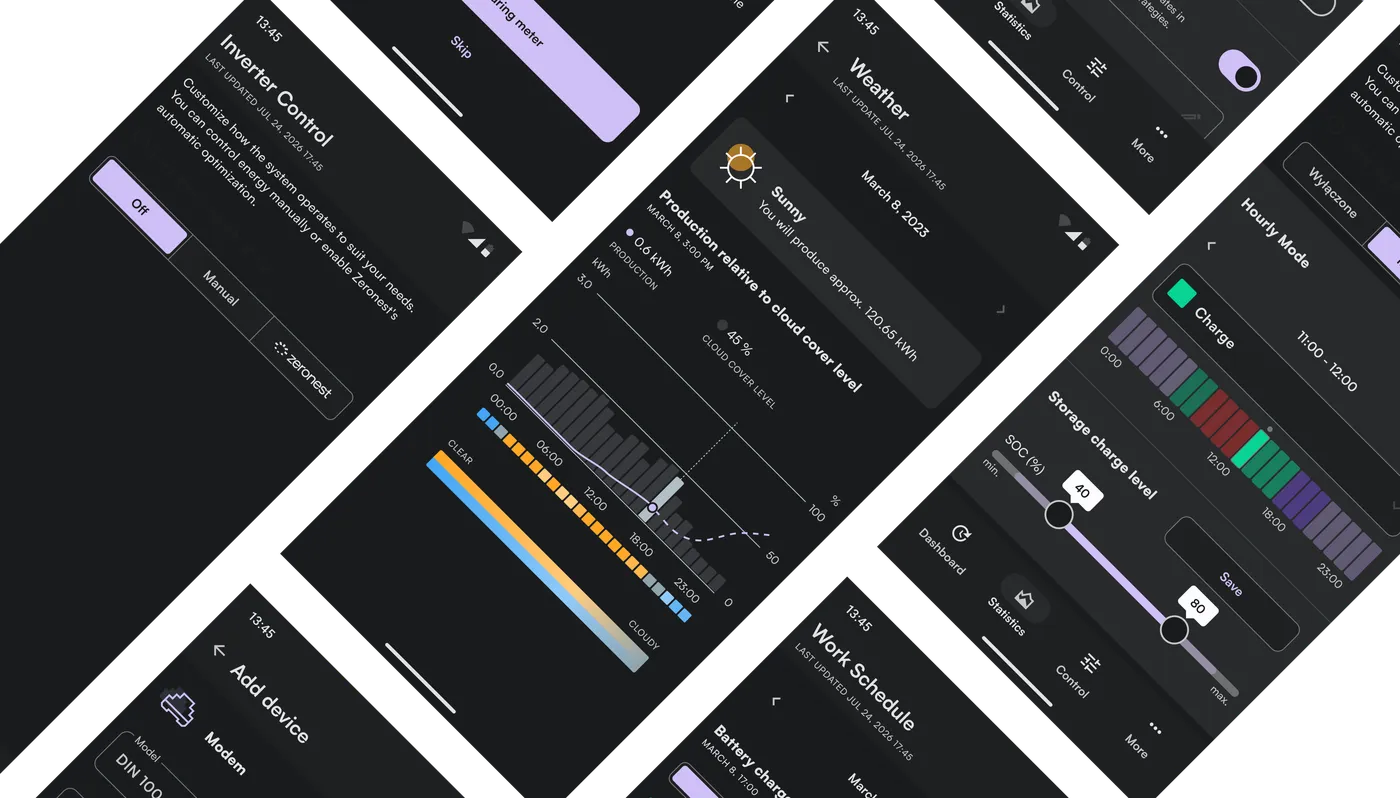
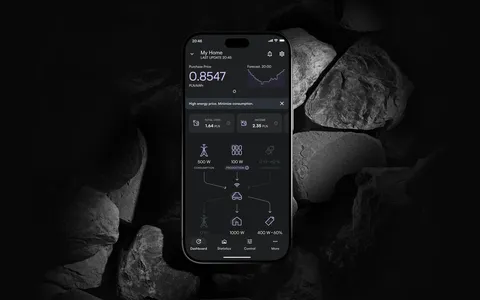
Zeronest mobile app screens: weather, work schedule and statistics

Zeronest

A home-battery EMS for a prosumer fleet

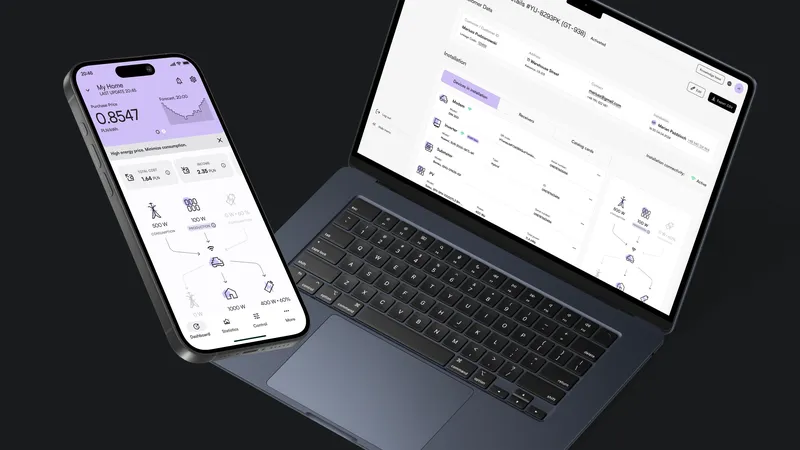
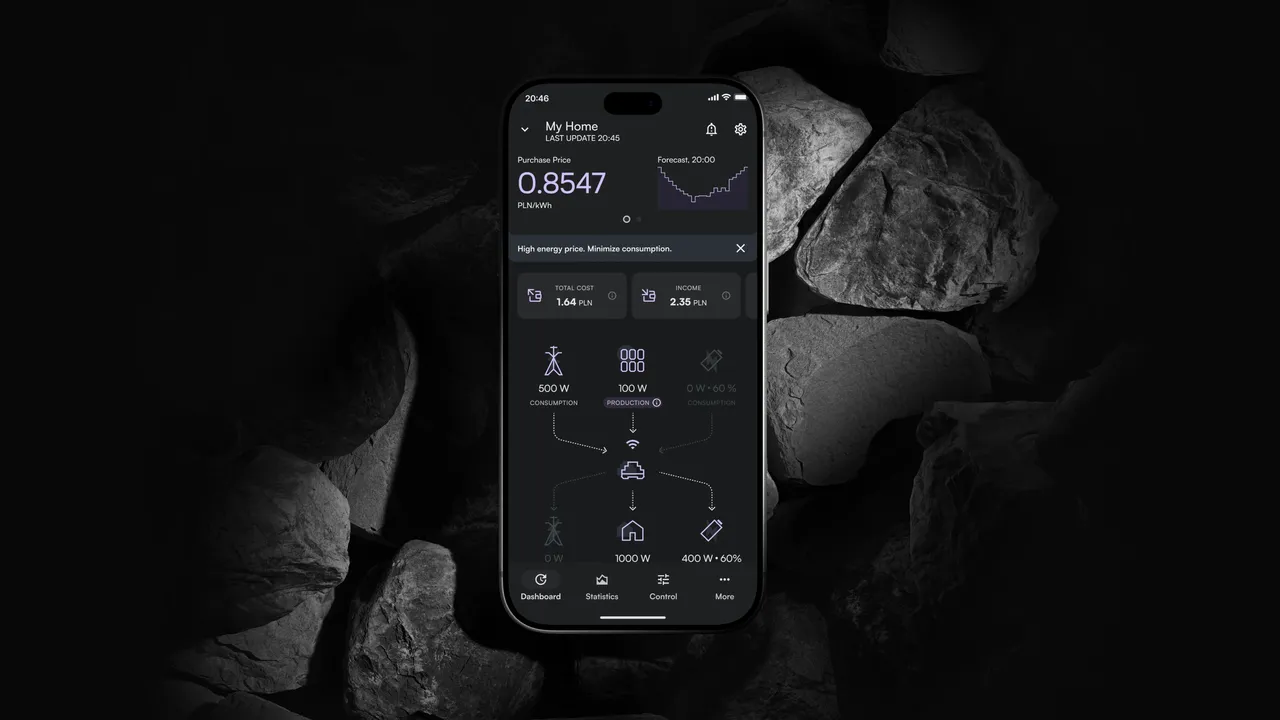
Once a minute the EMS decides whether each battery charges, discharges or sells to the grid. It integrates 16 inverter brands and controls 30 MWh of storage. The same platform carries the apps for homeowners and installers.

Read the Zeronest case study
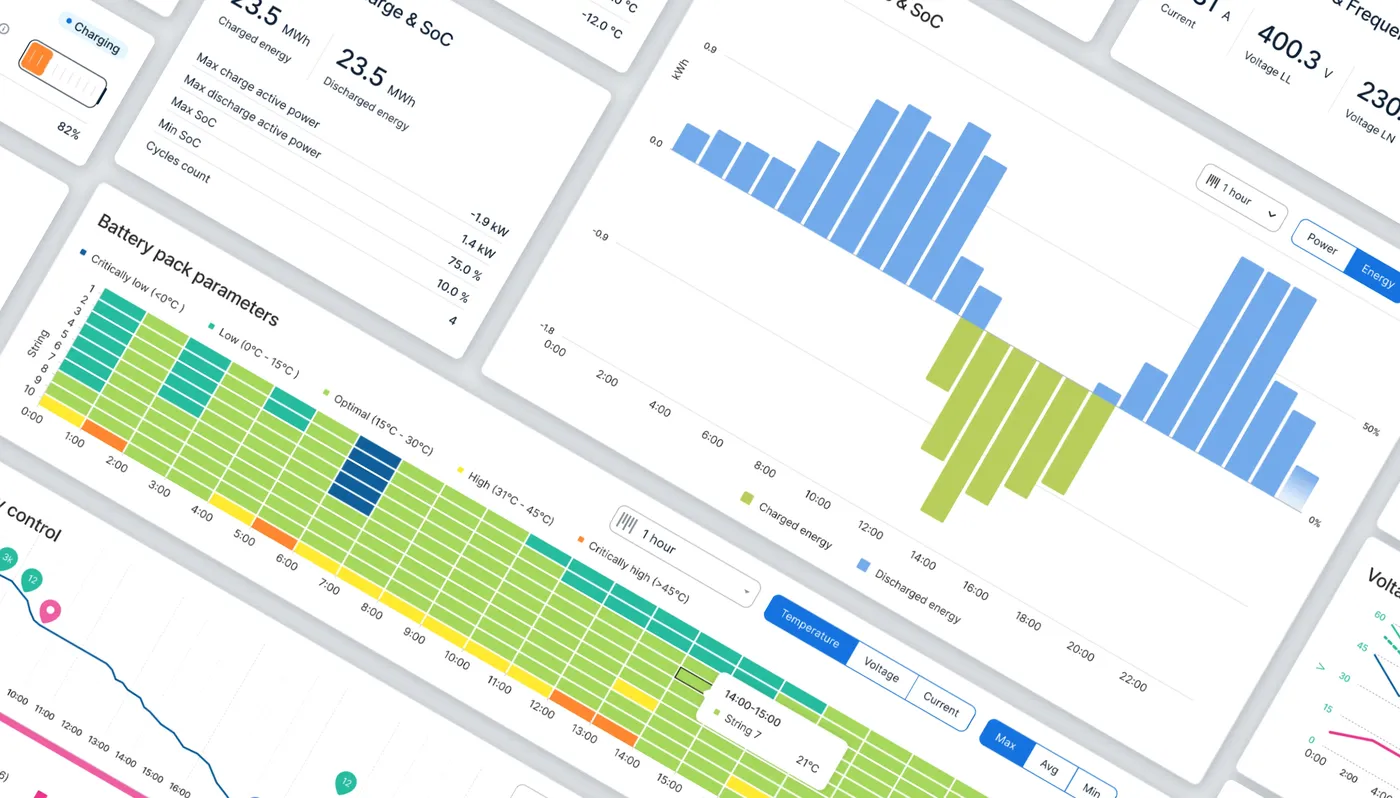
BESS monitoring dashboard with energy, temperature and battery charts.

Skyfri

An EMS that works fully offline

We designed the architecture and built the EMS behind Skyfri's platform for solar and battery plants. It was validated at Socomec's energy storage lab near Strasbourg, ran across 7 plants and works in Germany and Sweden.

Read the Skyfri case study
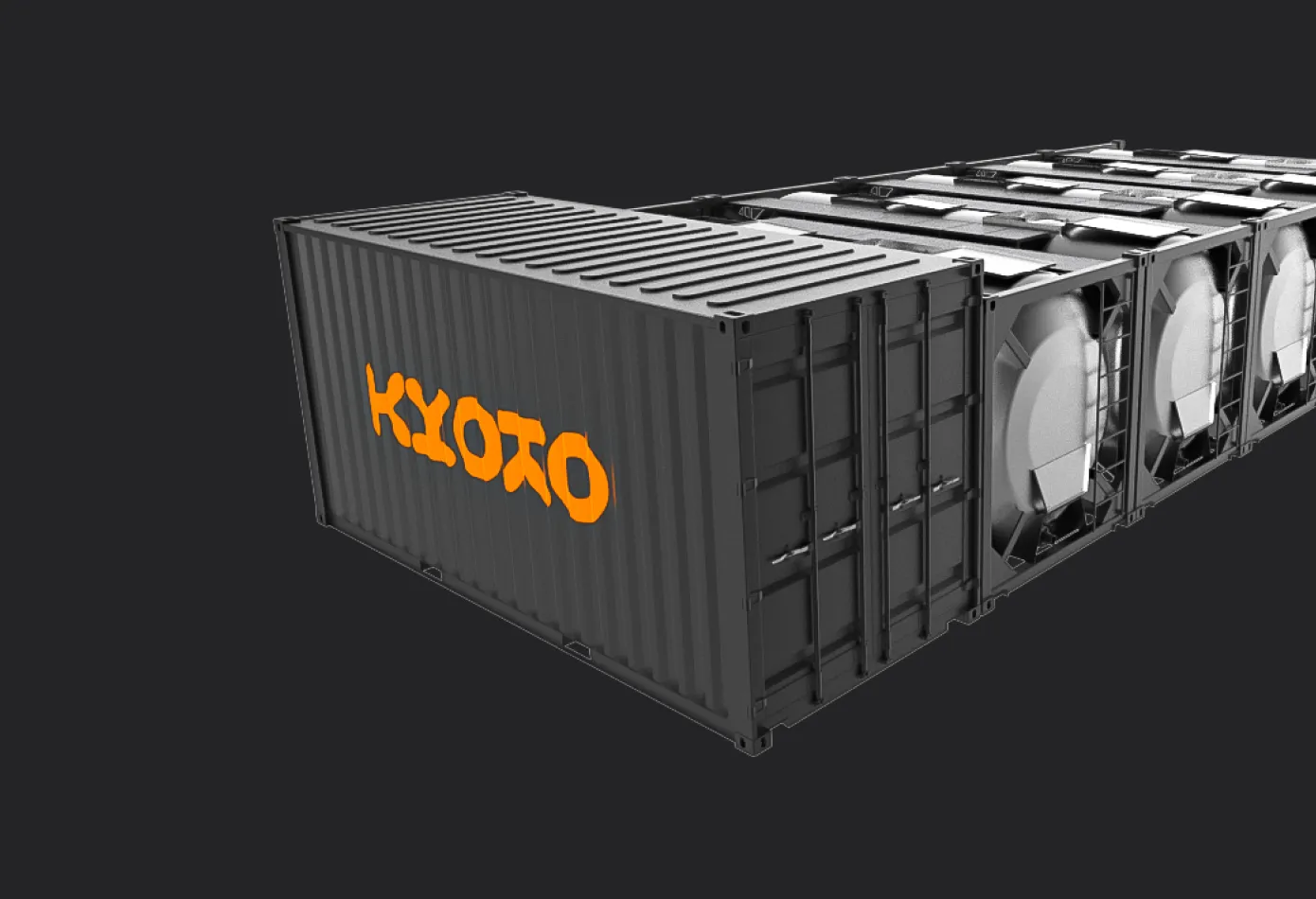
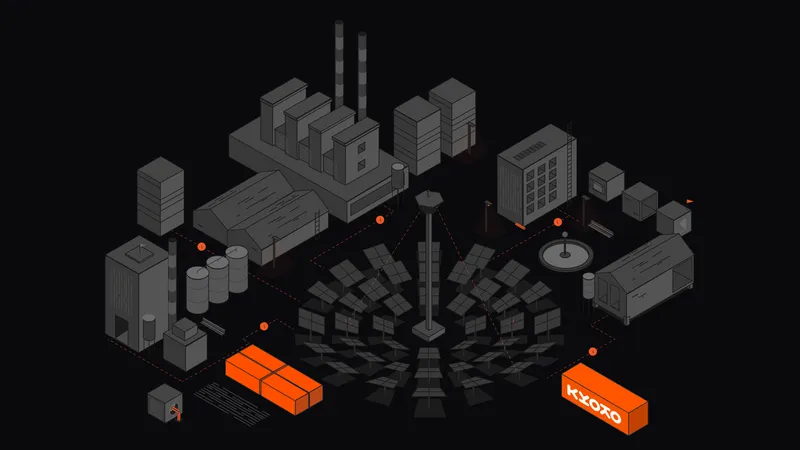
3D render of a Kyoto Group thermal energy storage container

KYOTO Group

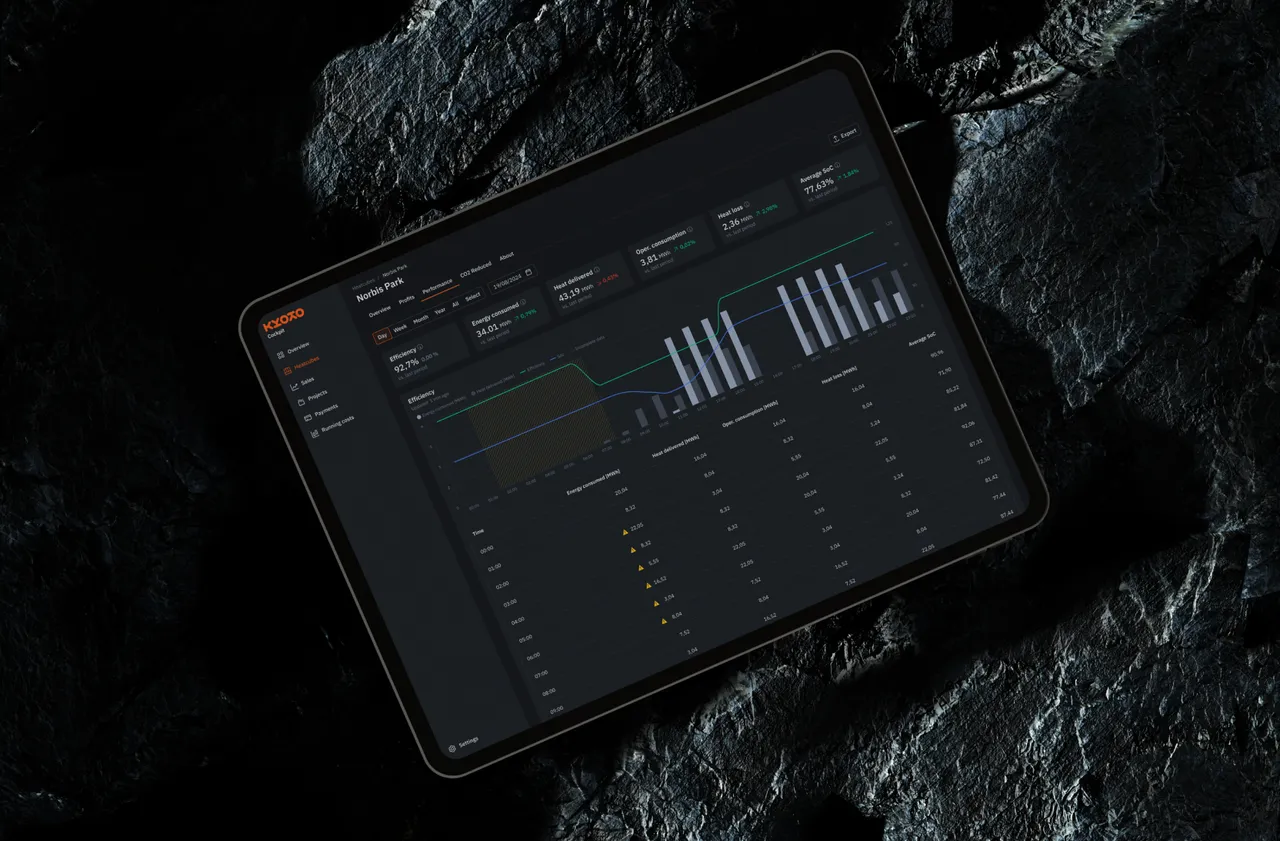
A digital twin for molten-salt heat storage

From the UX/UI MVP to a SCADA-based system that monitored and controlled the flow of energy in real time. The twin combined plant data with weather data and energy price analysis. With the MVP we built, KYOTO Group raised NOK 183.3 million in 2021, and it returned in 2024 to develop the product.

Read the KYOTO case study

For one site or a thousand

The same platform serves a single prosumer and the aggregators and installers around thousands of installations.

Architecture

What goes into energy software

Data and setpoints travel from the device on site to the market and back. These are the layers we build into each client's system.

  1. Devices

    • Inverters, batteries, meters Hardware from several manufacturers, read and controlled through one data layer.
    • Plant control systems Existing SCADA and plant controllers the software reads from and sends setpoints to.
  2. Data layer

    • Modbus and MQTT The protocols the Zeronest EMS uses to read and control inverters.
    • Telemetry and alarms Readings from all sites in one place, so operators see a fault as it happens.
  3. Optimization and control

    • Forecasts Day-ahead and intraday price forecasts and load forecasts feed every decision.
    • Battery degradation Counted as a cost of every cycle.
    • Control logic Your own models or optimization built with you, in the cloud, on-premises or hybrid.
  4. Markets and back office

    • Price and market data Price feeds and ENTSO-E Transparency data as inputs to every decision.
    • Settlement Billing and ERP integration for the settlement that follows.
    • Local market rules Balancing, capacity and demand-side response rules differ by country, and the software carries that local logic.

Highlighted: where the decisions are made

Layers of an energy software system, from device to market.

Three areas, each with its own page

Renewable energy software development: what we build

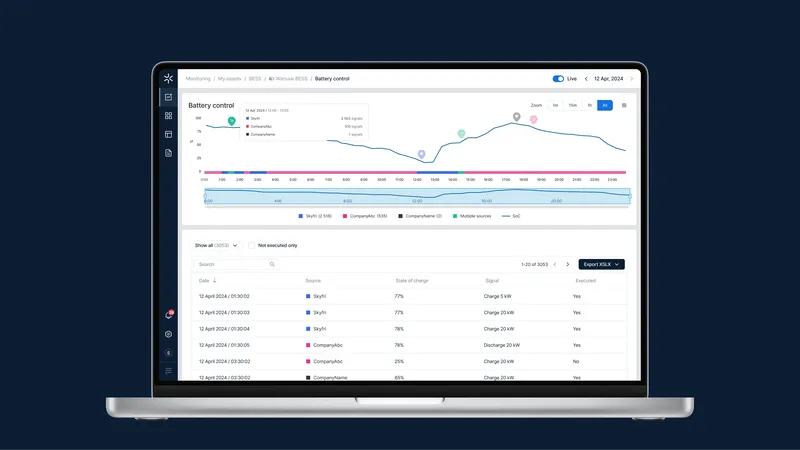
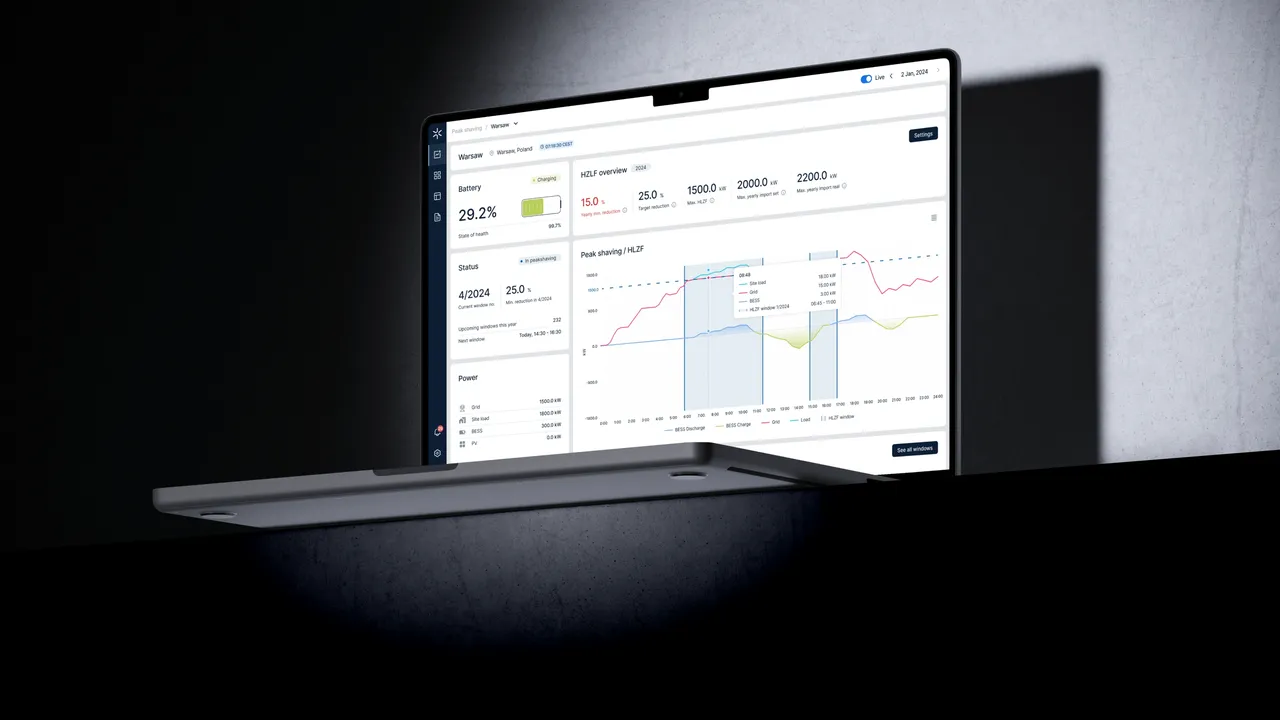
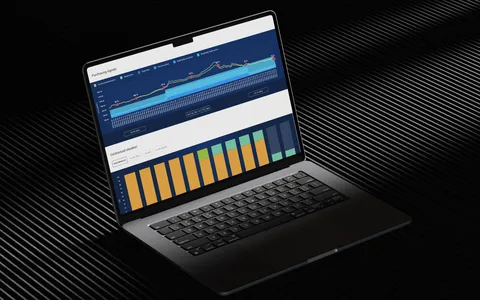
  • Skyfri battery control dashboard with state of charge and executed charge signals on a laptop

    EMS and battery storage software

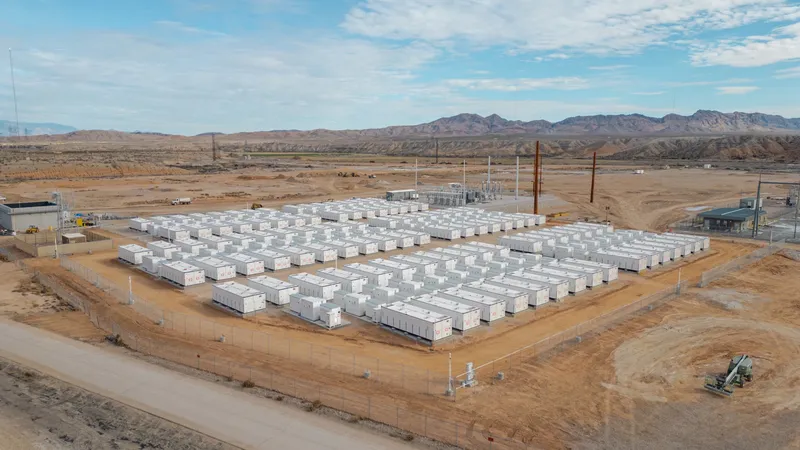
    An EMS decides what each battery and inverter does. For Global Green we are building one for 15 MWh of storage: its orchestrator resolves conflicts between trading, aFRR and direct control before splitting the result across the batteries.

  • Energy trading and procurement platforms

    Portfolio position, tranche purchases and purchase recommendations at Enerace, and a purchasing portal connected to an energy company's ETRM, the book of record for its trades. Energy trading platforms.

  • Virtual power plant and demand-response software

    Aggregation units and demand-side response calls for Zeronest, and hourly settlement for its energy cooperative module. VPP and DSR software links many small assets into one market participant.

EV fleets and vehicle-to-grid software

Between January 2022 and December 2023 we worked on Nuvve's vehicle-to-grid platform. We automated the monthly reports for Nuvve's customers, built a tool for monitoring and bidding on the Danish energy market, and built a database that joins charger, fleet and grid data. We integrated new charger models with the platform. In 2023 we rebuilt Fleetbox, Nuvve's EV fleet management app, for web, iOS and Android. It covers charging and market participation, including discharging to the grid.

How flexibility earns money

Four revenue strategies and where we built them
StrategyWhat the software doesWhere we built it
Price arbitrageCharges the battery when day-ahead and intraday prices are low and discharges at the peaks, guided by the weather forecastZeronest and Skyfri EMS
Demand-side response (DSR)Groups metering points into aggregation units, gives each point its declared power and builds a corrected baseline. Participants confirm by SMS or e-mail, and the report for each hour is ready 15 minutes after it endsZeronest, in production since June 2025
Peak shavingDischarges the battery at the site's load peak so the power drawn from the grid stays under the contracted capacitySkyfri EMS, one of its operating modes
Balancing and frequency reserves (FCR, aFRR, mFRR)Responds within the grid operator's reaction times and sends the telemetry the operator requires for frequency containment and restoration reservesGlobal Green EMS, aFRR in progress

Software for buying and trading energy

We build energy trading platforms for three groups: asset operators that bid flexibility into markets, advisors who tell their clients when to buy, and energy companies whose business customers buy energy through a portal.

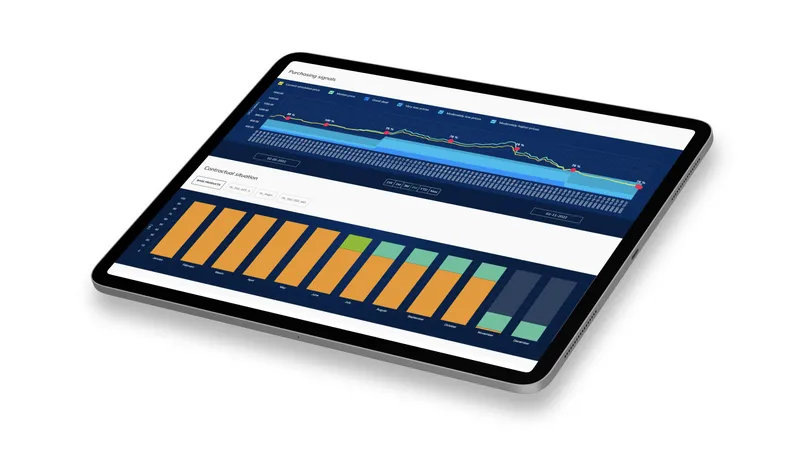
Since 2020 we have built Enerace.Online for Enerace, an advisory that helps companies buy electricity and gas. Automating market data collection and recurring reports saves hundreds of hours each month, and the SaaS model has brought Enerace new clients. Background: how energy trading platforms work.

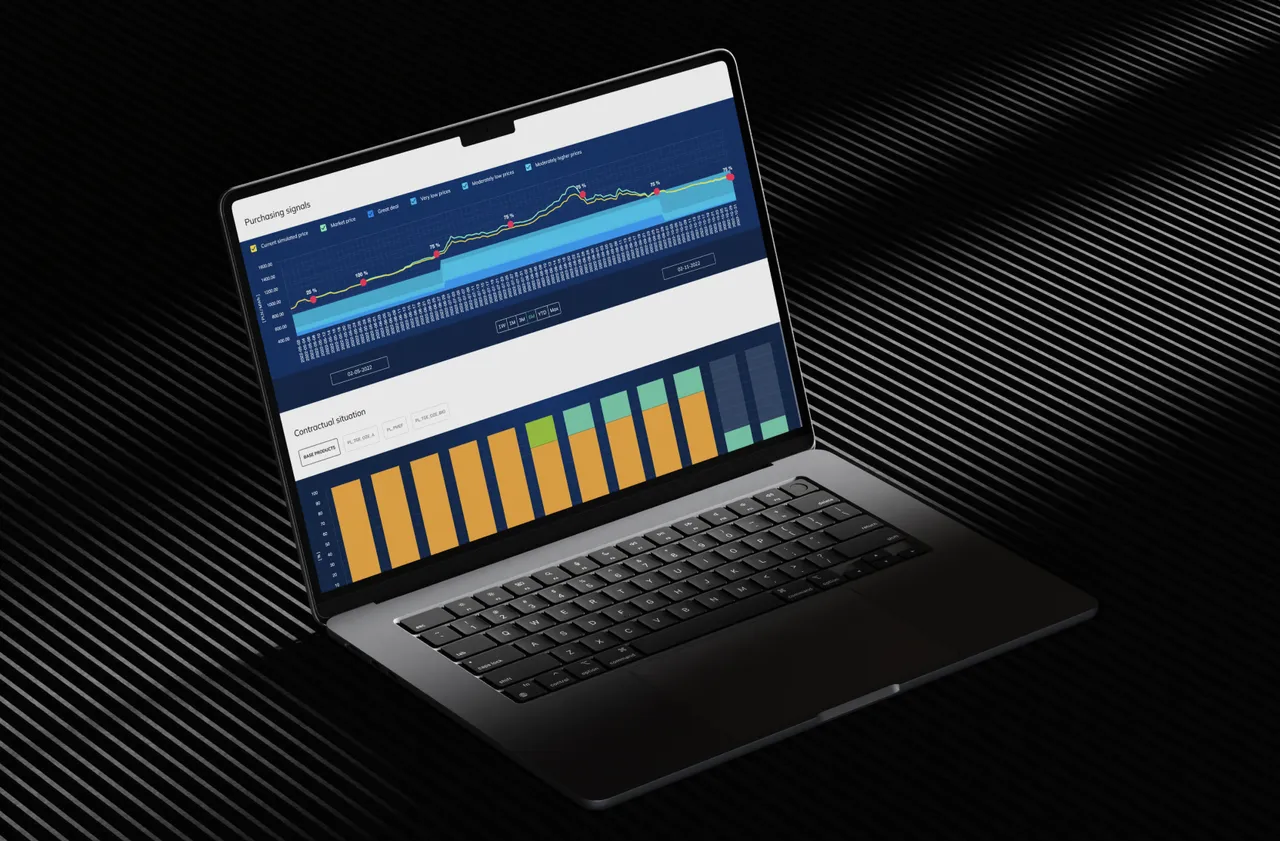
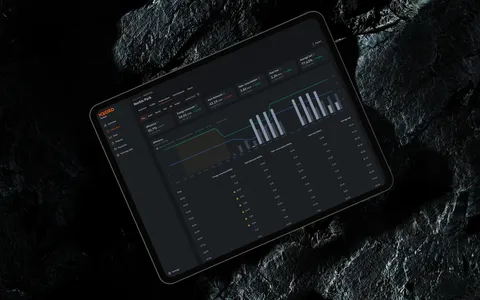
Enerace purchasing signals chart and contract position bars on a laptop

Seven parts of a purchasing platform

Built at Enerace, with an ETRM portal under way.

  • Portfolio position calculated from the contracts entered, replacing spreadsheets
  • Tranche purchasing in MW or MWh, priced at an average quotation updated daily
  • Market data: price feeds, ENTSO-E Transparency, day-ahead and intraday forecasts
  • Purchase recommendations with a rationale, accepted in the platform and kept in the history
  • Back office: billing and ERP links, supplier tender comparison, invoice control
  • Price alerts and purchase signals with risk zones, plus daily and weekly reports
  • A portal tied to an energy company's ETRM, so each trade is written there once

Since delivery day October 1, 2025

The European day-ahead market runs on a 15-minute market time unit. Prices, bids, positions and settlement have to work at that resolution, from the database to the screen. Enerace's PowerShift production module has settled in 15-minute periods since May 18, 2026.

96

trading periods a day on the day-ahead market, up from 24

Approach

How a project runs

Each stage ends with something you can check: an estimate, a release, a live site.

  1. Discovery

    One free meeting. From it we prepare a basic proof of concept or mockups that let us estimate the cost. Extended discovery is a separate, broader scope.

    Free

  2. Build

    Releases with an agreed scope. The Zeronest DSR module took about three weeks, its energy cooperative module about ten days, Enerace's PowerShift production module three weeks.

    10 days to 3 weeks

  3. Deploy

    Rollout to your sites with monitoring, documentation, runbooks and infrastructure-as-code for your team.

    Monitoring

  4. Support

    Maintenance under an SLA agreed in the contract: target resolution times for each priority class, two support tiers and transparent penalties.

    SLA

Entering the Polish energy market

Projects in Poland run under local rules: capacity-market auctions, the balancing products of PSE (the Polish transmission system operator), dynamic tariffs and demand-side response programs for battery storage (BESS) and flexible loads. The software has to meet them as requirements.

Since April 3, 2026 the rules also include the amended act on the national cybersecurity system (KSC), Poland's transposition of NIS2. Entities had to apply for entry in the register of essential and important entities by October 3, 2026 and must implement the new obligations by April 3, 2027. For most obligations, fines can be imposed only after April 3, 2028. Under NIS2 the maximum fine for essential entities is at least EUR 10 million or 2% of worldwide annual turnover, whichever is higher.

For a project under these rules the deployment choice matters: the control layer can run on-premises, inside your own infrastructure.


Glossary

Energy software terms explained

The concepts behind this page, each with its own entry.

  • V2G

    Vehicle-to-grid

    V2G (vehicle-to-grid) lets a plugged-in electric vehicle send electricity from its battery back to the grid, not only charge from it. An aggregator pools many vehicles and sells their flexibility on energy and balancing markets.

  • VPP

    Virtual power plant

    A virtual power plant (VPP) is a network of distributed energy resources, such as solar systems, batteries and flexible loads, coordinated by a central control system so that they can be operated and traded as one unit.

  • Digital twin

    A digital twin is a software representation of a physical asset or process, kept in sync with it through live data, so operators can monitor it, simulate changes and sometimes control it without touching the real equipment.

  • NIS2

    NIS2 Directive

    NIS2 is the EU cybersecurity directive (EU) 2022/2555. It requires essential and important entities, including electricity suppliers, grid operators, producers, aggregators, storage and charge point operators, to manage cyber risk and send an early warning of significant incidents within 24 hours.

  • ETRM

    Energy trading and risk management

    Energy trading and risk management (ETRM) is the category of software that records energy trades and manages the resulting positions, risk, profit and loss and settlement for companies that buy and sell power, gas or other energy commodities.

  • Day-ahead market

    The day-ahead market is a daily auction in which electricity for each 15-minute period of the next day is bought and sold. In Europe orders close at 12:00 CET and one algorithm sets prices for all coupled bidding zones.

  • Demand response

    Demand response is a change in electricity consumption by end users, away from their normal pattern, in reaction to prices or to a paid call from a grid operator or aggregator. It can be offered by one site or by many sites pooled through aggregation.

  • Peak shaving

    Peak shaving lowers the highest power a site draws from the grid, usually by discharging a battery or cutting flexible load during the intervals the network tariff measures, so the site avoids capacity overrun fees or qualifies for a lower network charge.

  • aFRR

    Automatic frequency restoration reserve

    aFRR (automatic frequency restoration reserve) is a frequency restoration reserve that the grid operator activates automatically, by sending setpoints from its frequency controller, to bring system frequency back to its nominal value. In Poland it must reach full activation within 5 minutes.

How each project ran, in full

Case studies: results from four energy systems

Where to start

Where is your energy software project now?

Pick the situation closest to yours. Each one starts with a free discovery meeting.

We run batteries and PV and need an EMS

First step

Map every device and the interface it exposes

We list the batteries, inverters and meters on your sites and check which protocols each one offers.

  1. A free discovery meeting about your sites and markets
  2. A list of the devices and protocols the EMS has to integrate
  3. An estimate for the first release

We trade or buy energy and run an ETRM

First step

Decide what the new tool writes to the ETRM

We go through your trading workflow and agree which data the new tool owns and which stays in the ETRM.

  1. A free discovery meeting about your markets and systems
  2. A split of duties between the new tool and the ETRM
  3. An estimate for the first release

Our plant needs a digital twin or a fleet app

First step

Choose monitoring, simulation or control first

Each needs different data and safety rules, so we agree which one the first release covers.

  1. A free discovery meeting about your plant or fleet
  2. The data sources the twin or app has to read
  3. An estimate for the first release

We are entering the Polish energy market

First step

List the local rules the software has to meet

We go through capacity-market, balancing and KSC requirements and agree what the first release has to support.

  1. A free discovery meeting about your markets and systems
  2. A list of the Polish requirements for the build
  3. An estimate for the first release
You'll talk to Paweł Zieliński Co-founder & Business Owner

Energy

Guides and insights

All 14 articles about Energy

EMS, trading, integration and support.

Questions energy teams ask us

  • Yes. An EMS has to keep three limits under every decision: the battery's state of charge, the site's grid connection limit and the market rules. We build it across hardware from several manufacturers, with control and safety limits at the site and analytics in the cloud. See our EMS software page.

  • Yes, and the ETRM stays the book of record for position, risk, P&L and settlement. The new tool writes each trade there once and reads trading rules from it instead of copying them into code. We are building a purchasing portal this way: contracts, positions and tranches synchronize with the ETRM on a schedule.

  • Yes, the digital twin for KYOTO Group's thermal energy storage is one. Before you order one, decide whether you need monitoring, simulation or control, because each needs different data and different safety rules.

  • Yes, two of them: aggregation with demand-side response calls for Zeronest, and the orchestrator for Global Green. Our page on VPP and DSR software covers both, and the virtual power plant entry explains the layers.

  • Yes. We list every device and the interface it exposes in discovery, before the first release is estimated. The Zeronest EMS reads and controls inverters over Modbus, and for KYOTO Group we built a SCADA-based system.

  • Yes. Use your own models when your forecasts or dispatch strategy are your advantage, or when your traders already rely on them. We build the control layer around them, with the battery and grid limits enforced underneath.

  • Either, or a mix. Choose on-premises when regulation or your security policy keeps control logic inside your own infrastructure. Choose the cloud to add sites quickly without running servers. A hybrid setup keeps control and safety limits at the site and puts analytics and reporting in the cloud.

  • The estimate comes from the free basic discovery: one meeting, after which we prepare a basic proof of concept or mockups that show what the build involves. Each release then has an agreed scope, so you know what you get before work on it starts.

Book a free consultation

Your message goes to

Filip Szamborski

Filip Szamborski

Co-founder & CEO

Thank you for your message.

We read every message ourselves and get back to you within 48 hrs on business days.

Something urgent? hello@ordergroup.co

Let's work together!

Tell us about your project and we will come back to you.

Fields marked with an asterisk (*) are required.

Order Group sp. z o.o. uses the information you provide only to reply to your enquiry and to keep a record of it (Art. 6(1)(b) and (f) GDPR). Details, including your rights, are in our Privacy Policy (opens in a new tab).

We reply within 48 hrs on business days - a person, not an autoresponder.

Using an AI assistant? It can send this inquiry for you or prepare a pre-filled form - instructions for it are in llms.txt.

Brands we have worked with

Accessibility settings

Text size

100%