Mobile app development services: custom iOS and Android apps
Centrum Komunikacji runs on one React and React Native codebase for web, iOS and Android. Beyond apps, our team works on Android itself, from a secure operating system for RAW Cyber to the AOSP layer for Mudita.

Cross-platform mobile app development or native: how we choose
We start with React Native and add native code where the product needs the platform.
-
When cross-platform fits
Most business apps are built from screens, forms, lists, payments, notifications, camera access and biometric login, and React Native covers all of them while rendering the platform's own native components. One team keeps one backlog, one set of tests and one release process for both stores, so each feature is built once. We start there unless the product gives a reason not to.
-
When native fits
Native code gives direct access to the operating system and to platform-specific APIs. A shared layer adds work when an app depends on OS-level behavior, background processing, specialized hardware or very demanding graphics. A product that has to look and behave differently on iOS and Android also gains from two separate apps.
-
Native modules inside a cross-platform app
Cross-platform apps can still contain native code. In Aasa24 the card data is encrypted and decrypted on the device in a native module, and the rest of the app stays in React Native. We plan that split at the start, so the shared layer carries the product and native modules handle the parts that need the platform.
-
Web, iOS and Android in one repository
Centrum Komunikacji, a sign language interpreter app for the Polish Association of the Deaf, keeps its web app, iOS app and Android app in one React and React Native (Expo) repository with shared code.
React Native apps we build: AvaFin, Aasa24 and Zeronest
Two lending apps and an energy app, all built on the same framework.
-
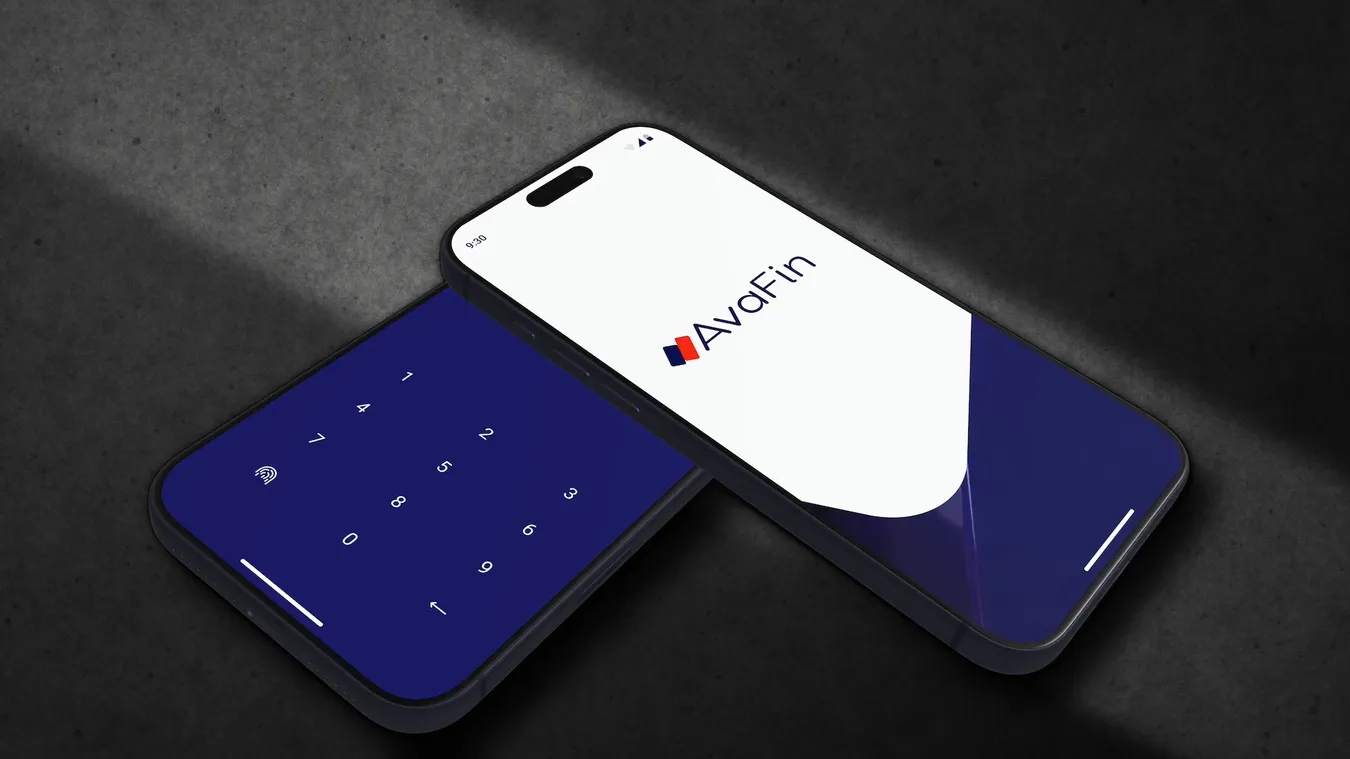
AvaFin: React Native app for iOS and Android for a lender
Since January 2026 we have been building the mobile app of AvaFin Poland, a consumer lender. The account area shows the amount to repay and the due date, and a loan extension has its own flow in the app: the customer requests it, follows its progress and can cancel it. The app handles 18 loan states, and each one has its own view on the home screen and on the loan screen. Customers verify a bank account by logging in to their bank.
-
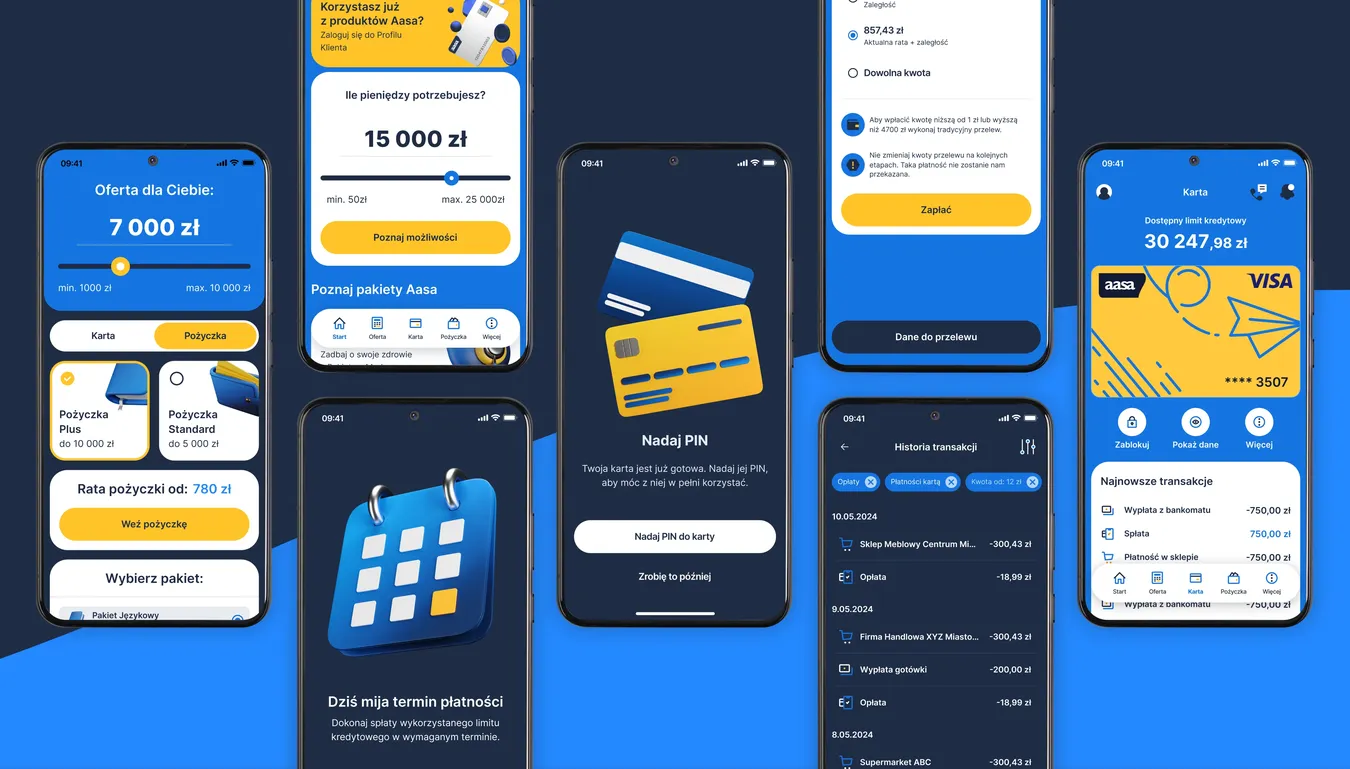
Aasa24: a lending app in React Native
Aasa24, the lending app of Aasa Polska, has been built in React Native for iOS and Android since May 2023. Customers apply for a loan in 13 steps, and more than 40 application and loan states are turned into plain messages. The first public release came less than six months after work started, and a Visa payment card with a renewable limit was added between July 2024 and January 2025.
-
Zeronest: React Native apps for homeowners and installers
For Zeronest we built a homeowner app and an installer app in React Native next to the web platform, and installers see alerts and installation statuses on their phones. The energy management system these apps work with serves more than 3,000 prosumer storage installations, as of April 2026.
What do mobile app development services include?
-
App development for iOS and Android
We build the interface in React Native and connect it to your backend and to outside services. One codebase serves both platforms.
-
Backend and admin panel
A backend and an admin panel for your team are part of the product. For Aasa24 we built the backend in Django, with PostgreSQL and Celery on AWS, and Centrum Komunikacji runs on a Django backend with a self-hosted video layer.
-
Integrations
Aasa24 connects to Autopay, a payment provider, to an outside identity verification platform and to a card issuer, and its Visa card can be added to Google Pay. AvaFin connects to Autopay and to a bank account verification provider, and its in-app chat works offline and from the lock screen.
Describe your idea and get a free consultation
Tell us what you're building and we'll walk you through the team, timeline, and approach that fit your project.
The React Native stack in our production apps
A list for technical teams: the tools and code structure behind AvaFin, Aasa24 and Zeronest.
-
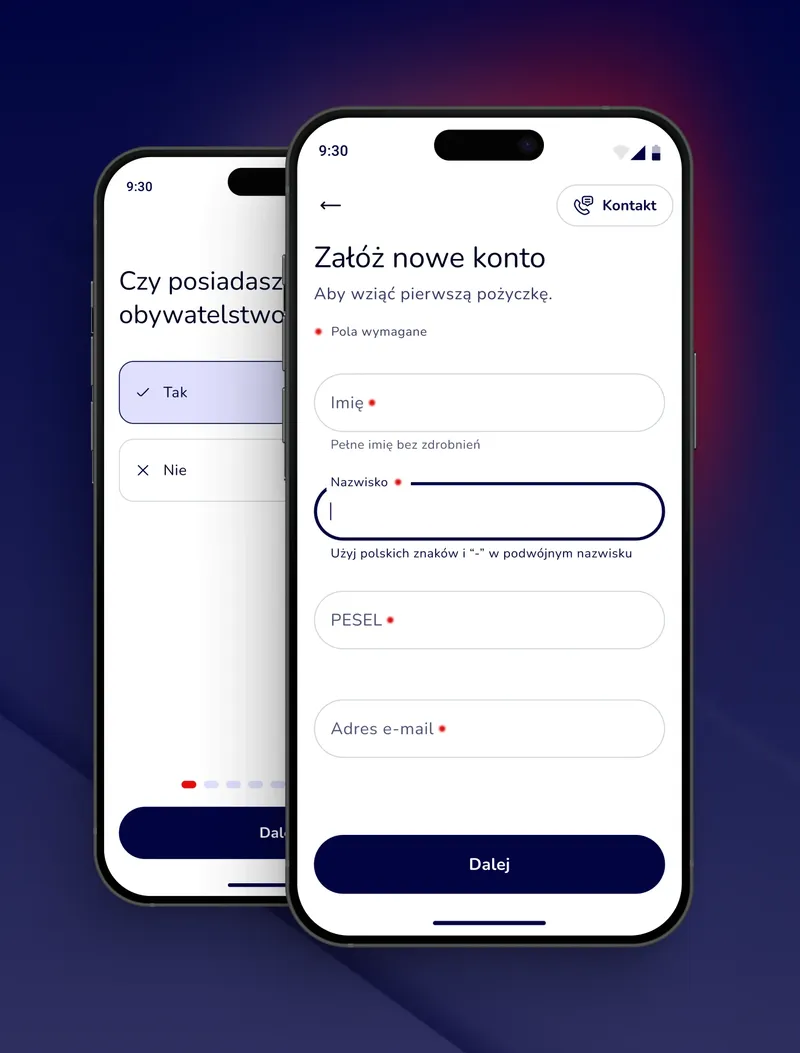
AvaFin
Expo and TypeScript run the app, with Redux Toolkit for data and Expo Router for navigation. The code is split into 13 domain modules, and every integration passes through a data-mapping layer, so a change in a partner's API stays in one place.
-
Aasa24
One TypeScript codebase serves iOS and Android. It uses Redux Toolkit for application state and is tested with React Testing Library and Jest, and builds reach the stores through Fastlane and GitHub Actions.
-
Zeronest
The homeowner and installer apps use React Native with Redux Toolkit. The web platform next to them uses Next.js and MUI, and the backend runs Django REST Framework and Celery on AWS, deployed through GitHub Actions.

Operating system level work
A secure phone system built over three years for RAW Cyber, and Android work for Mudita.
-
RAW Cyber: secure mobile operating system
For RAW Cyber we built a custom Android OS hardened with CopperheadOS. It includes packet inspection that detects and blocks malware and a secure app store limited to pre-approved apps.
-
Mudita: Android at the AOSP level
For Mudita, our team works on Android at the AOSP level, the layer of the Android operating system itself, below the apps a user installs, including a migration of parts of the product to a new Android architecture. We also work on the Mudita App Store, where a Developer Portal lets developers upload APK files (Android app packages) and see an automated scan result, and on the platform that delivers over-the-air (OTA) updates to the Mudita phone. A rollout can run in 1 to 10 phases.
Client reference: RAW Cyber
RAW Cyber - Secure mobile operating system
“Even with the challenging demand, the team was able to provide designs and other OS features already. The team managed to deliver on time and they understand the specifics of the security industry.”
 Maciej Łata
Project Manager, RAW Sp. z o.o.
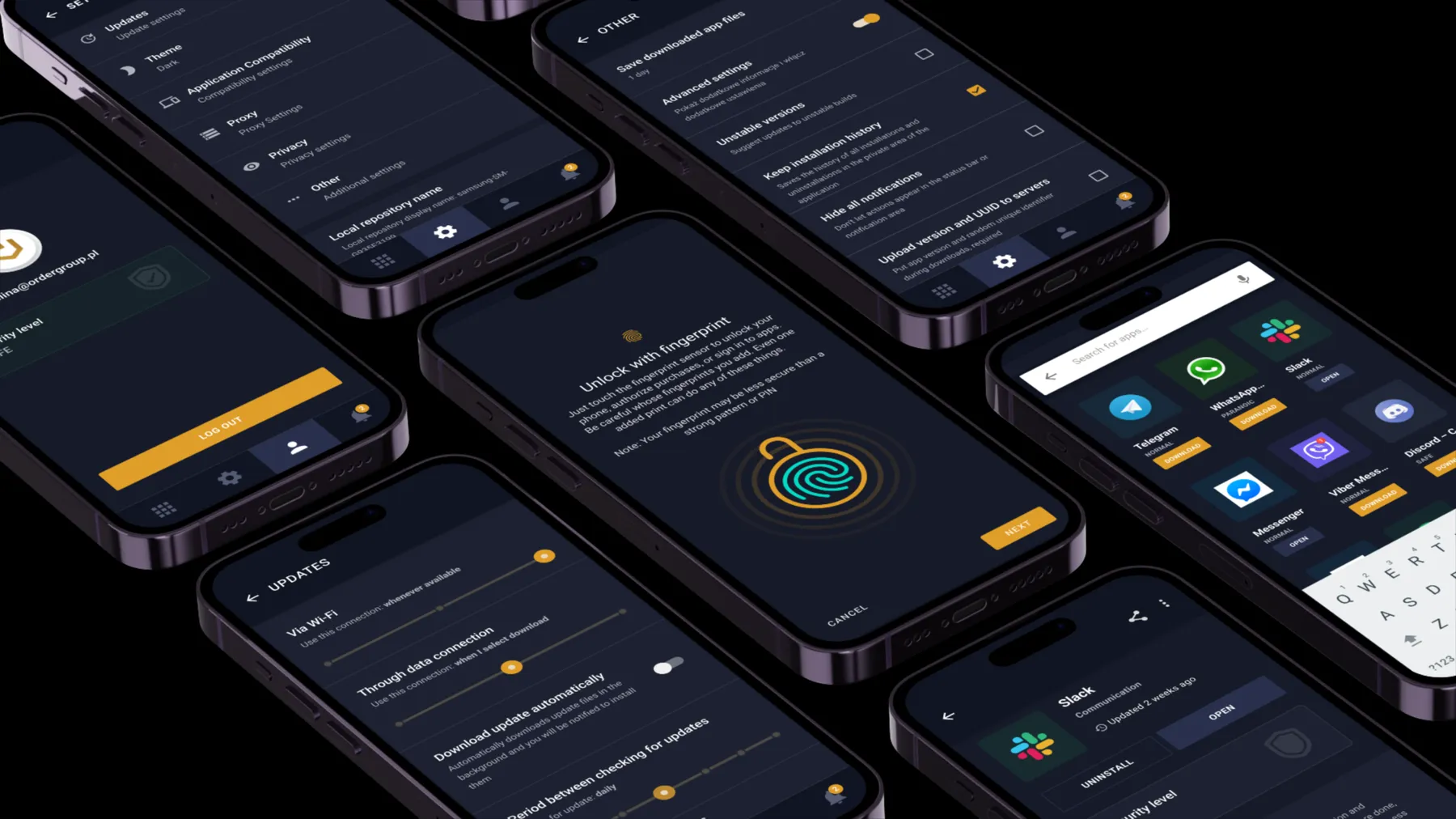
Our mobile app development process, step by step
Each stage ends with something you can review: a scope, a prototype, a demo, a build.
-
Free discovery workshop
Discovery is free. It is an opening meeting plus a basic mockup or proof of concept, and it ends with a confirmed scope and an estimate of cost, timeline and team. The technology decision, cross-platform or native, comes after the workshop.
-
Product and design workshops
This stage takes 1-2 months. UX research, user flows and wireframes lead to high-fidelity mockups and an interactive prototype, usually in Figma. For AvaFin the designers listed every app state with its technical ID, name, display logic and UX/UI description before development started. You receive the user and flow maps, wireframes, the UI component library and a clickable prototype, all editable, and your team keeps access after the project.
-
Development in sprints
We work in sprints that end with a working demo. Daily stand-ups and code review of every pull request keep the work visible. The planning rhythm follows the client: AvaFin is planned every two weeks, with a trial demo before the client demo, and Aasa24 once a month, with a daily call.
-
Testing and QA
In AvaFin every pull request runs automated code checks and unit tests in CI, and every merge sends a test build to Firebase App Distribution and TestFlight. QA has its own sessions with the client, and usability tests with real users come before release.
-
Release in the App Store and Google Play
After positive feedback from the first users, we stabilize the app and release it to production. Before submission we check the app against Apple's and Google Play's requirements and run a usability review.
-
Maintenance and support
After launch we monitor performance, look at how people use the product and handle requests under an SLA agreed with each client. In Centrum Komunikacji, QA checks every change the client's staff request before it is closed.
Security and compliance in financial and system-level apps
What sits behind the lending apps, the public-service app and the secure phone.
-
Card data in Aasa24
Aasa24 serves a lender supervised by the Polish Financial Supervision Authority (KNF). The PIN is never handled as plain text, and the card number and CVV appear only after the customer enters the PIN, then disappear. Screens with sensitive data are masked in analytics and session recordings.
-
Privacy and sessions in AvaFin
AvaFin covers its content with a privacy overlay when the app moves to the background and clears the chat when another customer logs in on the same device. Payment, verification and chat open in a secured web view that allows only listed domains and only HTTPS. Keys and secrets are injected at build time.
-
Consents and analytics in AvaFin
AvaFin handles consent in three layers: Apple's App Tracking Transparency prompt on iOS, a consent platform that manages each third-party library separately, and consents stored in the AvaFin system. Analytics libraries start switched off and are enabled after the customer decides. A GDPR screen in the app covers access, correction, restriction, objection, withdrawal of consent and deletion.
-
Identity checks
Aasa24 runs identity checks (KYC) with a document scan and confirms the PESEL number, the Polish national ID number, with an SMS code. A repeated or manual check handles harder cases.
-
Sign-in
Aasa24 customers sign in with a PIN, Face ID or Touch ID, Google, Apple or email. In AvaFin the PIN and biometrics work after the first login, and the credentials sit in the system's secure storage.
-
Device protection in RAW Cyber
The RAW Cyber system locks the bootloader, the phone's startup software, with the company's own key, enforces a screen lock and detects a SIM change. A device that stays offline for too long warns the user and then wipes its data. Admins control which apps can use the camera, the microphone and the location, and a device can be locked down by company or user group.
-
Encrypted communication in Centrum Komunikacji
The Centrum Komunikacji platform processes health and disability data. Video calls are end-to-end encrypted, and the mobile app uses the platform's native encryption manager. Data is encrypted in the database and in storage, hosting and data stay in the EU, and chat messages and attachments are deleted after 30 days.
-
Identity in Centrum Komunikacji
Users confirm their identity in one of two ways: online through the Polish government's digital identity login, or at a regional center, where a coordinator checks a photo ID and generates a one-time code.
Industries where we have built mobile apps
Four fields, each with its own hub or case study.
-
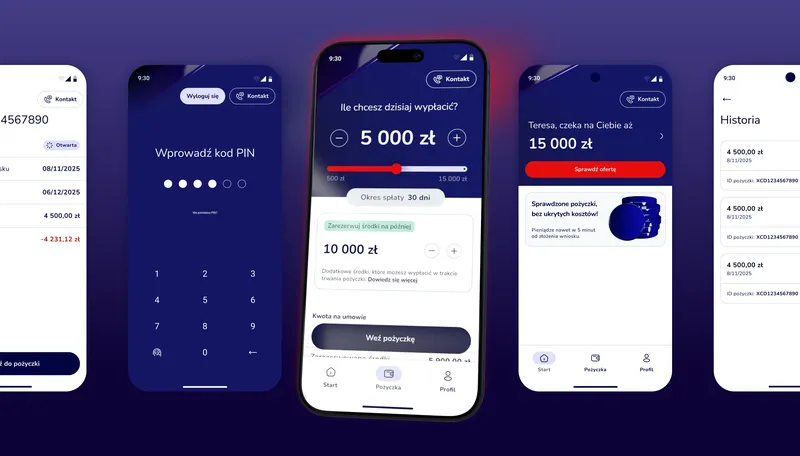
Fintech
We build the lending apps of AvaFin and Aasa24, from loan applications and payments to loan extensions. See fintech software development and loan management software.
-
Energy
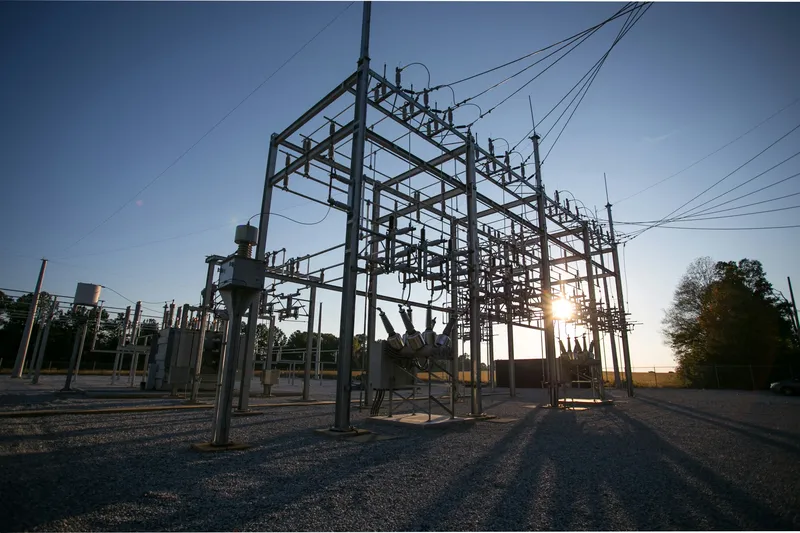
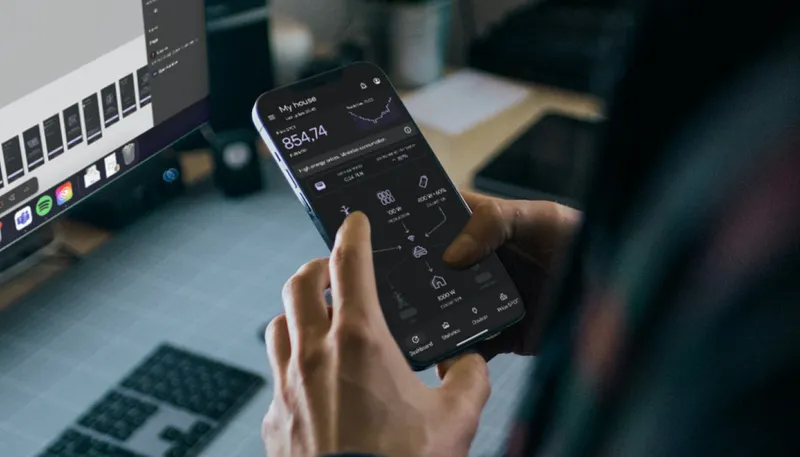
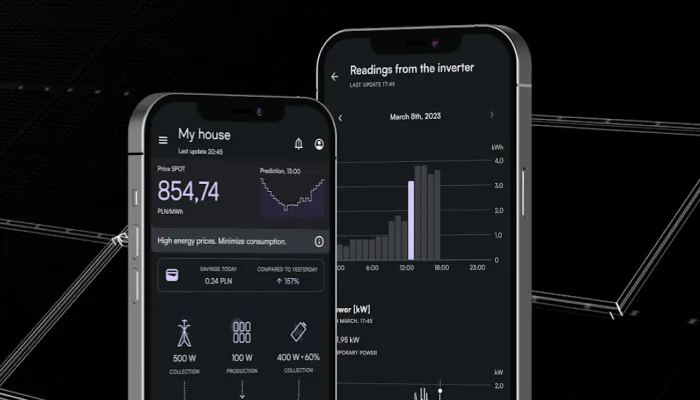
The Zeronest apps give homeowners and installers a view into the home energy system. The homeowner app describes the expected production in words and works from meter data alone, so a home without solar panels can use it. The Enerace.Online app has been in the stores since 2023, with more than 20 functional areas. See the Energy Hub.
-
Devices and cybersecurity
Beyond apps, we work on devices and on Android itself, for RAW Cyber and Mudita. See IoT software development.
-
Public services
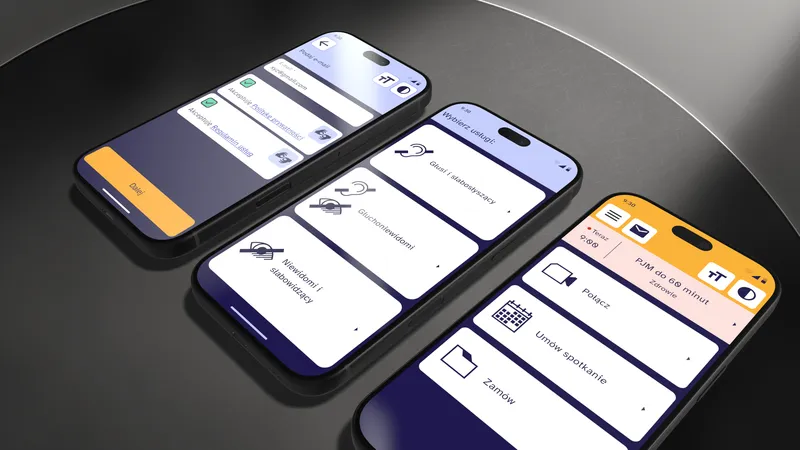
Centrum Komunikacji connects Deaf users with sign language interpreters over video for the Polish Association of the Deaf, in an app built for WCAG 2.1 AA, with calls to emergency numbers such as 112 through a phone bridge. Read the case study.

Accessibility and usability testing in a mobile app
Centrum Komunikacji is used by Deaf and blind people, so every screen was tested with them and with assistive technology.
-
Assistive technology on every screen
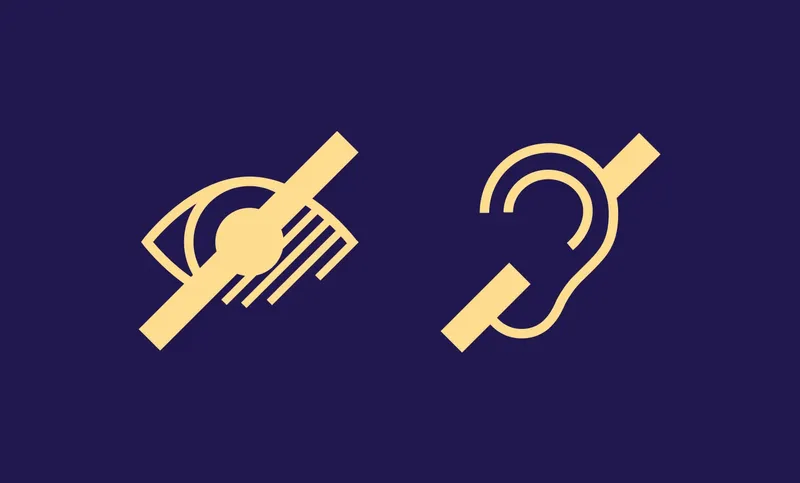
Every screen was checked with VoiceOver and TalkBack, including how phone numbers, notifications and file names are read aloud. Dialogs keep the screen reader inside them, the iOS braille keyboard works in form fields, and braille displays work through the system's own mechanisms.
-
Sign language in the interface
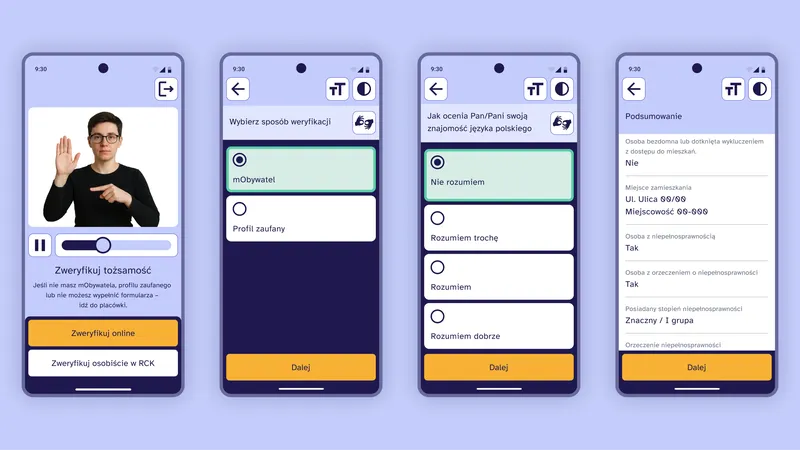
Registration screens, password requirements, terms and notifications have videos in Polish Sign Language. A rejected application gets its reason in Polish Sign Language and in writing, so the person does not depend on text alone.
-
Changes after user tests
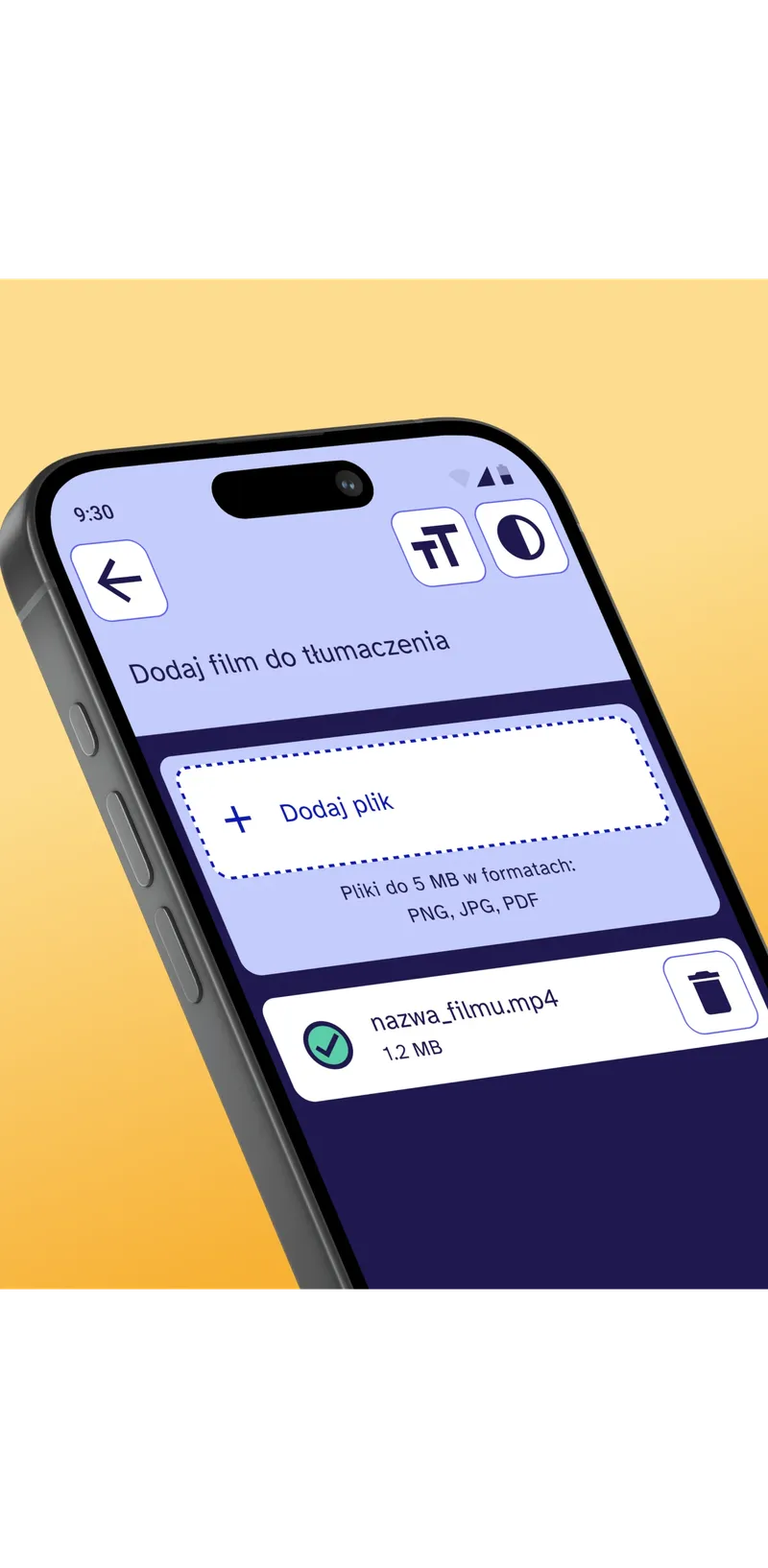
A WCAG audit was part of milestone acceptance. Workshops and tests with Deaf and blind users between September 2025 and January 2026 then produced about 30 UX/UI changes, among them a high-contrast palette, button outlines and a help section. The app bar has switches for text size and high contrast.
-
Feedback after training
Interpreters asked for a mirrored view of their own image during calls after their training, and it was added between February and April 2026.
Publishing, updates and support after launch
What happens once the app is live: store releases, remote changes, analytics and monitoring.
-
Store publication and regular releases
Centrum Komunikacji is published in the App Store and Google Play as Centrum Komunikacji CK. Aasa24 ships a new version every 3-4 weeks on average, and every pull request goes through code review before it is merged.
-
Changes without a store release
The Aasa Polska team changes the loan calculator, documents and messages in an admin panel without a release in the app stores. Aasa24 also switches features on and off remotely (feature flags), as it did with card features, first on Android and in a test group. In AvaFin the core system sets the order of the application steps, so changing them needs no new app version.
-
Analytics and attribution
Aasa24 is also a sales channel, so its funnel is measured in Google Analytics and Firebase and its campaigns in AppsFlyer, an attribution tool. An iOS App Clip, a small part of the app that opens without installing it, carries the customer's source into the full app, and deep links from ads, emails and notifications open the right screen.
-
Monitoring
Aasa24 is monitored with Firebase in the app and Sentry on the backend. Centrum Komunikacji runs Grafana for infrastructure and video, Sentry and a Wazuh security monitoring system.
What drives the cost and timeline of a mobile app
What moves the estimate, apart from scope: platforms, native work, design and requirements.
-
Timeline
A typical project takes 4-7 months: roughly 1 month to organize the team, 1-2 months for product and design workshops, and 2-4 months for development and testing.
-
Scope and integrations
Every screen, flow and user role adds design, development and testing, and so does every integration, such as payment gateways, bank account checks or identity verification providers.
-
Platforms and native modules
Separate native apps mean separate code, tests and releases for each platform, while one cross-platform codebase can also share code with a web app. Features that touch the device, such as on-device data encryption, may need native modules.
-
Design depth
How much design a product needs moves the estimate. In AvaFin and Aasa24 every loan state has its own screen or message, so a product with many states needs more design and more testing.
-
Backend, admin panel and web
A backend, an admin panel for your team and a web version are separate parts of the product. Each adds its own design, development and testing.
-
Security and regulatory requirements
A lender app under KNF supervision, an app that handles health data or a custom operating system adds testing, consent handling and documentation to the estimate.
Why choose us for custom mobile apps
Clutch rates us 5.0 out of 5 across 18 reviews.
-
Cross-platform apps (React Native)
Aasa24 has had continuous support from us since its first release. Updates since then added credit holidays and refinancing, all shipped from one React Native codebase.
-
Native modules where the platform needs them
Native modules cover what the shared layer cannot, such as device-level security features. We write them next to the React Native code, so the product still ships as one app on each platform.
-
Code and rights are yours
The default contract assigns all intellectual property (code, designs and documentation) to you. After go-live we can add hypercare, a period of closer support, with scope and length agreed before launch. Our approach to security and data is on the Security and GDPR page.

How to choose a mobile app development company
Look at what the company has shipped to the stores, how it explains technical choices and who runs the app after launch.
-
Apps live in the stores
Ask to see apps that are live in the stores, and look at how often they are updated.
-
Reasons for cross-platform or native
Ask what in your product drives the choice, for example background processing, specialized hardware or OS-level behavior.
-
Proof in your field
Match the company's projects to your requirements: lending apps for AvaFin and Aasa24, accessibility for Deaf and blind users in Centrum Komunikacji, system-level Android work, energy apps for Zeronest.
-
Who keeps the app running
Ask who maintains the app after launch and on what terms. On Centrum Komunikacji the same people who built the platform deployed it and still maintain it.
FAQ for founders
Answers about cross-platform development, cost and timelines.
-
Cross-platform mobile app development means one mobile codebase that runs on both iOS and Android instead of two separate apps, so a feature is written, tested and released once. It suits most business apps, and native modules cover the parts that depend on the platform.
-
Choose cross-platform for most business apps that have to reach both platforms with one team and one release process. Choose native for products that depend on the operating system itself, such as a custom Android system.
-
Yes. Aasa24 is a lending app built in React Native for a lender supervised by the Polish Financial Supervision Authority (KNF), and AvaFin is a React Native app for a consumer lender. The security section above lists how card data, sensitive screens and identity checks are handled.
-
React Native with TypeScript is our main stack, with Expo in AvaFin and Centrum Komunikacji and Redux Toolkit for application state. Native modules cover the parts that need the platform, and the backends we build run Django on AWS.
-
They cover the whole path from design through testing and release to maintenance, including the backend and the integrations the app needs.
-
The scope (screens, flows and user roles), integrations, native modules, the backend and admin panel, and security or regulatory requirements. We give an estimate after the free discovery workshop, and you can ask for an estimate at any point.
-
A typical project takes 4-7 months, from setting up the team through workshops to development and testing. For your specific timeline, ask for an estimate and we reply within 48 hours.
-
It runs in six stages, from a free discovery workshop to support after launch, and each stage ends with something you can review. Our approach page adds detail on how we work.
-
We monitor the app, ship updates and handle change requests under an SLA agreed with you. On Centrum Komunikacji, QA checks every change the client's staff request before it is closed, and Aasa24 ships a new version every 3-4 weeks on average.
-
We are a company in Warsaw, working for clients from Oslo to San Diego.
-
Yes. Our default contract assigns all intellectual property (code, designs and documentation) to you, and you can review the terms before the project begins.
-
No one can guarantee that. What we can do is check your idea against Apple's and Google Play's requirements up front, and run every app through testing and usability review before submission.
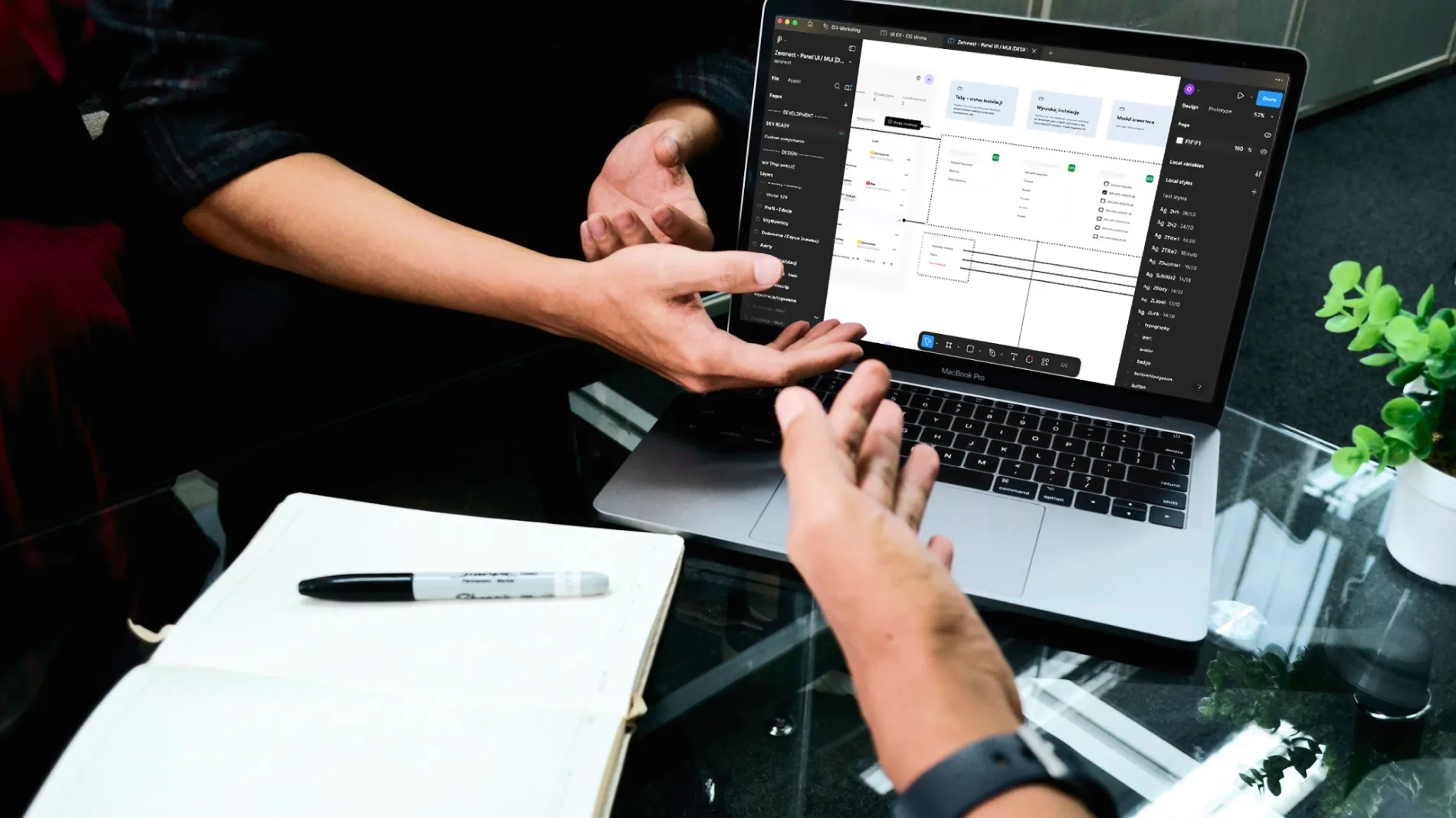

Discover what your product really needs
Your message goes to
Filip Szamborski
Co-founder & CEO

Your message goes to
Karol Oponowicz
Co-founder & Business Owner
Your message goes to
Paweł Zieliński
Co-founder & Business Owner
Thank you for your message.
We read every message ourselves and get back to you within 48 hrs on business days.
Something urgent? hello@ordergroup.co
SO FAR WE HAVE WORKED WITH BRANDS LIKE: