Energy Distribution & Production. Virtual Power Plants
Aleksander Jess, Former Copywriter | | 4 min read
The brief
One of the most exciting developments in recent years is the rise of virtual power plants (VPPs). These innovative systems are changing the way we think about energy production and distribution, but what's so special about them anyway?
The energy industry is constantly evolving, and one of the most notable developments in recent years is the rise of virtual power plants (VPPs). These systems are changing the way energy is produced and distributed, and they could reshape the industry in the years to come.
In this article, we'll explain what virtual power plants are, how they work, and why they are likely to play a growing role in the energy system.
What is a VPP?
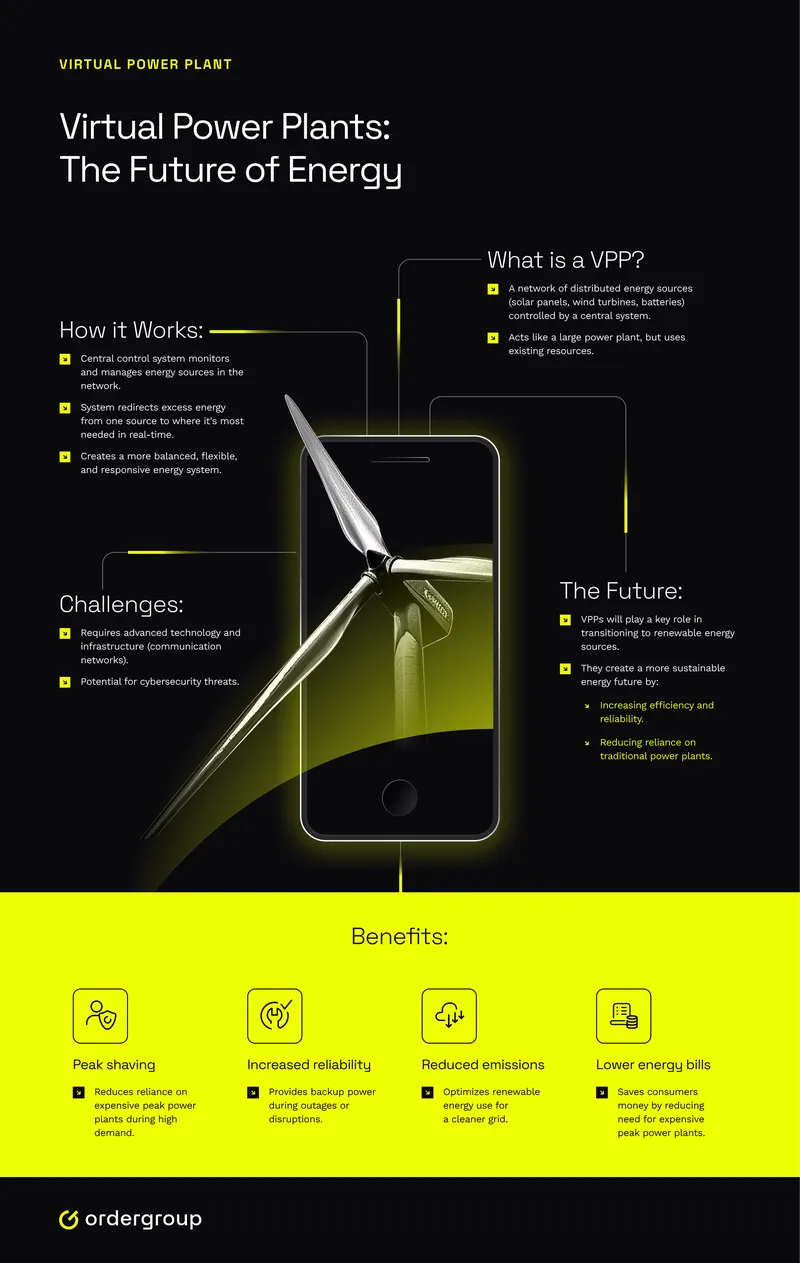
A virtual power plant is a network of distributed energy resources (DERs) that are connected and coordinated through a central control system. These resources can include solar panels, wind turbines, batteries, and other forms of distributed generation.
The goal of a virtual power plant is to create a more efficient and reliable energy system by aggregating these resources and using them to balance supply and demand in real time. This allows for more efficient use of renewable energy sources and can help reduce strain on the grid during peak demand periods.
How Does a Virtual Power Plant Work?
The key to a virtual power plant is its central control system, which is the brain of the operation. This system uses advanced software and algorithms to monitor and manage the various DERs in the network.
When there is excess energy being generated by a particular resource, the control system can redirect that energy to where it is needed most. For example, if a solar panel is producing more energy than is needed in a particular location, that energy can be sent to another location where it is needed, or stored if it can't.
Balancing supply and demand in real time is what makes virtual power plants efficient. It also makes the energy system more flexible and responsive, which matters more and more as we continue to transition to renewable energy sources.
Benefits of Virtual Power Plants
Virtual power plants benefit both energy providers and consumers. The main advantages include:
Peak Shaving
By using a virtual power plant to balance supply and demand, energy providers can avoid the need for expensive peak power plants, which are only used during periods of high demand. This can help reduce costs for both providers and end users.
Increased Reliability
Virtual power plants can help improve the reliability of the energy grid by providing backup power during outages or other disruptions. This is especially important as we become more reliant on renewable energy sources, which can be less reliable than traditional sources.
Reduced Emissions
By optimizing the use of renewable energy sources, virtual power plants can help reduce emissions and combat climate change, which is a step toward a more sustainable energy system.
Lower Energy Bills
Consumers who use a virtual power plant may save money on their energy bills, because the system can help reduce the need for expensive peak power plants, which drive up energy costs.
Real-World Examples of Virtual Power Plants
Virtual power plants are still a relatively new concept, but there are already some successful examples in use around the world.
One of the best-known examples is the VPP operated by Tesla in South Australia. The program aims to connect up to 50,000 homes with solar panels and Powerwall batteries, which are used to provide backup power and help stabilize the grid during peak demand periods.
Another example is the VPP operated by Next Kraftwerke in Germany. When this article was written, it connected over 5,000 small-scale energy producers, including wind turbines, solar panels, and biogas plants, into a virtual power plant with up to 2,800 megawatts of capacity.
The Future of Energy
As the world continues to transition to renewable energy sources, virtual power plants will become more important in the energy industry. They offer a more efficient and reliable way to manage energy production and distribution, and they can help reduce our reliance on traditional power plants.
In the coming years, we can expect more virtual power plants to be implemented around the world. As technology advances, these systems will become more sophisticated and effective, contributing to a more sustainable energy future.
Challenges and Limitations
Virtual power plants offer many benefits, but they also have challenges and limitations that need to be addressed.
One of the main challenges is the need for advanced technology and infrastructure. For virtual power plants to work effectively, there needs to be a reliable communication network in place to connect all of the DERs. This can be a significant barrier in some areas, particularly in developing countries.
Another limitation is the potential for cybersecurity threats. As virtual power plants become more widespread, they will become an attractive target for hackers and other malicious actors, so they will need strong security measures to stay protected and reliable.
Conclusion
Virtual power plants are likely to play a growing role in the energy system. They manage energy production and distribution more efficiently and reliably, and they can help reduce our reliance on traditional power plants. As technology advances, we can expect more virtual power plants to be implemented around the world, contributing to a more sustainable energy future.
Whether you are an energy provider or a consumer, it's worth following the latest developments in virtual power plants and the energy industry as a whole. Understanding these technologies and their potential impact will help you prepare for a fast-changing energy market.
Let's work together and shape the future
Contact usMore articles about Energy
Managing Surplus Renewable Energy with Energy Storage Systems
The Role of Artificial Intelligence in Custom Software Development for Renewable Energy