Published

KYOTO - Industrial IoT & Digital Twin for Thermal Energy Storage

The Kyoto project consists of three main elements:
Project summary
Key takeaways
- Industrial IoT and digital twin software for Kyoto Group's thermal energy storage, built over three and a half years.
- The project grew from a UX/UI MVP into a SCADA-based BMS that monitors and controls the flow of energy in real time.
- Stack: React.js, Python and AWS, with Terragrunt and Jenkins for the infrastructure.
- Our software supported the prototype Kyoto presented to investors; Kyoto raised NOK 182.3 million in a private placement.
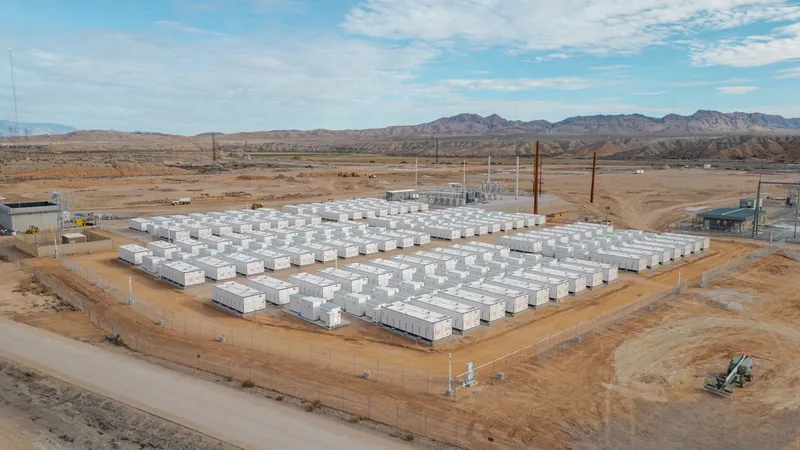
Order Group has partnered with Kyoto Group AS to develop an industrial IoT and Digital Twin solution for the Kyotopia project, which moved from solar energy production to advanced thermal energy storage. Over three and a half years, our team took the project from a basic MVP to a complex system that manages energy storage precisely and efficiently.
Challenges
The main challenge in this project was the scale and technical complexity of integrating industrial IoT with digital twin technology for a large-scale thermal energy storage system. We dealt with changing project requirements, frequent trips to Oslo for hands-on collaboration, and the difficult work of connecting complex physical hardware to software systems.


Solutions
We built a user-friendly interface for energy management and a backend that handles large volumes of data reliably. We used technologies such as React.js, Python and AWS, as well as tools such as Terragrunt and Jenkins, to create a scalable and secure infrastructure. This infrastructure supported a battery management system (BMS) and enabled real-time monitoring and control of the energy storage process.

Details
The development process began with a UX/UI MVP and grew into a comprehensive SCADA-based BMS for thermal energy storage management. The system included surveillance functions, weather data collection, energy price analysis, and a plant performance simulation interface. Each feature was designed to integrate with the overall system and give the Kyoto team actionable information.
Insights
Throughout the project, we used Agile and Scrum, which helped us manage a project this complex. We learned to stay adaptable and to work closely with experts from various fields. This approach helped us meet the changing needs of the project and kept us up to date with current industry standards and practices.

Results
The project ended with the implementation of the BMS, now an interactive panel that lets users control and monitor the flow of energy in real time.
Related articles



Discover what your product really needs
Your message goes to

Filip Szamborski
Co-founder & CEO

Your message goes to

Karol Oponowicz
Co-founder & Business Owner
Your message goes to

Paweł Zieliński
Co-founder & Business Owner
so far we've worked with brands like:




Thank you for your message.
We read every message ourselves and get back to you within 48 hrs on business days.
Something urgent? hello@ordergroup.co